



Anodized Aluminum Fixture Plate for Precision Component Positioning
Category:
Key Words:
Product parameters
Parameter | Specification |
Material | Aluminum Alloy (6061 / 5052 / 7075 optional) |
Surface Treatment | Anodizing (clear / black / custom color) |
Thickness | 2 mm – 20 mm (customizable) |
Plate Size | Custom (based on drawing) |
Slot / Hole Size | ≥ 0.1 mm (depending on process) |
Pattern Type | Etched slots / CNC machined holes / custom patterns |
Tolerance | ±0.01 mm – ±0.05 mm |
Flatness | ≤ 0.05 mm (depending on size) |
Surface Roughness | Ra 0.8 – 3.2 μm |
Edge Condition | Deburred / Smooth edges |
Processing Methods | Chemical Etching + CNC Machining / Laser Cutting (optional) |
Mounting Features | Threaded holes / positioning holes / custom design |
Vacuum Function | Optional (vacuum channels / suction holes) |
Operating Temperature | -40°C to 200°C (depending on material) |
Application | Fixture / Workholding / Assembly / Positioning |
MOQ | 1 pc (prototype) / small batch supported |
OEM / ODM | Fully supported (based on drawings or samples) |
Product Description
Product Description:
This anodized aluminum fixture plate is designed for precision component positioning in industrial applications. It ensures stable alignment and repeatability, making it ideal for custom fixture solutions in high-precision manufacturing.
Applications :
electronic component positioning fixture
PCB positioning plate / PCB assembly fixture
camera module alignment fixture
sensor positioning jig
micro part holding fixture
optical component positioning plate
Why Hard Anodizing is Critical for Precision Positioning Fixture Plates in Electronics Assembly
In high-volume electronics manufacturing, a fixture plate isn't just a piece of metal—it's the foundation of your assembly line's accuracy. For engineers sourcing tooling for PCB assembly or sensor manufacturing, the difference between a standard aluminum plate and a high-performance fixture often comes down to one critical factor: surface engineering.
At our factory, we see many production lines suffer from "tolerance drift"—where fixtures wear down after a few months of use, leading to misalignment. This article details why we specify Hard Anodizing for our precision positioning solutions and how our CNC capabilities ensure your components fit perfectly every time.
The Hidden Cost of Standard Aluminum Fixtures
In applications like PCB assembly or optical calibration, fixture plates endure constant mechanical stress. Operators and robotic arms repeatedly load and unload components, creating friction against positioning pins and slots.
Standard bare aluminum is relatively soft. Without proper treatment, a fixture plate will quickly show signs of wear:
- Edge Degradation: The sharp corners of positioning slots become rounded, introducing "play" or movement into the component.
- Particle Generation: Soft aluminum can gall or scratch, leaving dust particles that may contaminate sensitive electronic parts.
- Loss of Precision: As the surface wears, the repeatability of the fixture degrades, leading to higher rejection rates in production.
To solve this, we don't just machine aluminum; we engineer it to last.
Material Selection: 6061 vs. 7075 Aluminum
The foundation of a durable fixture is the substrate material. In our workshop, we primarily utilize Aluminum 6061-T6 and Aluminum 7075-T6. While both are excellent, we generally recommend Aluminum 6061-T6 for most electronic positioning fixtures.
Why? Because 6061 offers the perfect balance of machinability and anodizing response. It allows us to create complex geometries while ensuring the surface treatment bonds perfectly for maximum durability.
Feature | Aluminum 6061-T6 (Our Standard) | Aluminum 7075-T6 |
|---|---|---|
Best For | Precision fixtures, PCB carriers, optical mounts | High-stress structural parts |
Anodizing Quality | Excellent (Uniform, hard coating) | Good (Can be sensitive to stress) |
Machinability | High (Allows for complex micro-features) | Medium |
The Hard Anodizing Advantage: A Shield for Precision
We utilize Hard Anodizing (Type III) rather than standard decorative anodizing (Type II). This is a non-negotiable standard for our high-precision fixture plates.
The process creates a thick, dense oxide layer that is integral to the metal—it cannot peel or flake.
- Surface Hardness: We achieve hardness ratings of HV ≥ 400. To put this in perspective, this is comparable to hardened steel, making it resistant to the scratches and dings common in busy assembly lines.
- Corrosion Resistance: The coating protects the base metal from oxidation and chemical exposure during cleaning.
- Electrical Insulation: The anodized layer is non-conductive, a critical safety feature when holding populated circuit boards or sensitive sensors.
Precision CNC: Engineering the "Zero-Gap" Fit
A hard surface is useless without precise geometry. Our manufacturing process combines the durability of anodizing with the extreme accuracy of CNC machining.
1. Micron-Level Positioning Features
For a camera module alignment fixture or a micro part holding fixture, the fit must be exact. We machine V-grooves, dowel pins, and custom pockets with tolerances of ±0.01mm. This ensures a "zero-gap" fit, meaning the part snaps into place without needing manual adjustment.
2. Complex "Keep-Out" Zones (Relief Pockets)
One of the most common challenges in PCB fixturing is dealing with components of varying heights on the bottom of the board. Standard plates might crush tall capacitors or connectors.
Using high-speed CNC milling, we carve out precise "relief pockets" that match the exact layout of your PCB. This allows the fixture to support the board strictly by its edges or fiducials, leaving sensitive components untouched.
Real-World Applications
We have successfully deployed these hard anodized fixture plates for a variety of demanding applications:
- PCB Testing & Assembly: Holding boards steady during soldering or electrical testing without warping.
- Optical Component Positioning: Providing a stable, non-reflective black surface (via black anodizing) for calibrating camera lenses.
- Sensor Manufacturing: Securely holding delicate sensor arrays during the potting or bonding process.
Why Partner With Us?
We are a precision manufacturing partner with over a decade of experience. By combining CNC precision with chemical etching and laser cutting capabilities, we offer a holistic approach to fixture fabrication.
Whether you need a single prototype fixture for R&D or a batch of 500 plates for mass production, our factory ensures that every anodized aluminum fixture plate meets the highest standards of flatness, hardness, and dimensional accuracy.
Ready to Upgrade Your Production Line?
Don't let worn-out fixtures compromise your product quality. Whether you need a custom PCB positioning plate or a complex camera module alignment fixture, our team is ready to help you optimize your design for durability and precision.
Contact Luna today for a quick quote and DFM analysis.
- WhatsApp: +86 12132219094
- Company: NKEYTO Precision Hardware
Questions and Answers
Frequently Asked Questions (FAQ)
Q1: What is the typical tolerance you can hold for a fixture plate?
A: For precision positioning features like dowel holes and slots, we typically hold tolerances of ±0.01mm. For overall dimensions, ±0.05mm is standard.
Q2: Can you anodize the plate in different colors?
A: Yes. While black is popular for reducing glare in optical applications, we can also produce clear, blue, red, or gold anodized finishes based on your factory's color-coding requirements.
Q3: Do you offer design assistance for the relief pockets?
A: Absolutely. If you provide us with the Gerber files or a 3D model of your PCB or component, our engineering team can design the relief pockets to ensure perfect clearance.
Q4: How does hard anodizing affect the dimensions?
A: Hard anodizing adds thickness to the surface (typically 25-50μm). We account for this during the CNC machining phase (pre-anodize machining) to ensure the final part meets your exact specifications after the coating is applied.
Q5: What is the minimum order quantity (MOQ)?
A: We understand that fixtures are often needed for specific projects. We support low-volume manufacturing and prototyping, allowing you to order exactly what you need without excessive inventory costs.
Factory Description
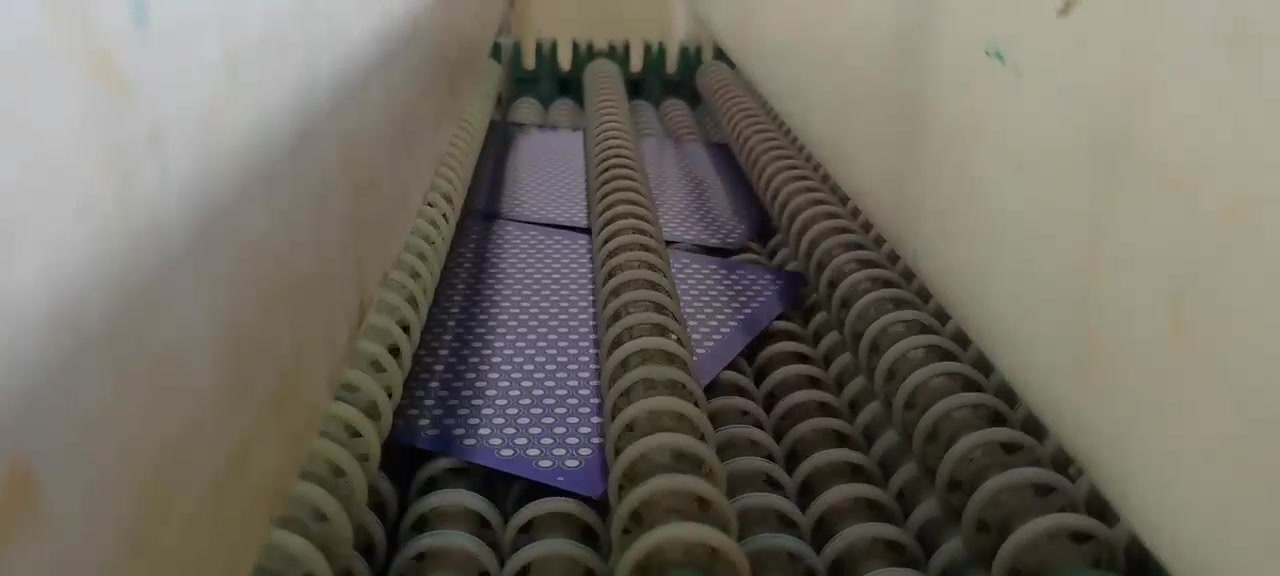
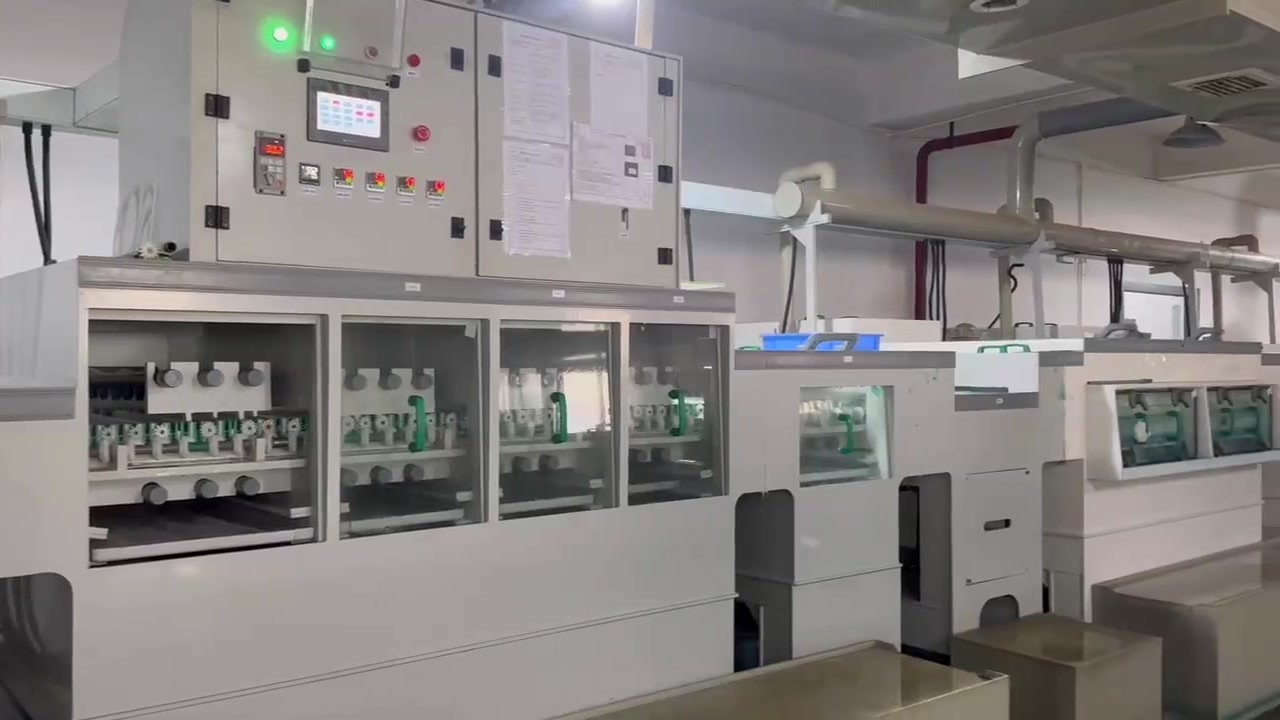
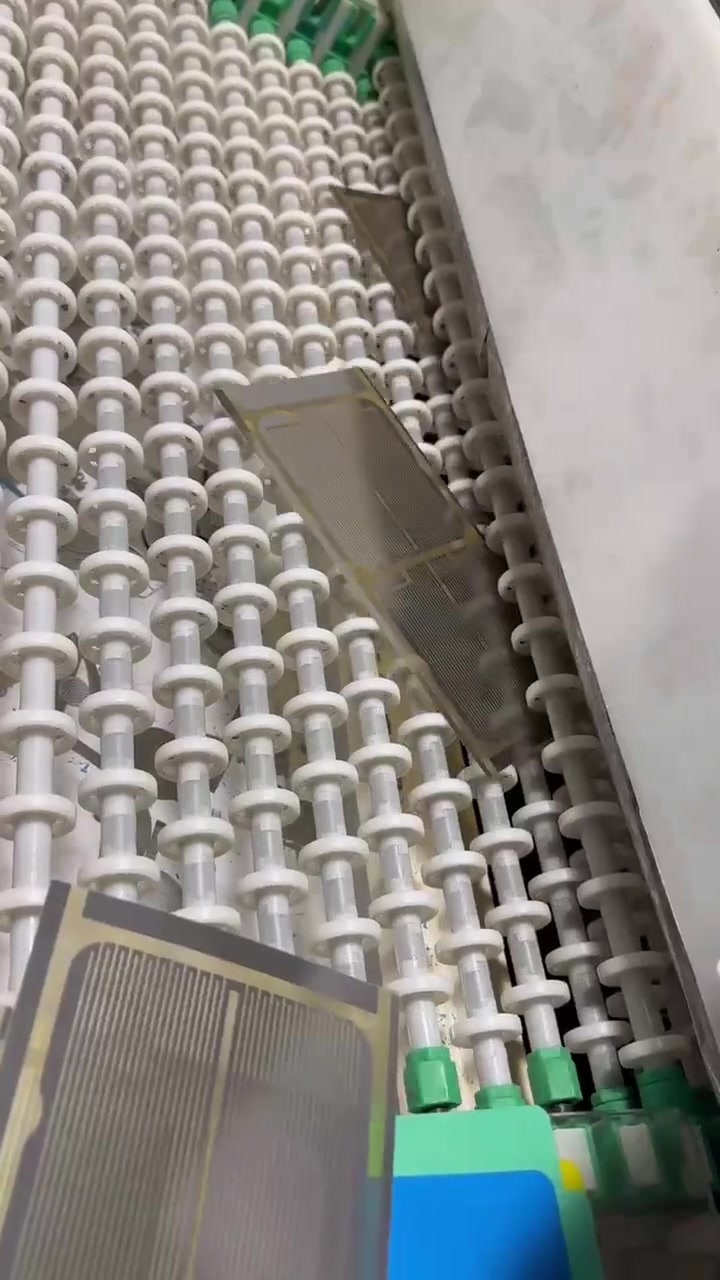
We have a full set of etching production equipment and mature processing technology. We can manufacture products in any shape with mesh sizes as small as 0.1mm, according to your requirements.

Our Advantage
Factory Direct Shipping
Our products undergo 100% QC checks before shipment, and we ensure compliance with international standards. If you require specific certifications for your target market, just let us know, and we'll meet those requirements.
Experienced Design and Manufacturing Team
We work closely with customers from the design phase to help avoid potential product flaws, ensuring both the functionality and design meet expectations.
Excellent Supply Chain Management
We can quickly adjust production schedules to meet your urgent deadlines, whether it's for large bulk orders or smaller rush orders.
OEM & ODM Support
We offer the option to print your logo or other customizations.
Strict Quality Control
Our products undergo 100% QC checks before shipment, and we ensure compliance with international standards. If you require specific certifications for your target market, just let us know, and we'll meet those requirements.
Certificate
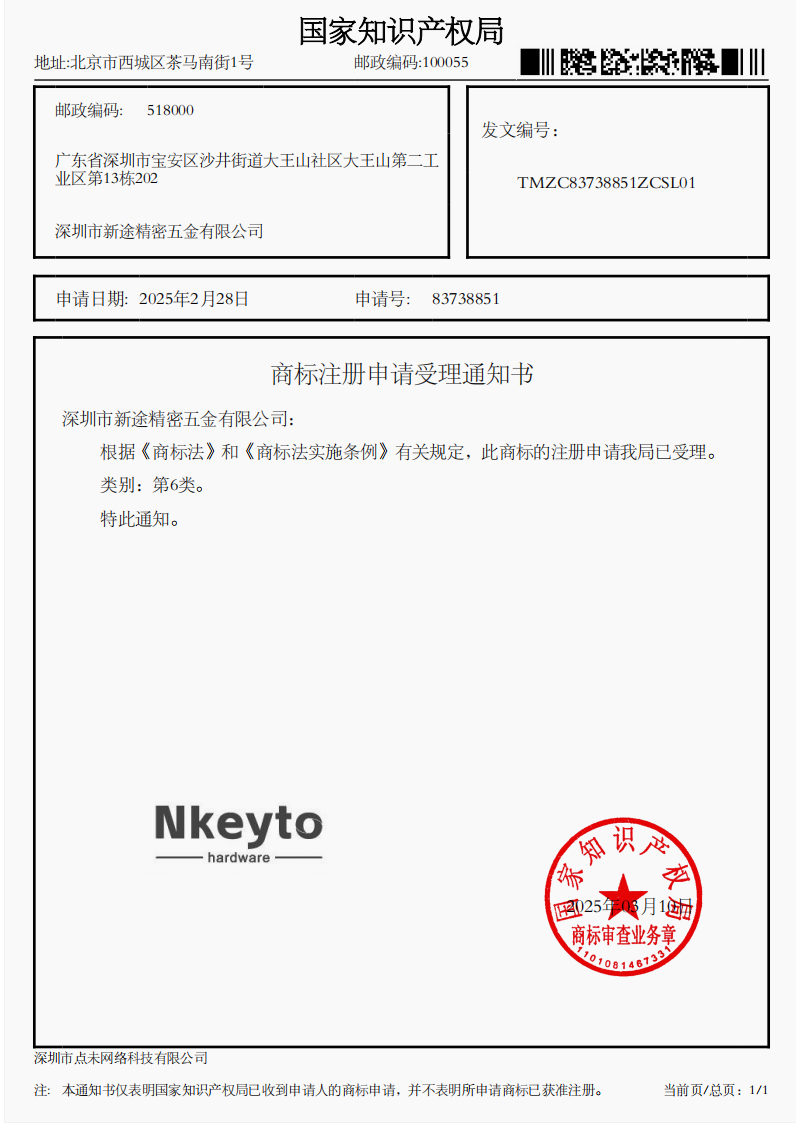
商标6类

9001
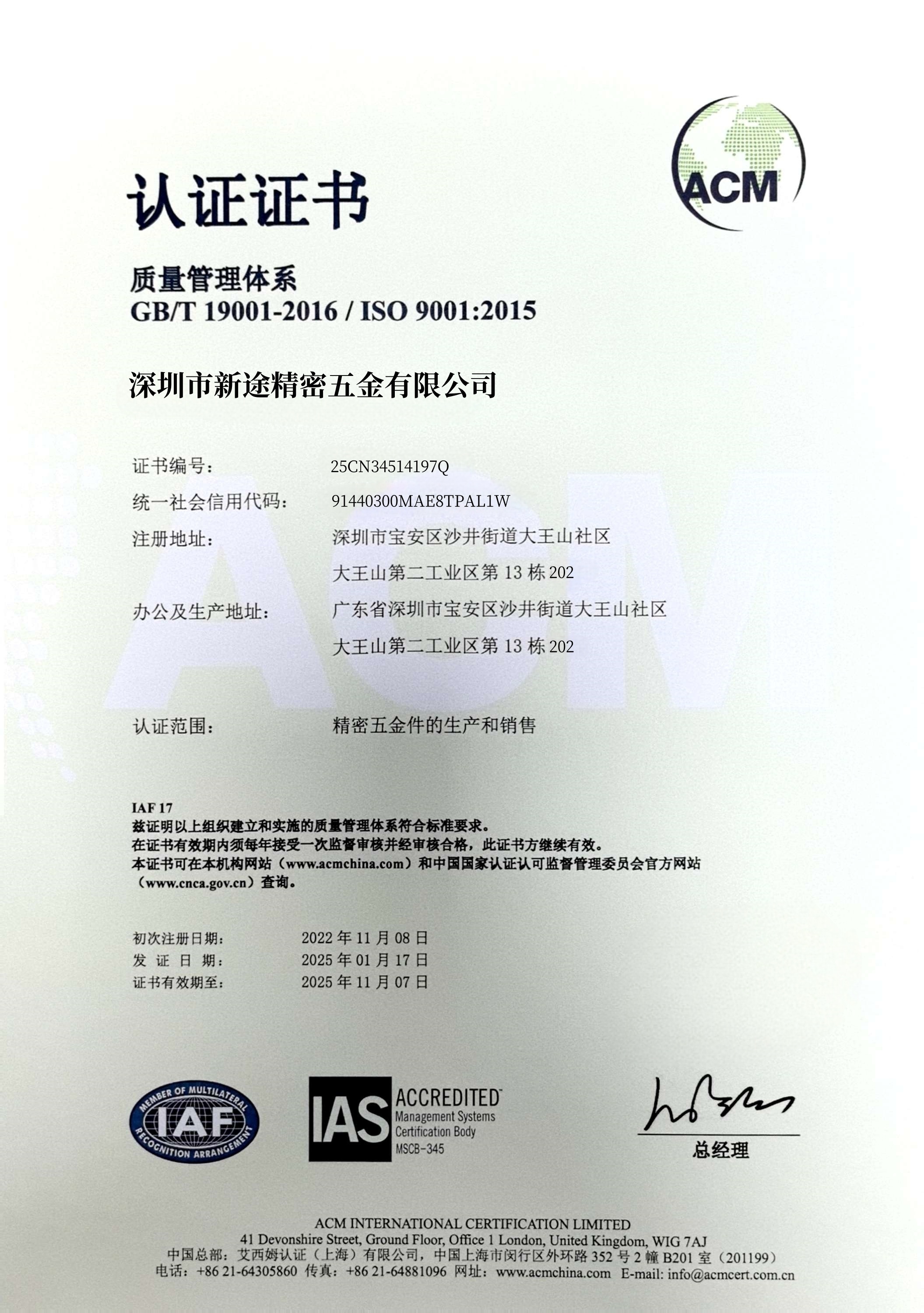
质量认证


Related Products

Shenzhen Nkeyto Precision Hardware Co., Ltd. is a factory specializing in precision hardware processing, committed to providing customers with high-quality products and services.We look forward to working with you.
Contact Us

E-mail: luna@nkeyto.com

Tel: +1 213-221-9094

Add: 13th Building, 202, Dawangshan Second Industrial Zone, Dawangshan Community, Shajing Street, Bao'an District, Shenzhen, Guangdong Province
Powered by: CEglobal
Copryright © 2025 Shenzhen Xintu Precision Hardware Co., Ltd.




Back To Top