



Blackened Stainless Steel Light Blocking Mask
Category:
Key Words:
Product parameters
Parameter | Description |
Material | Stainless Steel (SUS304 / SUS316), Nickel, Copper, Aluminum (optional) |
Surface Treatment | Blackened / Matte Black Coating / Chemical Blackening / Anodizing (Aluminum) |
Manufacturing Process | Chemical Etching (Primary), Laser Cutting / CNC (Auxiliary) |
Shape | Custom shapes (round, square, irregular, micro pattern, slit, aperture) |
Size Range | Customizable (Typical: ≤ 600 × 600 mm) |
Thickness | 0.01 mm – 1.0 mm (etching optimal: 0.02–0.5 mm) |
Hole Diameter / Aperture | ≥ 0.02 mm (depending on thickness & design) |
Tolerance | ±0.005 mm ~ ±0.02 mm (depending on thickness and pattern complexity) |
Edge Quality | Burr-free, smooth edge, no mechanical stress |
Flatness | ≤ 0.03 mm (depending on size & thickness) |
Surface Roughness | Ra ≤ 0.8 μm (optional requirement) |
Light Blocking Performance | High opacity, low reflectivity, suitable for optical shielding |
Pattern Precision | High-precision micro etching, uniform aperture distribution |
Customization (OEM/ODM) | Supported (based on drawings, samples, or technical requirements) |
Drawing Formats Accepted | CAD / DWG / DXF / STEP / PDF |
Quality Control | 100% inspection for critical dimensions, optical inspection available |
Product Description
Product Description
Blackened stainless steel light blocking mask is a precision metal component designed for strict light control in optical assemblies. Manufactured by chemical etching, this light blocking mask features high dimensional accuracy, burr-free edges, fine apertures, and a uniform blackened surface that helps reduce stray light and unwanted reflection. As a China custom precision metal manufacturer, we also support laser cutting and CNC machining for different drawing-based requirements, making this product suitable for high-precision OEM and custom applications.
Key Features:
Camera module light blocking mask
Optical sensor mask
Laser module mask
Infrared imaging mask
Precision aperture mask for optical instruments
Chemical Etching vs. Laser Cutting: Choosing the Right Process for Precision Optical Masks
In the world of optical engineering, the quality of a light blocking mask or aperture plate is defined by its edge quality and dimensional stability. A single burr, a slight warp, or a microscopic deviation in aperture size can scatter light, ruin an image, or cause a sensor to fail.
For design engineers and procurement specialists, selecting the right manufacturing process is the first step toward reliability. While both Chemical Etching and Laser Cutting are advanced digital manufacturing technologies that eliminate the need for hard tooling, they operate on fundamentally different principles.
At NKEYTO, we specialize in both. This guide will help you understand the differences and choose the best process for your specific optical application.
The Case for Chemical Etching: Precision Without Stress
Chemical etching, also known as photochemical machining, is a subtractive manufacturing process that uses corrosive chemicals to dissolve metal. For the production of precision optical masks, this is often the superior choice, particularly for thin materials and complex geometries.
1. Zero Mechanical Stress (The "Cold" Process)
Unlike mechanical punching or stamping, chemical etching exerts no physical force on the material. More importantly, unlike laser cutting, it does not generate significant heat.
- Why this matters: Optical masks are often made from ultra-thin stainless steel (0.03mm to 0.1mm). Heat from a laser can cause thermal distortion or warping, rendering the part unusable. Etching preserves the material's original flatness and metallurgical properties.
2. Burr-Free and Smooth Edges
The etching process dissolves metal from both sides of the sheet, meeting in the middle. This creates a smooth, burr-free edge profile.
- Why this matters: In optical assemblies, a burr can prevent a mask from sitting flush against a lens or sensor, creating a gap where stray light can leak through. Etched parts require no secondary deburring.
3. Complex Geometries & Micro-Apertures
Etching allows for the creation of highly complex patterns, such as fine meshes, fractal shapes, or arrays of micro-holes, without increasing production time or cost.
- Why this matters: We can easily achieve minimum aperture sizes of 0.1mm with high consistency. Whether you need a standard circle or a complex light-blocking grid, the "digital tooling" (phototool) handles it with ease.
The Role of Laser Cutting: Speed and Versatility
Laser cutting uses a high-power beam to melt, burn, or vaporize material. While it has limitations regarding heat-affected zones, it is an incredibly powerful tool for specific applications within our factory.
1. Rapid Prototyping for Simple Shapes
Laser cutting requires no physical tooling and minimal digital setup. If you need a simple bracket or a shielding plate with a basic outline, a laser can cut it in minutes.
- Best for: Initial concept validation where edge quality is less critical than speed.
2. Thicker Materials
While etching is ideal for thin foils (under 1mm), laser cutting excels at processing thicker metal plates.
- Best for: Heavy-duty light shielding plates or structural chassis components that are thicker than 1.0mm.
Comparison: Etching vs. Laser Cutting for Optical Masks
Feature | Chemical Etching | Laser Cutting |
|---|---|---|
Material Thickness | Best for thin materials (0.03mm - 1.0mm) | Effective for thin to thick plates (>1.0mm) |
Edge Quality | Smooth, burr-free, no recast layer | Slight roughness, potential heat-affected zone |
Heat Impact | None (Cold process) | High (Thermal process) |
Complexity | High (Micro-holes, meshes, complex curves) | Moderate (Limited by kerf width and heat) |
Lead Time | Fast (Digital tooling) | Very Fast (Instant setup) |
Cost | Cost-effective for complex batches | Cost-effective for simple prototypes |
NKEYTO's Hybrid Approach
We understand that every project is unique. As a precision metal manufacturer in Shenzhen with over 10 years of experience, we do not force a single solution.
When you submit your DXF or Gerber files to us, our engineering team analyzes the geometry, material thickness, and tolerance requirements.
- If you need a 0.05mm stainless steel light blocking mask with 500 micro-vents, we will recommend Chemical Etching to ensure flatness and precision.
- If you need a 2mm aluminum shielding bracket for a prototype, we will utilize our Fiber Laser for immediate turnaround.
Conclusion
For high-precision optical components, particularly those involving thin materials and strict light control, chemical etching offers distinct advantages in quality and consistency. However, for rapid iteration and thicker structural parts, laser cutting remains an essential tool. At NKEYTO, we leverage both technologies to provide you with the optimal manufacturing solution.
Need Help Choosing the Right Process?
Don't let manufacturing constraints limit your design. Whether you need a burr-free etched mask or a rapid laser-cut prototype, we are here to help. Contact Luna on WhatsApp at 12132219094 to discuss your project and get a free quote today.
Questions and Answers
Frequently Asked Questions (FAQ)
Q: Can you etch and laser cut the same part?
A: Yes. We often use a hybrid approach. For example, we might etch the fine details and micro-holes on a thin sheet, and then use a laser to cut the outer contour for high-speed profiling.
Q: Does laser cutting leave burn marks on the edges?
A: Fiber lasers are precise, but they do melt the metal to cut it. This can leave a slight oxidation layer or "dross" on the edge. For optical masks, we usually recommend etching to avoid this, or we perform secondary cleaning.
Q: What is the minimum hole size you can etch?
A: Our chemical etching process can achieve minimum aperture sizes of 0.1mm. This is ideal for precision light blocking and sensor applications.
Q: Is chemical etching environmentally friendly?
A: Modern etching is highly controlled. We use recyclable etchants and strictly manage waste disposal to meet environmental standards, ensuring a sustainable supply chain.
Factory Description
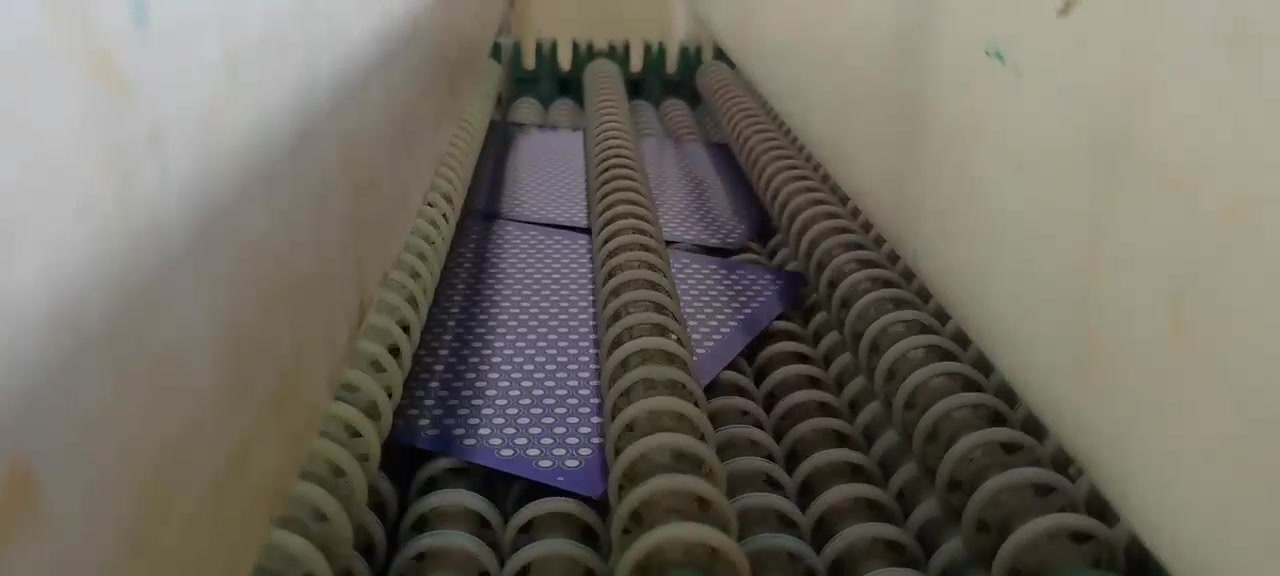
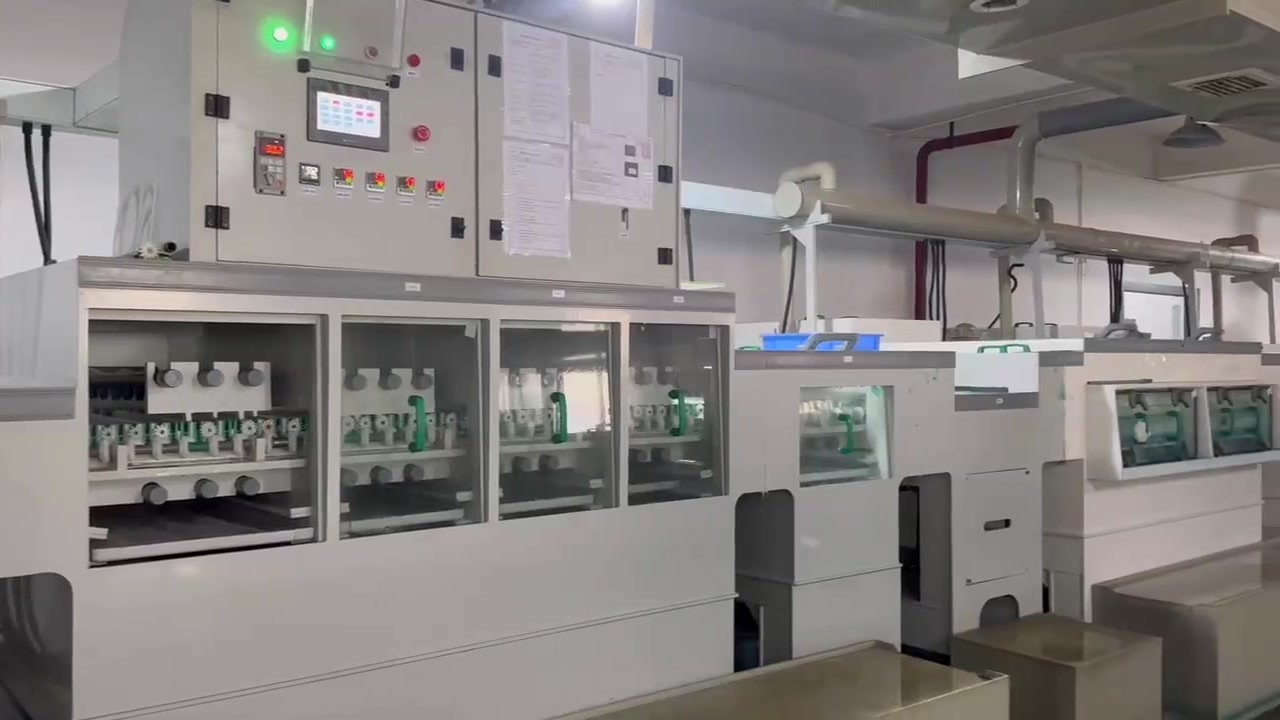
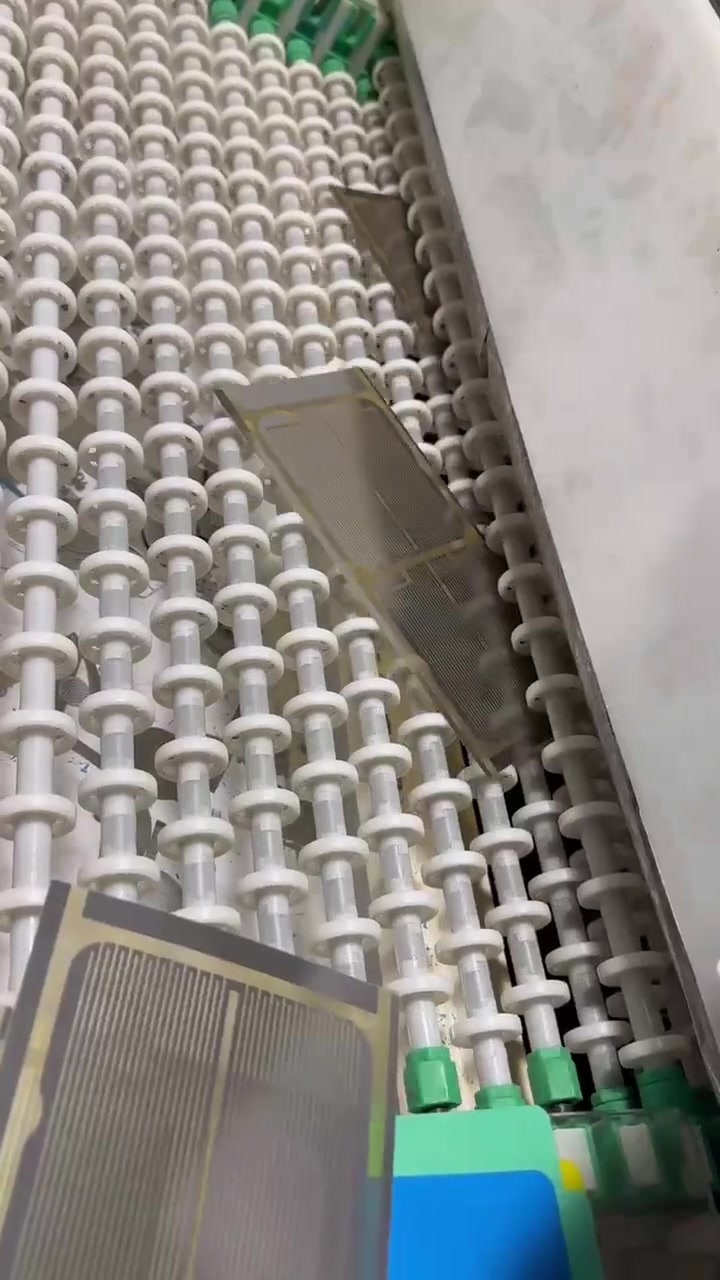
We have a full set of etching production equipment and mature processing technology. We can manufacture products in any shape with mesh sizes as small as 0.1mm, according to your requirements.

Our Advantage
Factory Direct Shipping
Our products undergo 100% QC checks before shipment, and we ensure compliance with international standards. If you require specific certifications for your target market, just let us know, and we'll meet those requirements.
Experienced Design and Manufacturing Team
We work closely with customers from the design phase to help avoid potential product flaws, ensuring both the functionality and design meet expectations.
Excellent Supply Chain Management
We can quickly adjust production schedules to meet your urgent deadlines, whether it's for large bulk orders or smaller rush orders.
OEM & ODM Support
We offer the option to print your logo or other customizations.
Strict Quality Control
Our products undergo 100% QC checks before shipment, and we ensure compliance with international standards. If you require specific certifications for your target market, just let us know, and we'll meet those requirements.
Certificate
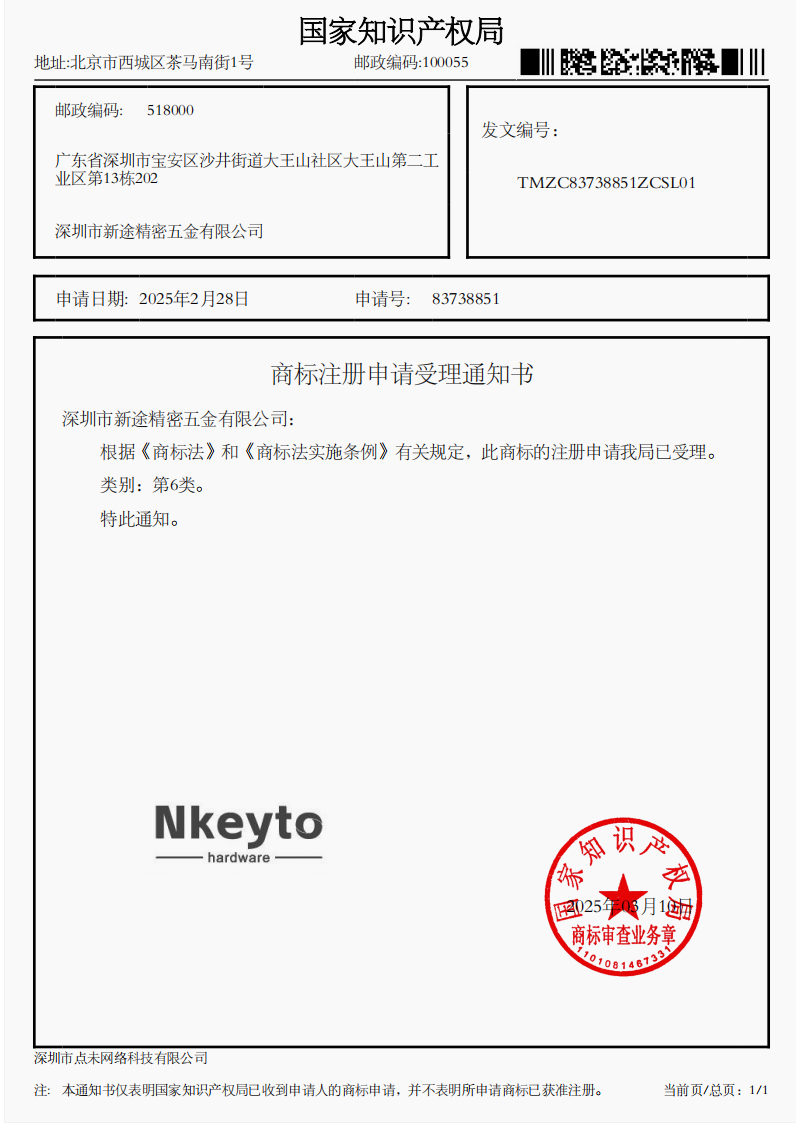
商标6类

9001
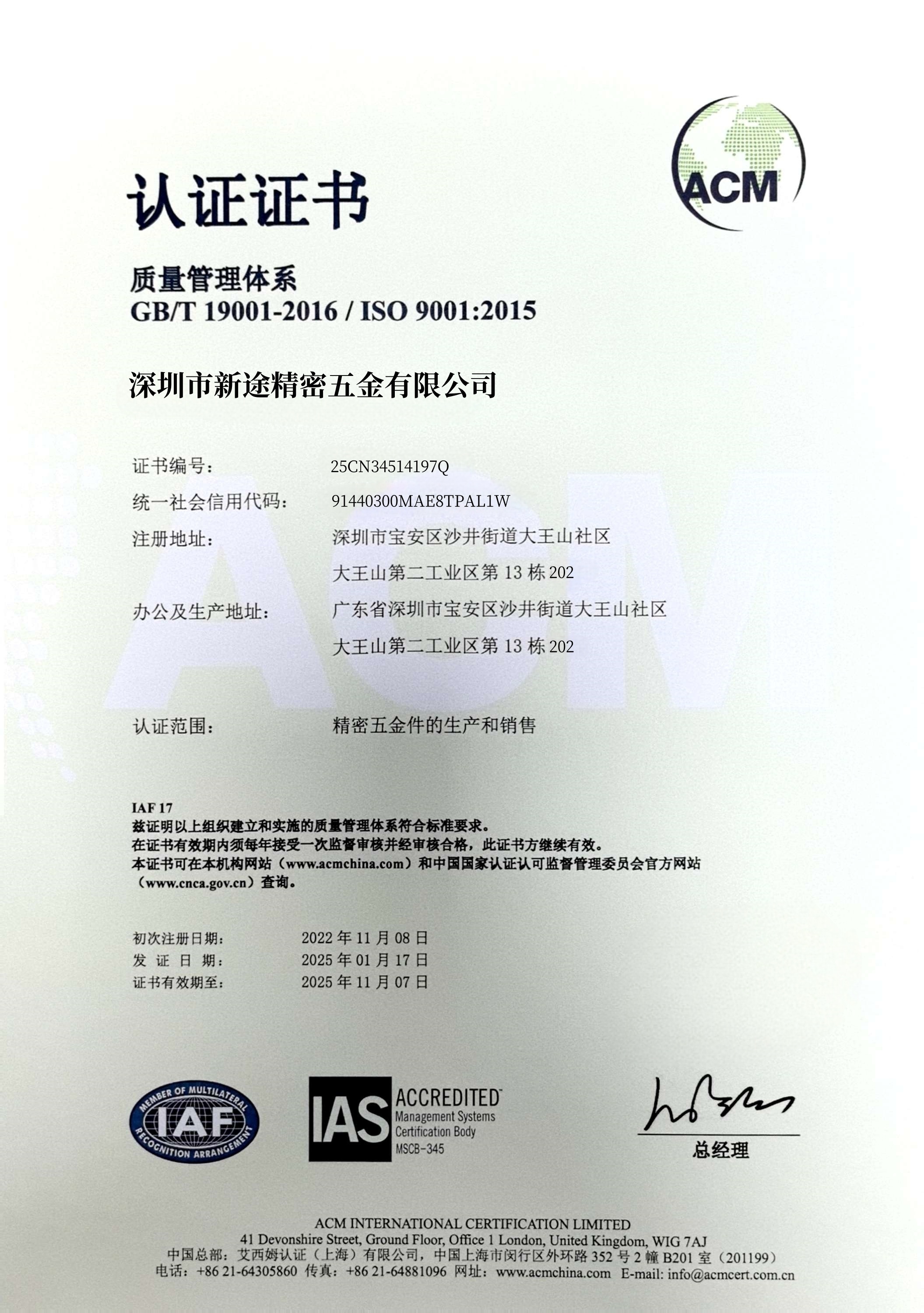
质量认证


Related Products

Shenzhen Nkeyto Precision Hardware Co., Ltd. is a factory specializing in precision hardware processing, committed to providing customers with high-quality products and services.We look forward to working with you.
Contact Us

E-mail: luna@nkeyto.com

Tel: +1 213-221-9094

Add: 13th Building, 202, Dawangshan Second Industrial Zone, Dawangshan Community, Shajing Street, Bao'an District, Shenzhen, Guangdong Province
Powered by: CEglobal
Copryright © 2025 Shenzhen Xintu Precision Hardware Co., Ltd.




Back To Top