



Complex Geometric Etched Mesh Screens for Aerospace Precision Equipment
Category:
Key Words:
Product parameters
Product Name | Custom Formed Metal Filter Mesh Chemical Etching and Stamping OEM |
Also Known As | Speaker Grille |
Stamped Grille | |
Stainless Steel Grille | |
Audio Grille | |
Material | Stainless Steel (SUS304 / SUS316), Aluminum, Brass |
Manufacturing Process | Chemical Etching / Laser Cutting / CNC Machining / Precision Stamping |
Surface Treatment | Electrophoretic Coating (E-coating), Electroplating, Powder Coating |
Thickness | 0.05 mm – 1.0 mm |
Hole Diameter | 0.3 mm – 5.0 mm |
Open Area | 30% – 70% |
Hole Pattern | Round / Hexagon / Custom |
Shape | Ring / Dome / Flat / Custom |
Surface Finish | Matte / Black Coating / Brushed / Mirror Polishing |
Tolerance | ±0.01 mm – ±0.05 mm |
Feature | Dust Protection / Sound Transmission / Speaker Protection |
Customization | OEM & ODM Available |
Logo | Laser Marking / Stamping / Etching |
Product Description
This complex geometric etched mesh is used in aerospace precision equipment, offering high accuracy and intricate patterns. It can be combined with forming processes to achieve functional structures for demanding applications.
Why Material Selection Matters for Complex Geometries
When designing complex geometric etched mesh, the material is the canvas. Unlike standard square or round holes, intricate patterns (like hexagonal, floral, or fluid-dynamic shapes) place unique stresses on the metal sheet. The material must etch uniformly in all directions to maintain the integrity of sharp corners and fine details. A poor choice can lead to "undercutting" (where the hole becomes larger than intended) or weak points that break during handling.
Stainless Steel Shims (Most Common)
Stainless Steel 304 remains the go-to for most aerospace mesh and precision screens due to its consistent etching rate. It holds fine details exceptionally well, making it perfect for the intricate patterns required in fluid dynamics or acoustic applications.
Other Common Shim Materials
- Copper & Brass: Frequently used for screen mesh in EMI/RFI shielding applications. The ductility of copper allows for very complex, tightly packed patterns without tearing.
- Aluminum: Ideal for lightweight aerospace applications where the geometric mesh serves as a structural skin or decorative vent.
- Nickel Alloys: Used when the complex mesh must operate in high-heat environments, such as turbine filters.
How to Choose the Right Shim Material
- Detail Resolution: How fine are the lines? Copper allows for slightly finer features than steel due to its etching characteristics.
- Environmental Exposure: Will the complex shape trap moisture? If so, corrosion-resistant alloys like SS316 or Titanium are mandatory.
- Rigidity vs. Flexibility: Does the geometry need to be rigid (thick SS) or flexible (thin Cu)?
Material vs Application Overview
Material | Best Application | Key Benefit |
SS 304 | Aerospace Vents, Acoustic Screens | High strength, holds complex shapes |
Copper | EMI Shielding, Decorative Grilles | Excellent etching resolution, conductive |
Aluminum | Lightweight Panels | Low density, good for large surface areas |
Material & Manufacturing Compatibility
Photo etching is the only viable method for producing these complex geometries without mechanical stress. Hard tooling (stamping) cannot easily produce intricate, non-repeating patterns. We adjust our exposure and etching times based on the material's grain structure to ensure that even the most complex etched mesh patterns are reproduced with 100% fidelity to the CAD design.
Custom Material Options
We can process clad metals (e.g., copper-clad steel) to create mesh screens that offer the strength of steel with the conductivity of copper on the surface.
CTA
Have a complex design that standard punching can't handle?
Contact Luna at NKEYTO for a feasibility study on your complex mesh patterns.
WhatsApp: 12132219094
Questions and Answers
FAQ
Q: Can you etch non-standard shapes like stars or logos?
A: Yes. Since we use digital tooling (photochemical etching), there is no hard tooling cost. We can etch any shape—logos, text, or complex fluidic channels—into the mesh.
Q: How does material thickness affect the geometric accuracy?
A: Thinner materials generally yield higher accuracy. For thick plates, we compensate for the "etch factor" (sideways etching) to ensure the final geometry matches your drawing.
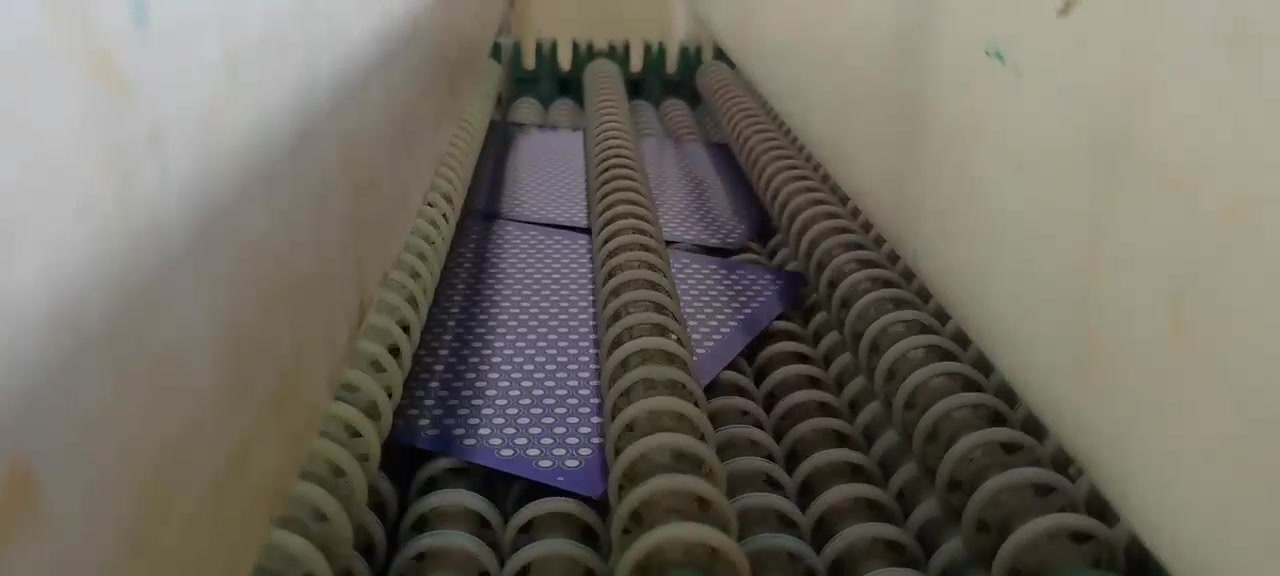
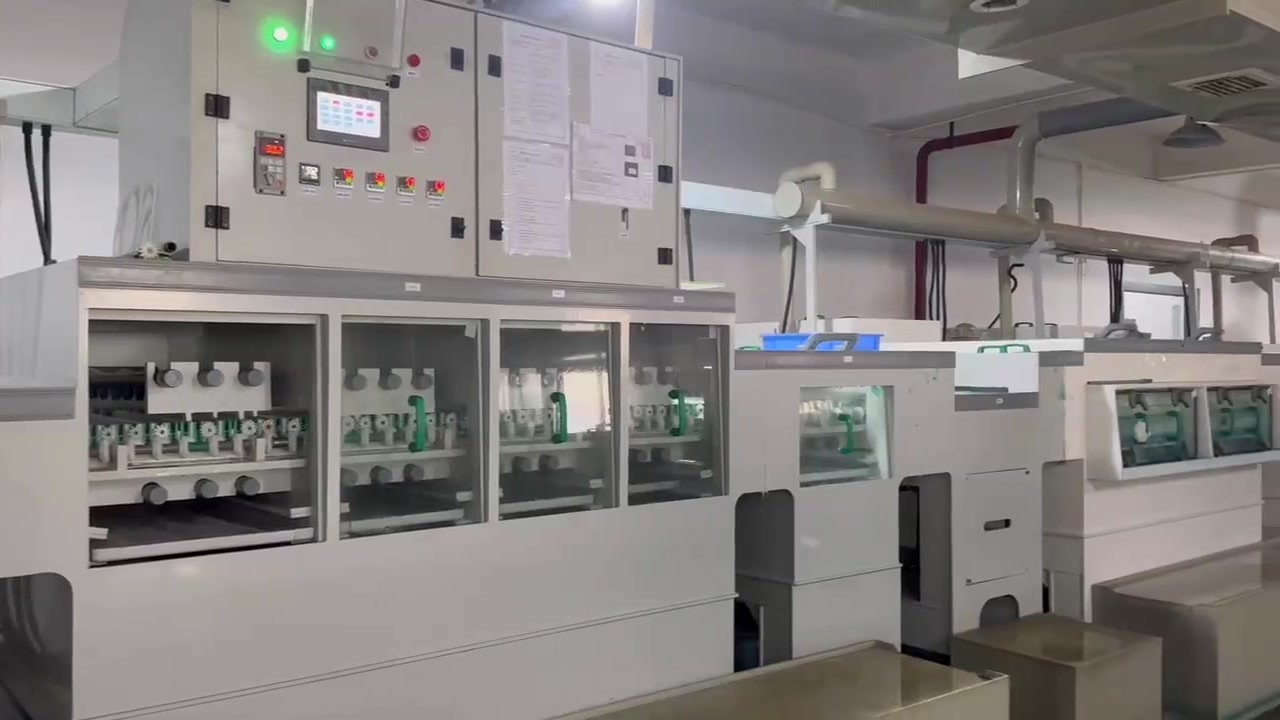
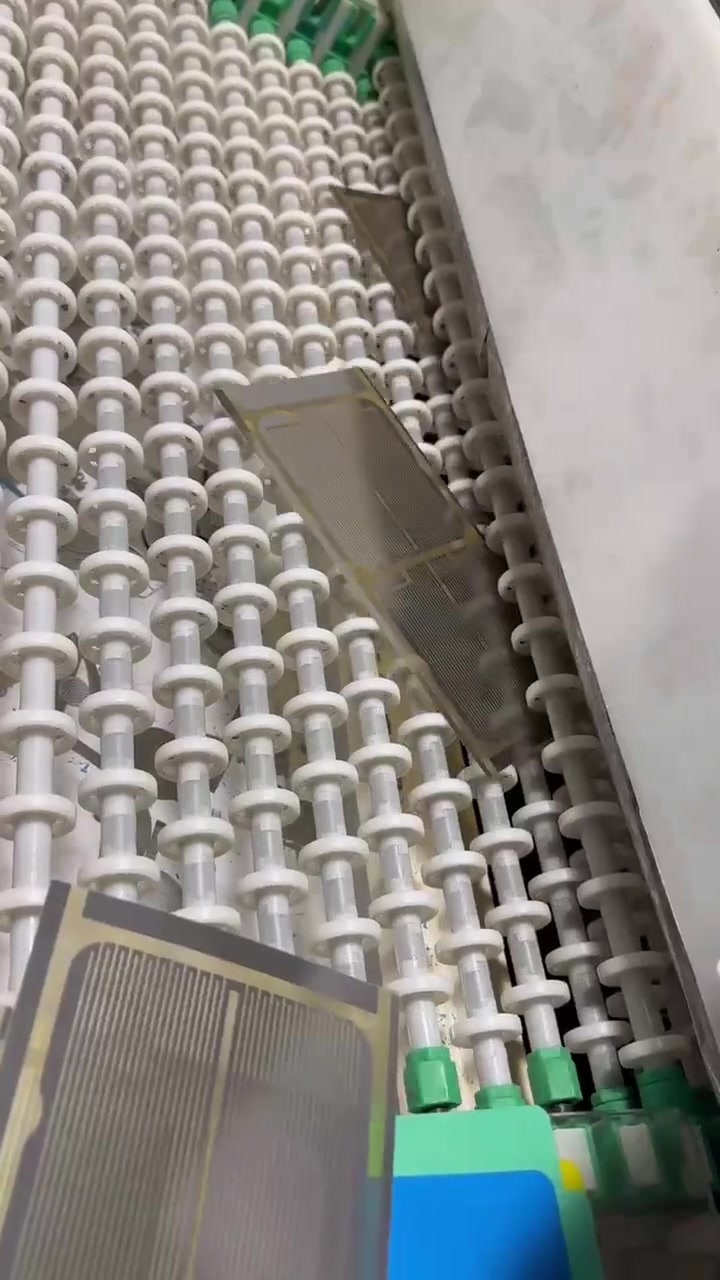
Factory Description
We have a full set of etching production equipment and mature processing technology. We can manufacture products in any shape with mesh sizes as small as 0.1mm, according to your requirements.

Our Advantage
Factory Direct Shipping
Our products undergo 100% QC checks before shipment, and we ensure compliance with international standards. If you require specific certifications for your target market, just let us know, and we'll meet those requirements.
Experienced Design and Manufacturing Team
We work closely with customers from the design phase to help avoid potential product flaws, ensuring both the functionality and design meet expectations.
Excellent Supply Chain Management
We can quickly adjust production schedules to meet your urgent deadlines, whether it's for large bulk orders or smaller rush orders.
OEM & ODM Support
We offer the option to print your logo or other customizations.
Strict Quality Control
Our products undergo 100% QC checks before shipment, and we ensure compliance with international standards. If you require specific certifications for your target market, just let us know, and we'll meet those requirements.
Certificate
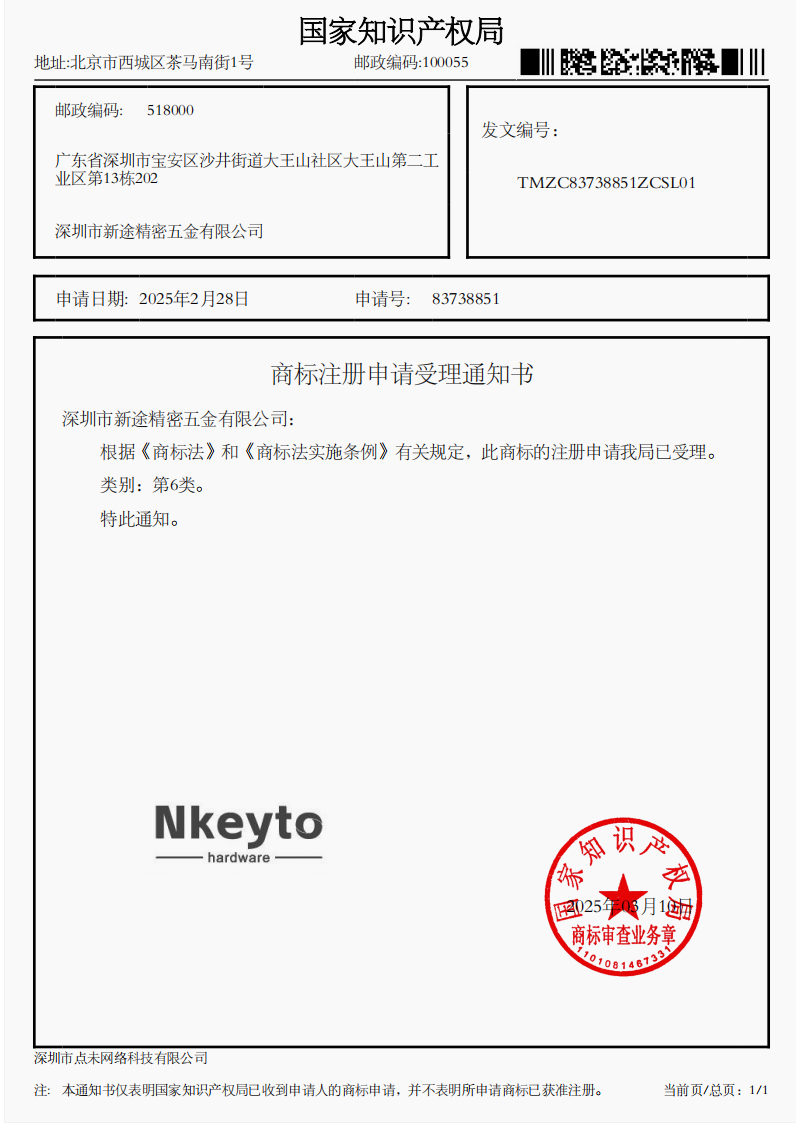
商标6类

9001
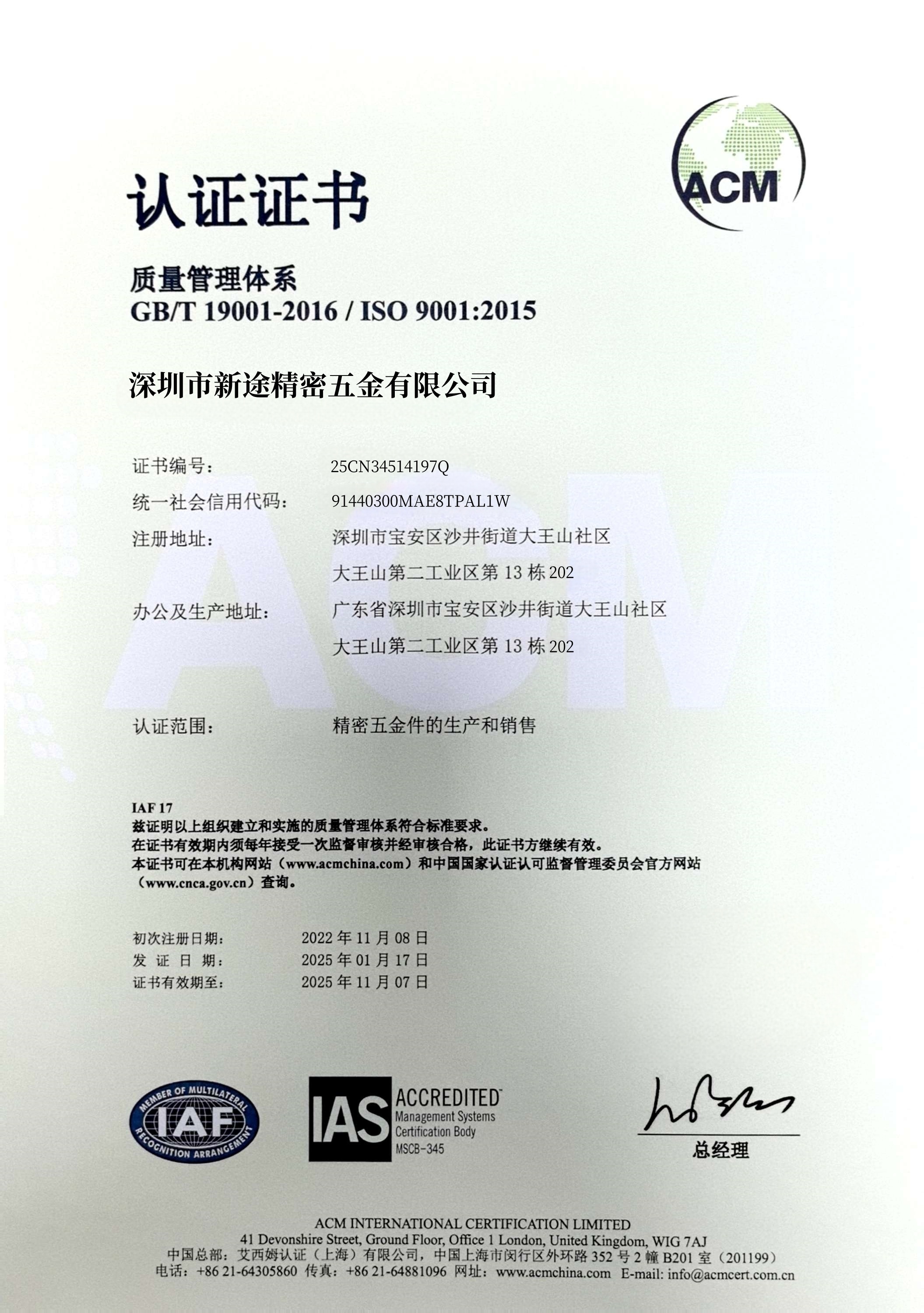
质量认证


Related Products

Shenzhen Nkeyto Precision Hardware Co., Ltd. is a factory specializing in precision hardware processing, committed to providing customers with high-quality products and services.We look forward to working with you.
Contact Us

E-mail: luna@nkeyto.com

Tel: +1 213-221-9094

Add: 13th Building, 202, Dawangshan Second Industrial Zone, Dawangshan Community, Shajing Street, Bao'an District, Shenzhen, Guangdong Province
Powered by: CEglobal
Copryright © 2025 Shenzhen Xintu Precision Hardware Co., Ltd.




Back To Top