



Copper Vapor Chamber Heat Spreader for Electronics Cooling
Category:
Key Words:
Product parameters
Parameter | Specification / Range |
Material | Copper (C1020 / C1100) |
Thickness | 0.3 – 3.0 mm (customizable) |
Structure Type | Flat Vapor Chamber / Formed Structure |
Working Fluid | Deionized Water (standard) |
Wick Structure | Sintered powder / Mesh / Groove (customizable) |
Thermal Conductivity | High thermal conductivity (design dependent) |
Heat Transfer Efficiency | Significantly higher than solid copper plate |
Flatness | ≤ 0.05 mm |
Surface Treatment | Nickel plating / Tin plating / Bare copper |
Sealing Method | Laser welding / Diffusion bonding |
Operating Temperature | -40°C to 120°C (customizable) |
Heat Source Area | Custom design based on application |
Application | Electronics cooling / Automotive / Industrial |
OEM / ODM | Supported |
Drawing Format | PDF / CAD / STEP / STP |
Sample | Available |
Production Lead Time | 10 – 20 days |
Product Description
Product Description
Copper vapor chamber heat spreader designed for high-efficiency thermal management in modern electronic devices. Compared with traditional copper cooling plates, this vapor chamber uses phase-change heat transfer to rapidly spread heat from localized hotspots, improving temperature uniformity and overall cooling performance. With optimized wick structures and sealed copper construction, it functions as a high-performance heat spreader, cooling plate, and thermal solution component.
Application Field
Widely used in smartphone cooling systems, laptop and GPU heat dissipation, and high-power electronic modules. This copper vapor chamber and heat spreader is also applied in communication devices and compact electronics where efficient cooling plate solutions are critical.
How Copper Vapor Chambers Revolutionize Electronics Cooling
In the relentless pursuit of faster, smaller, and more powerful electronic devices, thermal management has emerged as a critical bottleneck. As processors in smartphones, laptops, and 5G modules shrink in size while their performance skyrockets, the heat flux—the amount of heat generated per unit area—has reached unprecedented levels. Traditional cooling methods, such as solid copper plates or simple heat sinks, are increasingly struggling to dissipate this concentrated heat efficiently. This is where the Vapor Chamber, a sophisticated passive heat transfer device, transforms the landscape of thermal solutions.
At NKEYTO, we understand that managing heat is not just about moving it from point A to point B; it is about spreading it effectively to maximize the utility of your cooling system.
Beyond Solid Conduction: The Phase-Change Advantage
To appreciate the innovation of a Copper Vapor Chamber, one must first understand the limitations of traditional solid metal conductors. A solid copper plate relies solely on thermal conduction. While copper is an excellent conductor (approx. 400 W/m·K), it has physical limits. When a high-performance chip generates a "hotspot"—a tiny area of intense heat—a solid plate cannot spread that heat laterally fast enough. The result is a significant temperature gradient, where the center of the chip overheats while the edges of the heatsink remain relatively cool.
Our Vapor Chamber technology overcomes this by utilizing Phase-Change Heat Transfer. Instead of relying on the atomic vibration of solid metal, we use the latent heat of vaporization of a working fluid (typically water) to transport energy. This mechanism allows a Vapor Chamber to achieve an effective thermal conductivity that is significantly higher than that of solid copper—often exceeding 5,000 W/m·K depending on the design.
The Mechanics of a Vapor Chamber
A Vapor Chamber is essentially a flat, sealed enclosure with a vacuum inside. The inner walls are lined with a porous wick structure, which is crucial for the device's operation. The process operates in a continuous, passive cycle:
- Evaporation (Heat Absorption): When heat is applied to the bottom of the chamber (the evaporator zone), the liquid within the wick structure absorbs this energy and instantly vaporizes. This phase change absorbs a massive amount of heat (latent heat) without a significant rise in temperature.
- Vapor Transport: The resulting vapor, now at a slightly higher pressure, expands rapidly to fill the vacuum space. It travels at near-sonic speeds to the cooler areas of the chamber (the condenser zone).
- Condensation (Heat Release): Upon contacting the cooler upper surfaces—connected to a heatsink or the device chassis—the vapor releases its latent heat and condenses back into a liquid.
- Capillary Return: The liquid is then drawn back to the hot evaporator zone through the wick structure via capillary action, ready to repeat the cycle.
Vapor Chamber vs. Traditional Cooling Plate: A Performance Comparison
The primary advantage of a Copper Vapor Chamber over a traditional solid Cooling Plate lies in its ability to provide superior Temperature Uniformity.
In high-power electronics, "hotspots" can trigger thermal throttling, forcing the device to slow down to protect itself. Because a Vapor Chamber spreads heat in two dimensions (a planar spread) rather than just one (linear conduction), it effectively turns a concentrated hotspot into a uniform thermal load across the entire surface of the heatsink.
Feature | Solid Copper Plate | Copper Vapor Chamber |
|---|---|---|
Heat Transfer Mode | Solid Conduction | Phase-Change (Evaporation/Condensation) |
Effective Conductivity | ~400 W/m·K | > 4,000 W/m·K (Application dependent) |
Heat Spreading | Linear (1D) | Planar (2D) |
Hotspot Handling | Poor (High thermal resistance) | Excellent (Low thermal resistance) |
Weight | Heavy | Lighter (Hollow structure) |
Optimizing the Wick Structure for Efficiency
The performance of any Thermal Solution based on vapor chambers is heavily dependent on the internal wick structure. The wick must balance two competing forces: capillary pressure (to pump the liquid back against gravity or flow resistance) and permeability (to allow the liquid to flow easily).
At our manufacturing facility, we leverage advanced Chemical Etching and sintering processes to create optimized wick structures. Whether using sintered copper powder, mesh, or grooved channels, precision is key. For instance, a finely tuned sintered wick can provide the high capillary force needed for high-heat-flux applications, ensuring the device does not "dry out" at the heat source.
Applications in Modern Electronics
The shift toward Vapor Chamber technology is most visible in sectors where space is limited, and power is high.
- Smartphones & Tablets: As mobile processors approach desktop-level performance, thin Vapor Chambers are essential to prevent the phone's surface from becoming too hot to touch while keeping the processor cool.
- Laptops & GPUs: High-end gaming laptops and graphics cards utilize Vapor Chambers to spread heat from the GPU die across large fin stacks, allowing for thinner device profiles without sacrificing cooling performance.
- 5G & Communication Modules: Base stations and compact communication modules rely on these Heat Spreaders to manage the continuous thermal loads of high-frequency signal processing.
Precision Manufacturing: The NKEYTO Standard
Designing a Vapor Chamber is complex, but manufacturing one requires even greater precision. The integrity of the vacuum seal and the consistency of the internal structure are non-negotiable.
We specialize in the precision manufacturing required for these advanced thermal components. By utilizing Chemical Etching, we can produce intricate internal support structures and wick geometries that are impossible to achieve with traditional stamping or machining. This ensures that every Copper Vapor Chamber we produce meets rigorous standards for flatness, structural integrity, and thermal performance.
Ready to Optimize Your Thermal Management?
Don't let heat limit your device's potential. At NKEYTO, we specialize in high-precision Copper Vapor Chambers and custom thermal solutions tailored to your specific requirements. Whether you need a prototype for a new smartphone design or a mass-produced cooling module for automotive electronics, our team is ready to help.
Contact us today for a quote or technical consultation:
- Contact Person: Luna
- WhatsApp: 12132219094
- Company: Shenzhen NKEYTO Precision Hardware Co., Ltd.
Let us help you turn up the performance while keeping the temperature down.
Questions and Answers
Frequently Asked Questions (FAQ)
Q: How does a Vapor Chamber differ from a Heat Pipe?
A: While both use phase-change technology, a heat pipe transfers heat linearly (1D) from one end to the other. A Vapor Chamber transfers heat planarly (2D), spreading it from a central source outward across a surface. This makes Vapor Chambers superior for spreading heat from small, concentrated chips.
Q: Can Vapor Chambers work in any orientation?
A: Yes. Unlike some gravity-dependent cooling methods, the capillary wick structure inside a Vapor Chamber allows it to function effectively regardless of its orientation, although performance can vary slightly based on the specific wick design and gravity's effect on fluid return.
Q: What materials are used in your Vapor Chambers?
A: We primarily use high-purity copper for the envelope and the wick structure due to its excellent thermal conductivity and compatibility with water as a working fluid. This ensures maximum efficiency and long-term reliability.
Q: Is a Vapor Chamber suitable for low-power devices?
A: Generally, Vapor Chambers are most cost-effective and necessary for high heat flux applications (typically over 50-100 W/cm²). For very low-power devices, a simple aluminum or copper heatsink may suffice. However, for high-performance electronics, the Vapor Chamber is the industry standard for thermal management.
Factory Description
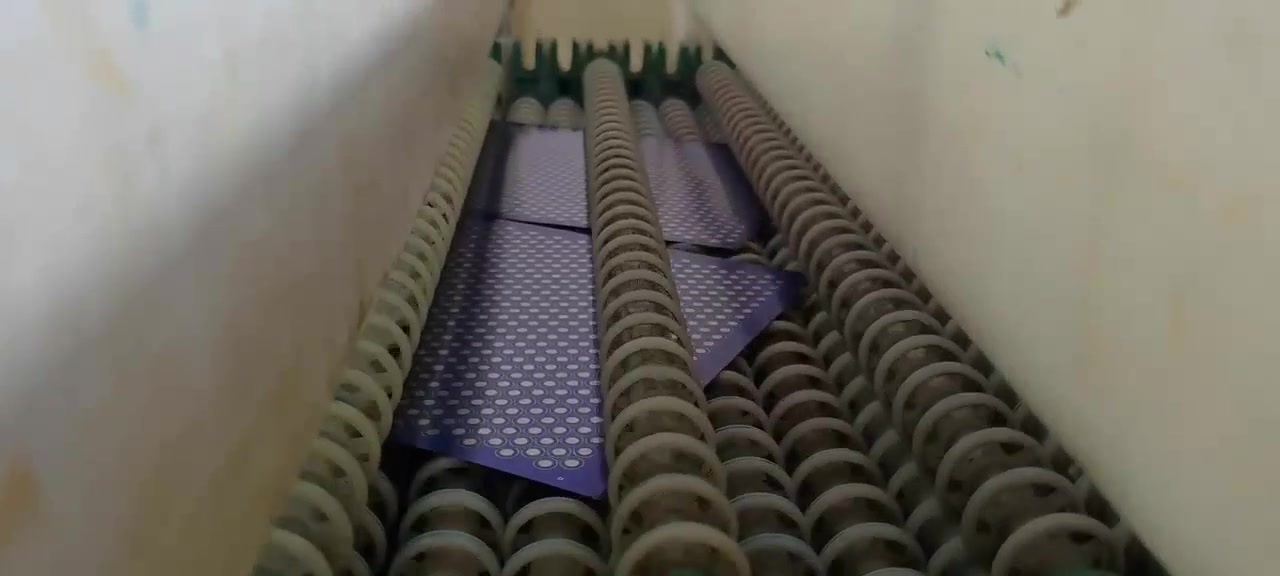
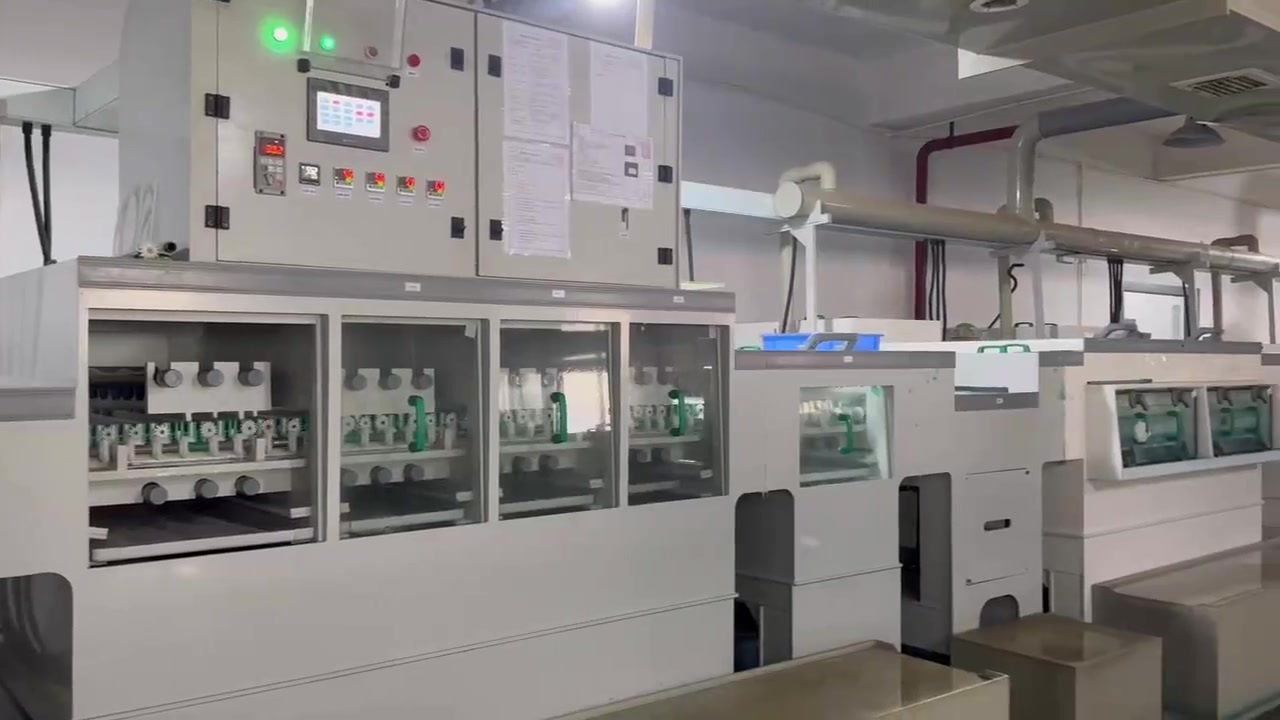
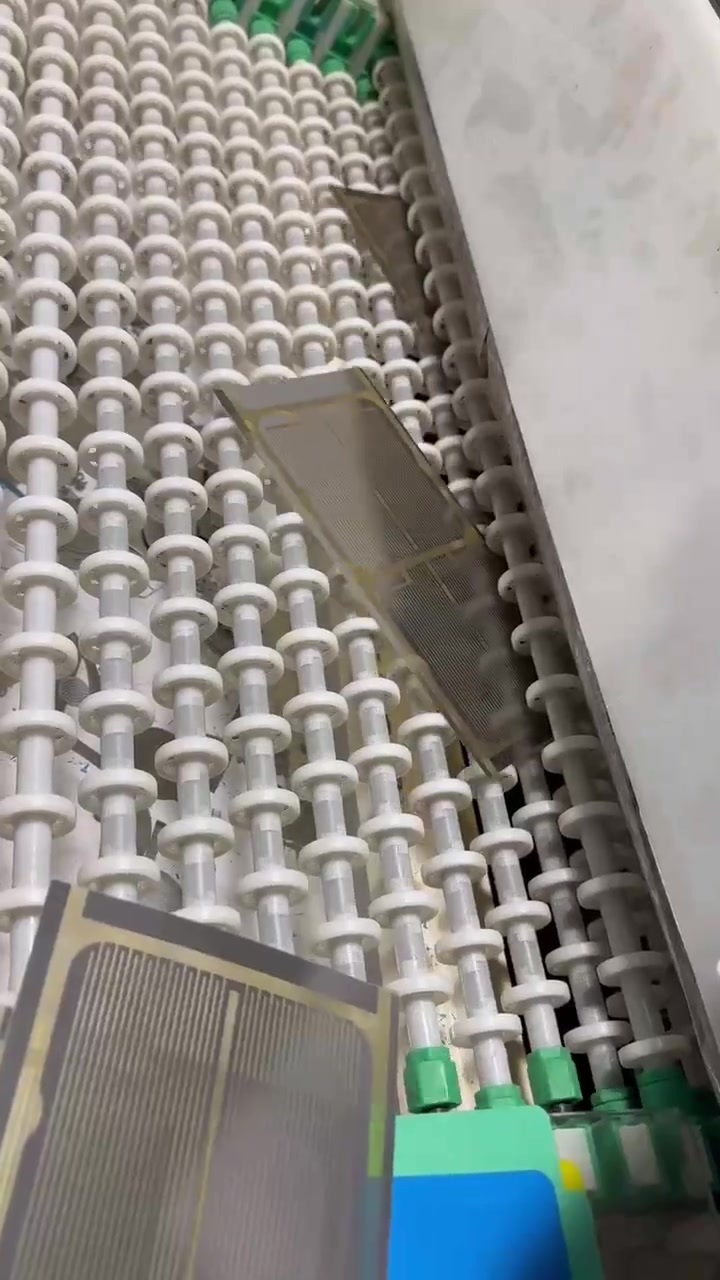
We have a full set of etching production equipment and mature processing technology. We can manufacture products in any shape with mesh sizes as small as 0.1mm, according to your requirements.

Our Advantage
Factory Direct Shipping
Our products undergo 100% QC checks before shipment, and we ensure compliance with international standards. If you require specific certifications for your target market, just let us know, and we'll meet those requirements.
Experienced Design and Manufacturing Team
We work closely with customers from the design phase to help avoid potential product flaws, ensuring both the functionality and design meet expectations.
Excellent Supply Chain Management
We can quickly adjust production schedules to meet your urgent deadlines, whether it's for large bulk orders or smaller rush orders.
OEM & ODM Support
We offer the option to print your logo or other customizations.
Strict Quality Control
Our products undergo 100% QC checks before shipment, and we ensure compliance with international standards. If you require specific certifications for your target market, just let us know, and we'll meet those requirements.
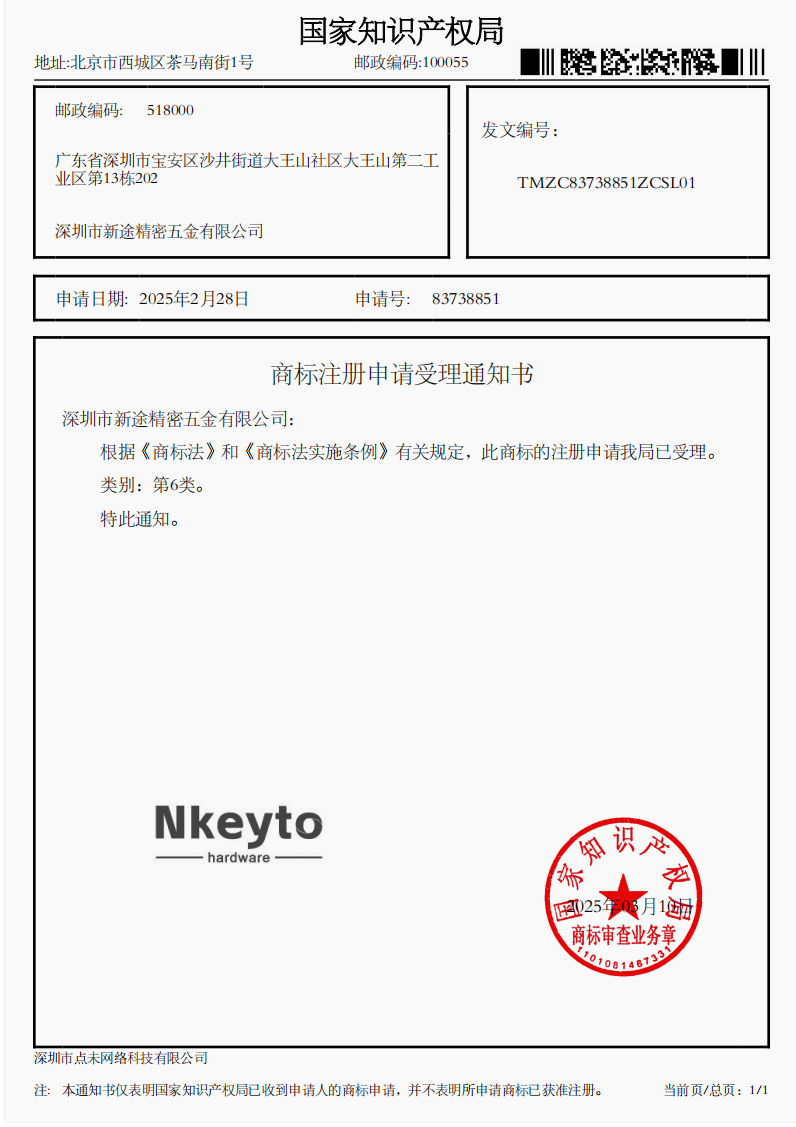
Certificate
商标6类

9001
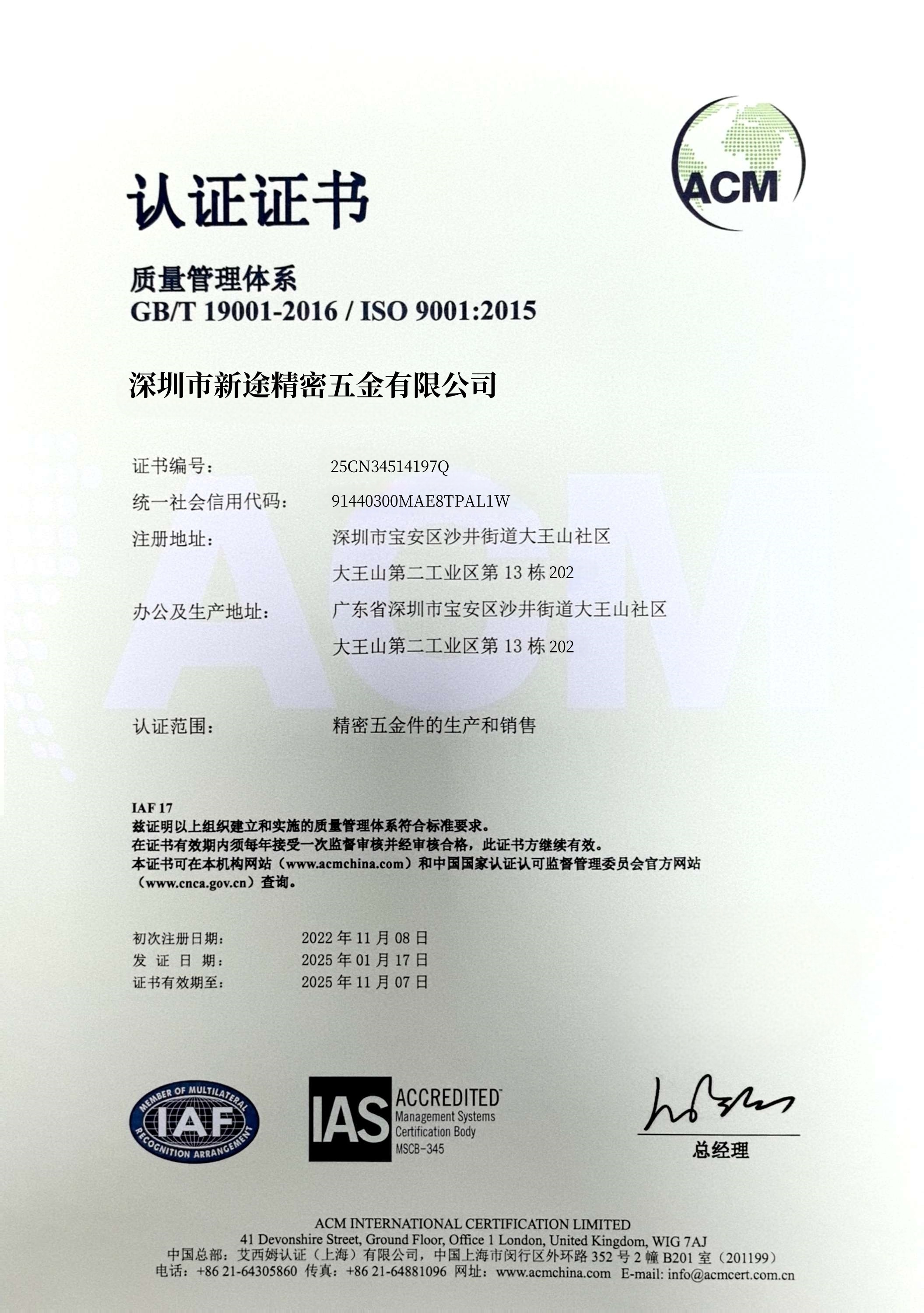
质量认证


Related Products

Shenzhen Nkeyto Precision Hardware Co., Ltd. is a factory specializing in precision hardware processing, committed to providing customers with high-quality products and services.We look forward to working with you.
Contact Us

E-mail: luna@nkeyto.com

Tel: +1 213-221-9094

Add: 13th Building, 202, Dawangshan Second Industrial Zone, Dawangshan Community, Shajing Street, Bao'an District, Shenzhen, Guangdong Province
Powered by: CEglobal
Copryright © 2025 Shenzhen Xintu Precision Hardware Co., Ltd.




Back To Top