



EMI Shielding Metal Cover for Electronic Devices
Category:
Key Words:
Product parameters
Parameter | Typical Range / Specification |
Product Name | Metal Sealing Cover / Packaging Cover / Shielding Lid |
Material | Stainless Steel 304 / 316 / 316L (others on request) |
Thickness | 0.05 – 1.0 mm |
Structure Type | Flat Plate / Edge Formed / Pressed Structure |
Surface Condition | Smooth / Clean / Burr-free |
Flatness | ≤ 0.02 – 0.05 mm (depending on size) |
Tolerance | ±0.01 – ±0.05 mm |
Edge Condition | Smooth edge / No sharp burrs |
Corner Type | Rounded corner / Chamfered edge |
Processing Method | Chemical Etching / Stamping / CNC |
Surface Treatment | Passivation / Polishing / Brushing / Coating (optional) |
Welding Compatibility | Suitable for laser welding / resistance welding |
Sealing Method | Adhesive bonding / Welding / Mechanical fitting |
Shape | Rectangular / Square / Custom geometry |
Size | Fully customizable |
OEM / ODM | Fully supported |
Drawing Format | CAD / PDF / DWG / DXF |
Application | Electronic packaging / EMI shielding / Module sealing |
Product Description
Product Description
This EMI shielding metal cover is designed to protect electronic devices from electromagnetic interference. With precise structure and excellent surface quality, it ensures effective shielding performance while maintaining stable mechanical properties. It is ideal for applications requiring signal integrity and electromagnetic compatibility.
Applications
Communication equipment
RF and wireless modules
PCB shielding covers
Electronic control systems
High-frequency devices
Ensuring Signal Integrity: How EMI Shielding Covers Solve EMC Challenges in 5G Devices
In the rapidly evolving landscape of 5G and IoT, electronic devices are becoming faster, smaller, and more complex. However, with increased speed and density comes a significant challenge: Electromagnetic Interference (EMI). For R&D engineers, ensuring Signal Integrity is no longer just a checkbox—it is a critical requirement for product functionality.
When high-frequency signals clash, devices can malfunction or fail certification tests. This is where precision-engineered EMI Shielding Solutions play a pivotal role. In this post, we explore how metal covers act as the guardians of electromagnetic compatibility (EMC) and why material and process selection matters.
The Challenge: Noise in a High-Frequency World
As devices operate at higher frequencies, they generate more electromagnetic noise. This noise can couple into adjacent circuits, causing data corruption or signal loss.
To achieve Electromagnetic Compatibility, engineers must isolate sensitive components (like RF modules and processors) from noise sources. A robust RF Shielding Cover creates a "Faraday cage" effect, effectively blocking interference from entering or escaping the protected zone.
How Metal Covers Protect Signal Integrity
An EMI shielding cover works through two main mechanisms: reflection and absorption.
- Reflection: The conductive metal surface reflects incident electromagnetic waves away from the sensitive circuit.
- Grounding: For a shield to be effective, it must be properly grounded. The cover works in tandem with the PCB ground plane to divert noise currents safely away.
However, the effectiveness of this shield relies heavily on the physical quality of the cover. Gaps, warping, or poor contact points can act as slot antennas, leaking signals and defeating the purpose of the shield.
Material Selection: Stainless Steel vs. Copper Alloys
Choosing the right material is the first step in designing effective EMI Shielding Solutions.
Material | Characteristics | Best Application |
|---|---|---|
Stainless Steel (SUS304) | High strength, good corrosion resistance, moderate conductivity. Cost-effective. | General enclosures, structural shielding covers. |
Copper / Brass | Excellent electrical conductivity. Superior shielding effectiveness (SE). | High-frequency RF modules, sensitive analog circuits. |
Aluminum | Lightweight, good conductivity, easy to machine. | Consumer electronics where weight is a concern. |
At our factory, we help customers select the optimal material based on their specific frequency requirements and environmental constraints.
The Manufacturing Advantage: Precision is Key
A shielding cover is only as good as its fit. If the cover warps or has burrs, it creates gaps that compromise the shield.
We utilize Chemical Etching and Laser Cutting to manufacture high-precision EMI Shielding Metal Covers.
- Superior Flatness: Unlike stamping, which can induce stress and warping, our etching process is stress-free. This ensures the cover sits perfectly flat against the PCB or housing, minimizing leakage gaps.
- Complex Geometries: We can etch fine meshes or ventilation holes directly into the cover. This allows for airflow (thermal management) without sacrificing shielding performance, as long as the hole size is smaller than the wavelength of the interference.
- Rapid Prototyping: For R&D teams validating EMC designs, our laser cutting service allows for rapid iteration of shield geometries, helping you pass certification faster.
Surface Treatment for Enhanced Performance
To further improve the performance of an RF Shielding Cover, surface treatment is essential. We offer various plating options, such as Nickel, Tin, or Silver.
Plating serves two purposes:
- Improved Conductivity: A layer of silver or tin on top of a steel base can significantly lower surface resistance.
- Solderability: For covers that are soldered directly to the PCB (SMT shields), the plating ensures a reliable, low-resistance connection.
Conclusion
In the era of 5G, you cannot afford to overlook electromagnetic compatibility. A well-designed EMI Shielding Metal Cover is a cost-effective insurance policy for your device's performance. By combining the right materials with precision manufacturing, NKEYTO ensures your signals remain clean and your products remain compliant.
Need to solve EMC issues in your next design?
Let our engineers help you design the perfect shielding solution.
Contact Us:
- Company: NKEYTO (Shenzhen Xintu Precision Hardware Co., Ltd.)
- Contact Person: Luna
- WhatsApp: 12132219094
Questions and Answers
Frequently Asked Questions (FAQ)
Q1: How do I choose between a soldered shield and a snap-in cover?
Soldered shields (SMT) provide the best EMI protection as they create a continuous electrical bond. Snap-in covers are better for rework and repair but require careful design of the retention clips and grounding pads.
Q2: Can you add ventilation holes to the shielding cover?
Yes. Using chemical etching, we can create precise ventilation patterns. The key is to ensure the hole diameter is small enough (typically < λ/20) to prevent high-frequency waves from leaking through.
Q3: What is the typical shielding effectiveness (SE) of your metal covers?
Depending on the material and frequency, our metal covers can provide 30dB to 60dB (or higher) of attenuation. For extreme requirements, multi-layer or plated solutions are available.
Q4: Do you support custom shapes for irregular PCBs?
Absolutely. Our laser cutting and etching capabilities allow us to produce covers in virtually any 2D shape, ensuring a perfect fit for your specific PCB layout.
Factory Description
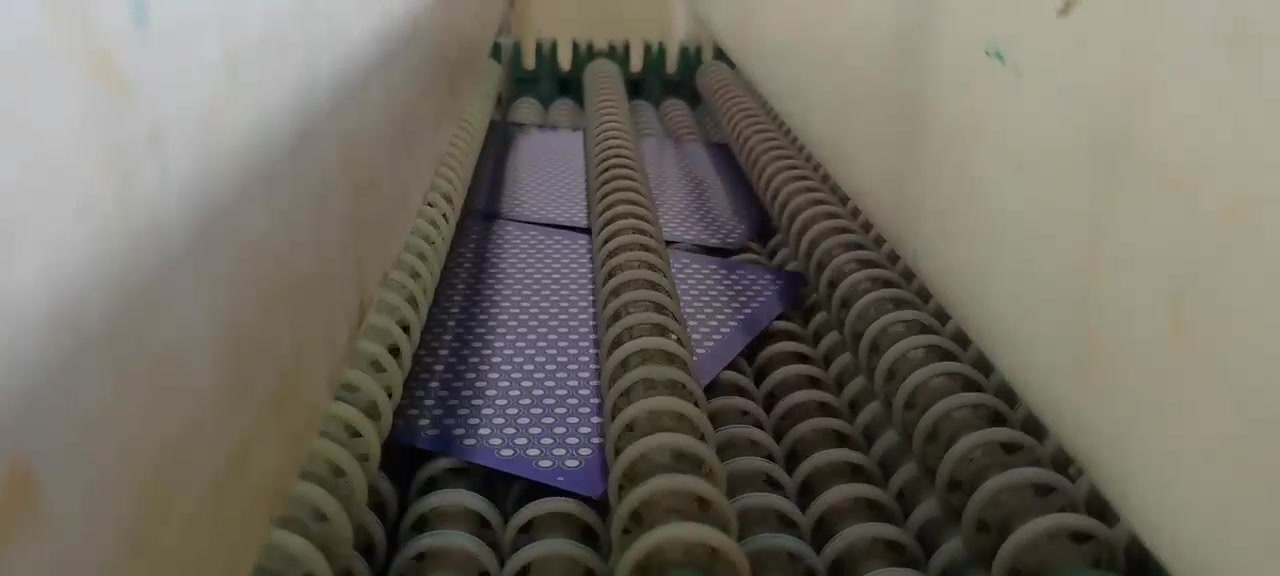
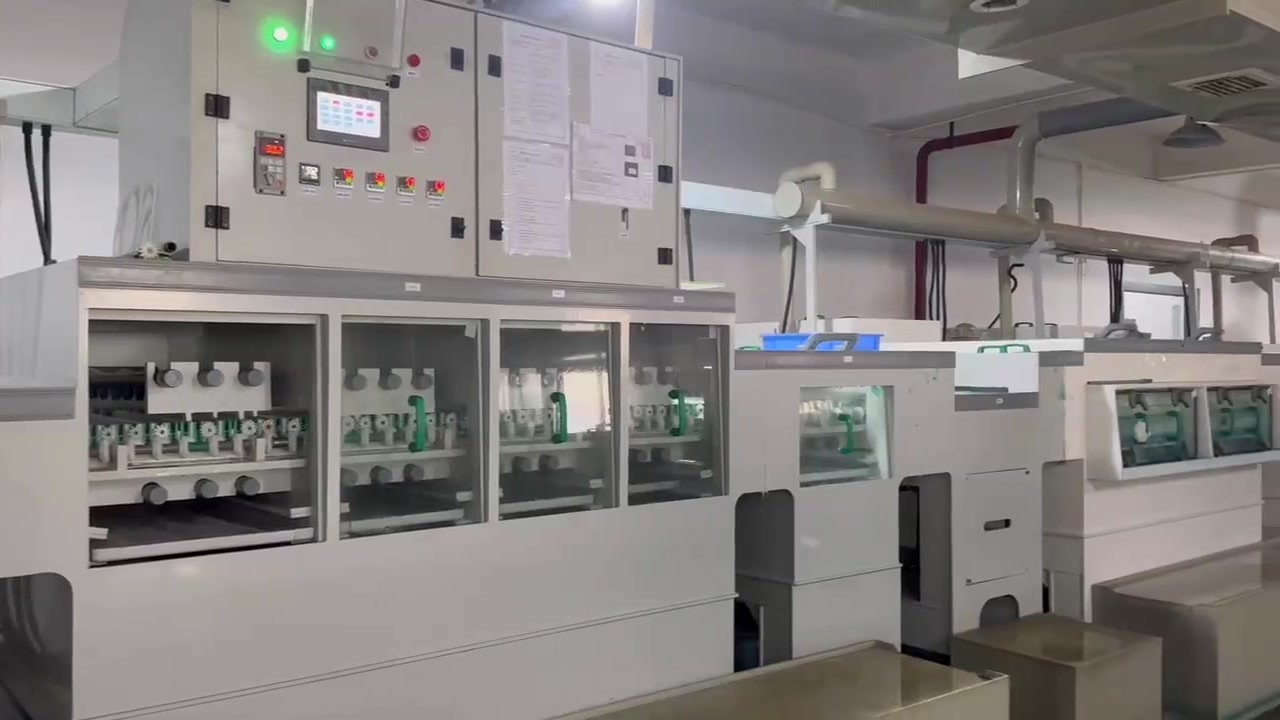
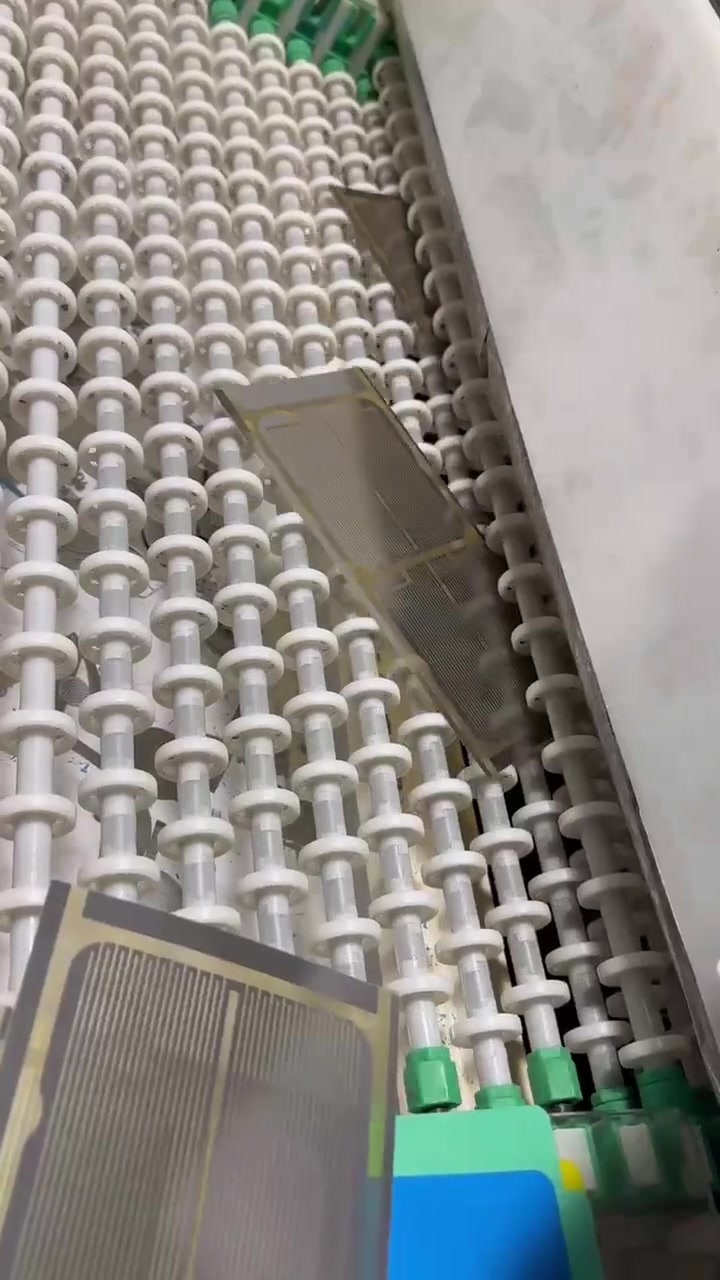
We have a full set of etching production equipment and mature processing technology. We can manufacture products in any shape with mesh sizes as small as 0.1mm, according to your requirements.

Our Advantage
Factory Direct Shipping
Our products undergo 100% QC checks before shipment, and we ensure compliance with international standards. If you require specific certifications for your target market, just let us know, and we'll meet those requirements.
Experienced Design and Manufacturing Team
We work closely with customers from the design phase to help avoid potential product flaws, ensuring both the functionality and design meet expectations.
Excellent Supply Chain Management
We can quickly adjust production schedules to meet your urgent deadlines, whether it's for large bulk orders or smaller rush orders.
OEM & ODM Support
We offer the option to print your logo or other customizations.
Strict Quality Control
Our products undergo 100% QC checks before shipment, and we ensure compliance with international standards. If you require specific certifications for your target market, just let us know, and we'll meet those requirements.
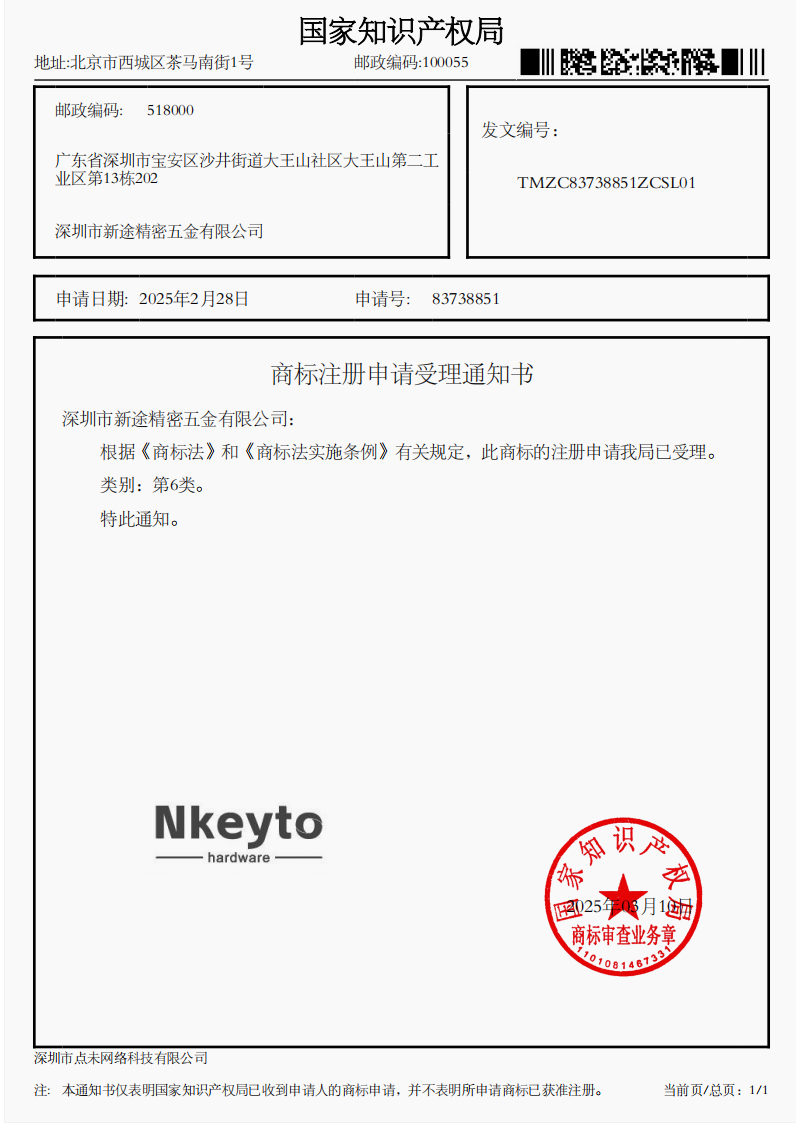
Certificate
商标6类

9001
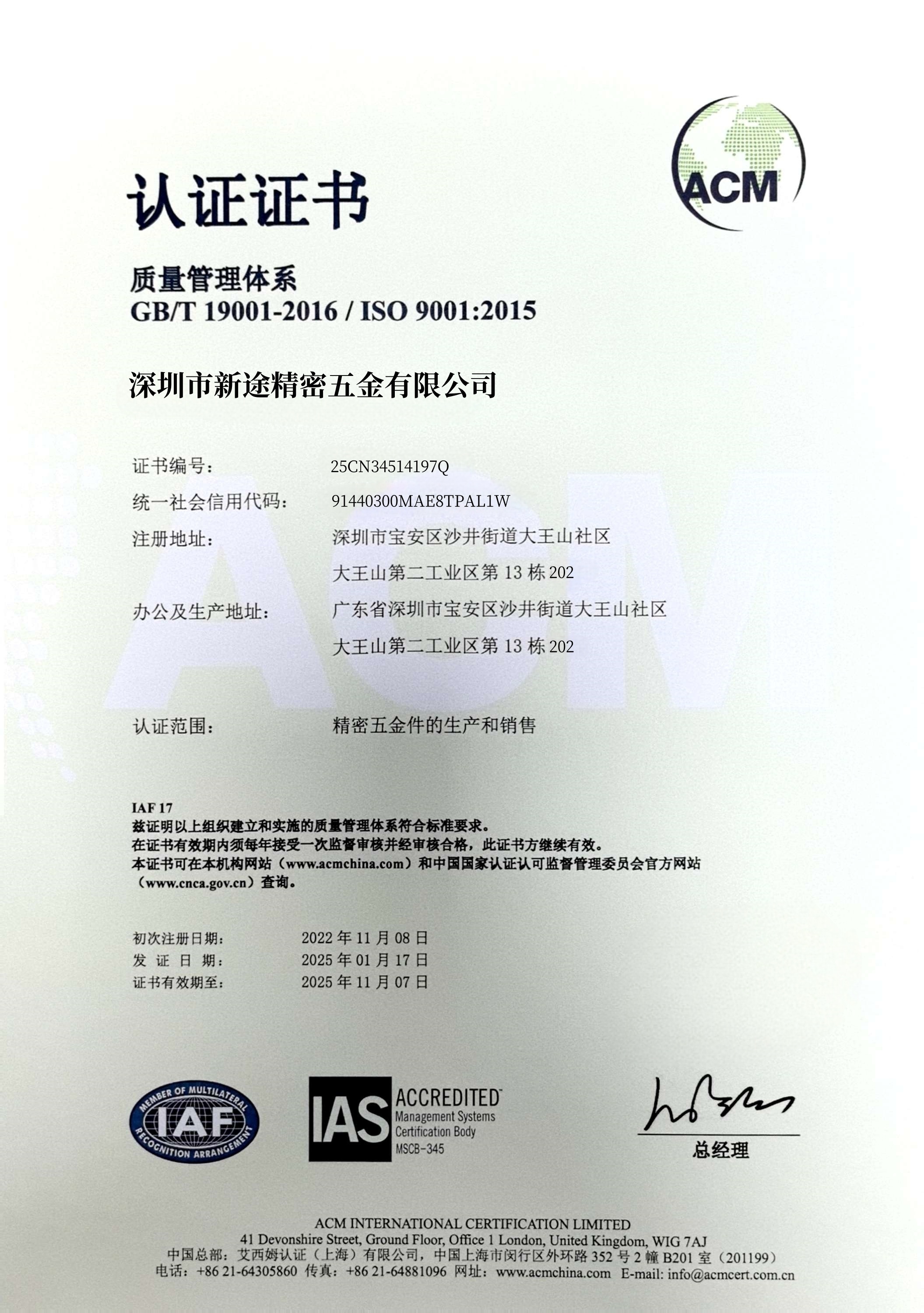
质量认证


Related Products

Shenzhen Nkeyto Precision Hardware Co., Ltd. is a factory specializing in precision hardware processing, committed to providing customers with high-quality products and services.We look forward to working with you.
Contact Us

E-mail: luna@nkeyto.com

Tel: +1 213-221-9094

Add: 13th Building, 202, Dawangshan Second Industrial Zone, Dawangshan Community, Shajing Street, Bao'an District, Shenzhen, Guangdong Province
Powered by: CEglobal
Copryright © 2025 Shenzhen Xintu Precision Hardware Co., Ltd.




Back To Top