



Etched Metal Aperture Mask
Category:
Key Words:
Product parameters
Parameter | Description |
Material | Stainless Steel (SUS304 / SUS316), Nickel, Copper, Aluminum (optional) |
Surface Treatment | Blackened / Matte Black Coating / Chemical Blackening / Anodizing (Aluminum) |
Manufacturing Process | Chemical Etching (Primary), Laser Cutting / CNC (Auxiliary) |
Shape | Custom shapes (round, square, irregular, micro pattern, slit, aperture) |
Size Range | Customizable (Typical: ≤ 600 × 600 mm) |
Thickness | 0.01 mm – 1.0 mm (etching optimal: 0.02–0.5 mm) |
Hole Diameter / Aperture | ≥ 0.02 mm (depending on thickness & design) |
Tolerance | ±0.005 mm ~ ±0.02 mm (depending on thickness and pattern complexity) |
Edge Quality | Burr-free, smooth edge, no mechanical stress |
Flatness | ≤ 0.03 mm (depending on size & thickness) |
Surface Roughness | Ra ≤ 0.8 μm (optional requirement) |
Light Blocking Performance | High opacity, low reflectivity, suitable for optical shielding |
Pattern Precision | High-precision micro etching, uniform aperture distribution |
Customization (OEM/ODM) | Supported (based on drawings, samples, or technical requirements) |
Drawing Formats Accepted | CAD / DWG / DXF / STEP / PDF |
Quality Control | 100% inspection for critical dimensions, optical inspection available |
Product Description
Product Description:
Etched metal aperture mask is a precision thin metal part used to control aperture size, light path, and shielding performance in compact devices. Produced through chemical etching, this metal mask can achieve complex contours, micro openings, and consistent dimensions without burrs or mechanical deformation. With optional blackening treatment, stainless steel aperture mask products are widely used in optical, electronic, and sensor-related assemblies requiring stable and repeatable performance.
Key Features:
Optical industry
Photonics and imaging equipment
Sensor manufacturing
Semiconductor equipment
Precision instrument and electronic device assemblies
The Importance of Blackening Treatment for Optical Light Blocking Masks
In the design of high-performance optical systems, the metal components are not just structural—they are optical elements in their own right. A shiny, untreated stainless steel surface, while mechanically robust, acts as a mirror inside a lens barrel or sensor housing. This reflection is the enemy of clarity.
For engineers designing Etched Metal Aperture Masks and light shielding plates, surface finish is a critical variable. A standard silver metal finish can cause stray light to bounce around the system, creating "ghosting" or reducing contrast. This is where blackening treatment transforms a simple metal part into a high-performance optical component.
Understanding the Enemy: Stray Light
Stray light is any unwanted light that reaches the image sensor but does not contribute to the formation of the intended image. It typically originates from bright light sources outside the field of view or reflections from internal mechanical parts.
When light hits a non-treated metal mask, it reflects. In a compact camera module or a LiDAR system, these reflections can:
- Reduce Contrast: Washing out the image and making dark areas appear gray.
- Create Artifacts: Causing "ghost" images or lens flares.
- Lower Signal-to-Noise Ratio (SNR): Introducing noise into sensor data, which is critical in medical or automotive applications.
The Solution: High-Performance Blackening
Blackening is not just about aesthetics; it is a functional necessity. By converting the surface of the metal into a light-absorbing layer, we effectively turn the mechanical component into a "light trap."
1. Superior Light Absorption
A high-quality blackened finish significantly lowers the reflectance of the metal surface. Instead of bouncing light back into the optical path, the rough, dark surface absorbs it. This ensures that only the light passing directly through the aperture reaches the sensor, preserving the integrity of the image.
2. Enhanced Signal-to-Noise Ratio (SNR)
In sensitive applications like infrared imaging or scientific sensors, minimizing optical noise is paramount. By eliminating internal reflections with a blackened mask, the sensor receives a cleaner signal, resulting in higher accuracy and better detection capabilities.
NKEYTO's Blackening Standards: Precision and Reliability
Applying a black finish to a flat sheet is easy. Applying it to a precision-etched aperture with 0.1mm holes and complex micro-structures requires specialized expertise. As a manufacturer with over 10 years of experience, we have refined our blackening processes to meet the rigorous demands of the optical industry.
1. Uniformity in Micro-Apertures
Our chemical etching process creates burr-free parts, and our subsequent blackening treatment is equally precise. We ensure that the black coating penetrates even the smallest apertures (down to 0.1mm) and covers the sidewalls of the metal uniformly. There are no "shadows" or untreated spots where light could reflect.
2. Adhesion and Cleanliness
In optical assemblies, particulate contamination is a disaster. A poor-quality coating can flake or peel, sending microscopic particles onto the lens or sensor. Our blackening process creates a chemically bonded layer that is integral to the metal surface. It is durable, resistant to flaking, and compatible with cleanroom environments.
3. Thermal Stability
Many of our customers assemble their components using Surface Mount Technology (SMT) or reflow soldering. Standard paints or organic coatings might burn or discolor at these temperatures (often exceeding 240°C). We offer blackening treatments that are thermally stable, ensuring the optical properties remain intact even after exposure to high-heat assembly processes.
Application Spotlight: Camera Modules
Consider a modern smartphone camera module. Inside this tiny assembly, there are multiple light blocking masks and aperture plates.
- The Scenario: A bright light source hits the camera from the side.
- Without Blackening: The light hits the metal bracket, reflects off the sidewall, and hits the sensor, creating a flare.
- With NKEYTO Blackening: The stray light hits the blackened mask, is absorbed immediately, and never reaches the sensor. The resulting photo is crisp, with deep blacks and high contrast.
Conclusion
The difference between a functional part and a high-performance optical component often lies in the surface treatment. By integrating high-quality blackening processes with precision etching, we help our customers eliminate stray light, improve image quality, and ensure the reliability of their optical systems.
Need High-Performance Blackened Masks?
Don't let stray light compromise your optical design. We provide precision-etched masks with superior blackening treatment, tailored to your specific optical and thermal requirements. Contact Luna on WhatsApp at 12132219094 to request samples or discuss your project specifications today.
Questions and Answers
Frequently Asked Questions (FAQ)
Q: What is the difference between black oxide and black paint?
A: Black oxide is a chemical conversion coating that reacts with the metal surface, creating a thin, durable layer that is part of the metal itself. Paint is a surface coating that sits on top and can chip or peel. For optical masks, black oxide or specialized industrial blackening is preferred for its durability and lack of outgassing.
Q: Can you blacken Invar Alloy or Copper masks?
A: Yes. While stainless steel (SUS304/SUS301) is the most common material for blackening, we have processes to treat other alloys like Invar and Copper to achieve similar light-absorbing properties.
Q: Does the blackening process affect the dimensions of the aperture?
A: The coating is extremely thin (typically a few microns). However, for ultra-precision apertures (e.g., tolerance ±0.01mm), we account for this growth during the etching design phase to ensure the final part meets your specifications.
Q: Is the blackened surface conductive?
A: Generally, black oxide coatings on stainless steel maintain some electrical conductivity, unlike paint. However, if your application requires specific electrical properties, please let us know so we can recommend the best treatment.
Factory Description
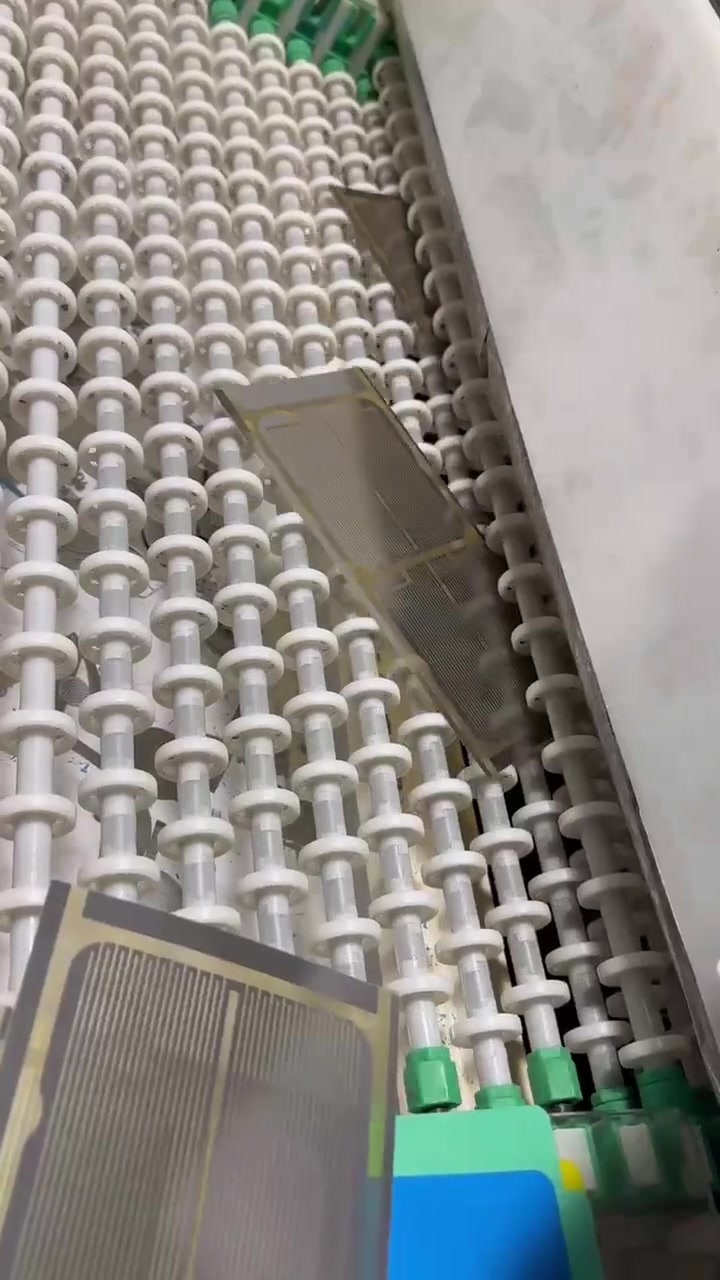
We have a full set of etching production equipment and mature processing technology. We can manufacture products in any shape with mesh sizes as small as 0.1mm, according to your requirements.



Our Advantage
Factory Direct Shipping
Our products undergo 100% QC checks before shipment, and we ensure compliance with international standards. If you require specific certifications for your target market, just let us know, and we'll meet those requirements.
Experienced Design and Manufacturing Team
We work closely with customers from the design phase to help avoid potential product flaws, ensuring both the functionality and design meet expectations.
Excellent Supply Chain Management
We can quickly adjust production schedules to meet your urgent deadlines, whether it's for large bulk orders or smaller rush orders.
OEM & ODM Support
We offer the option to print your logo or other customizations.
Strict Quality Control
Our products undergo 100% QC checks before shipment, and we ensure compliance with international standards. If you require specific certifications for your target market, just let us know, and we'll meet those requirements.
Certificate
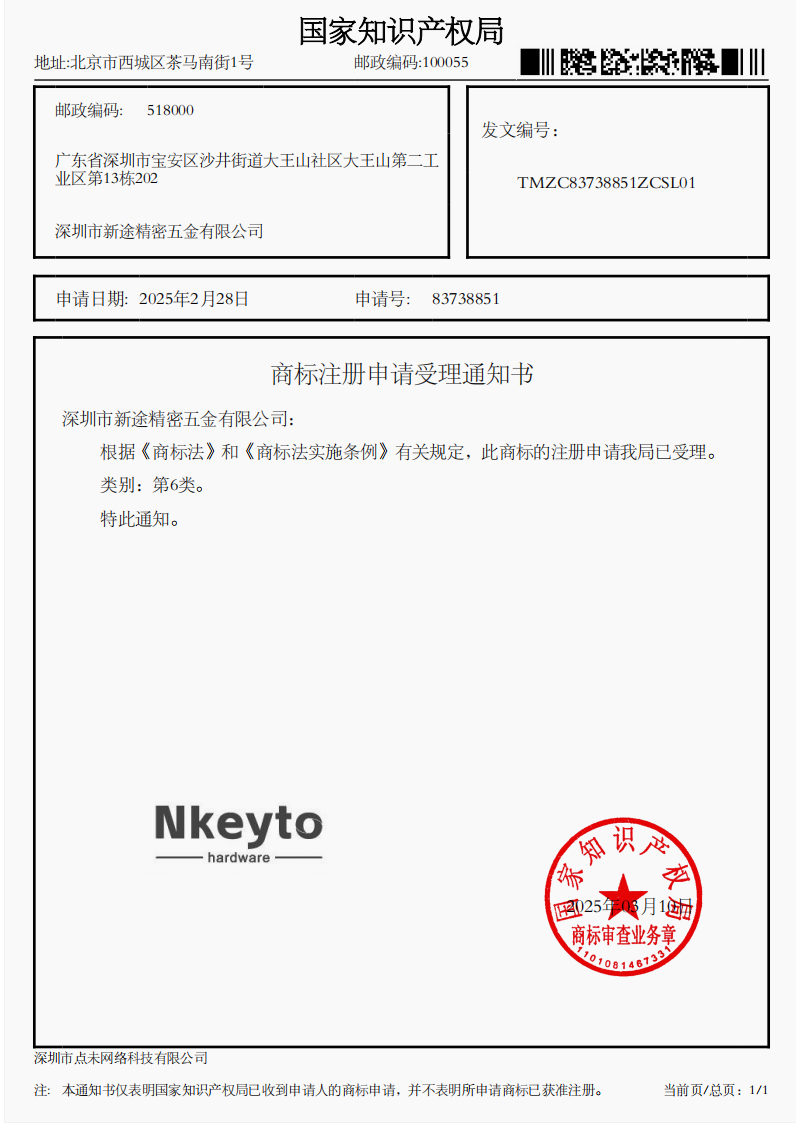
商标6类

9001
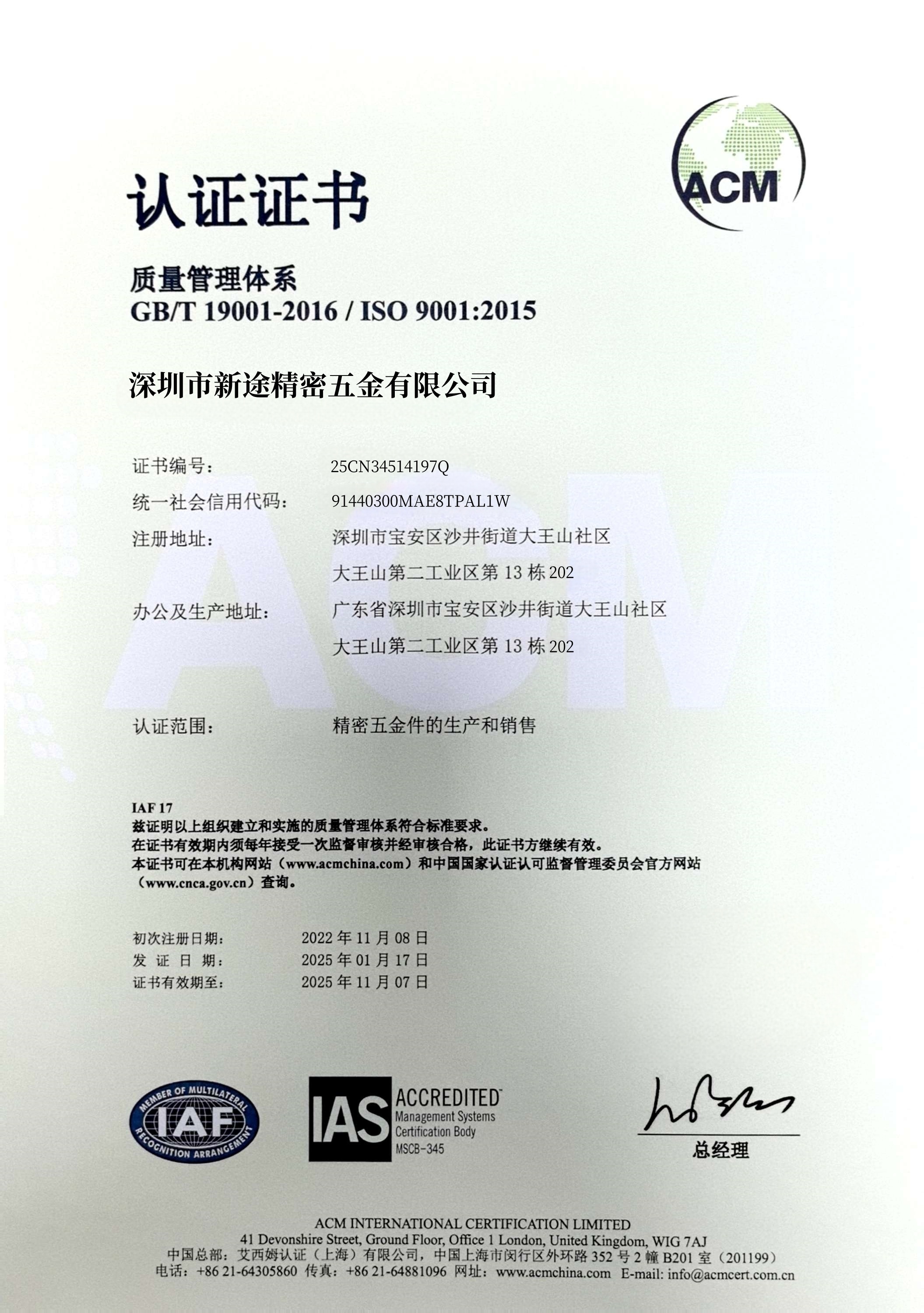
质量认证


Related Products

Shenzhen Nkeyto Precision Hardware Co., Ltd. is a factory specializing in precision hardware processing, committed to providing customers with high-quality products and services.We look forward to working with you.
Contact Us

E-mail: luna@nkeyto.com

Tel: +1 213-221-9094

Add: 13th Building, 202, Dawangshan Second Industrial Zone, Dawangshan Community, Shajing Street, Bao'an District, Shenzhen, Guangdong Province
Powered by: CEglobal
Copryright © 2025 Shenzhen Xintu Precision Hardware Co., Ltd.




Back To Top