



High Accuracy Encoder Disc Metal Optical Precision Component
Category:
Key Words:
Product parameters
Parameter | Specification |
Material | Stainless Steel 304 / 301 |
Thickness | 0.02 – 0.5 mm |
Diameter | 10 – 200 mm |
Resolution | 100 – 5000+ lines |
Slot Type | Through slot / grating / custom |
Tolerance | ±2 – ±10 μm |
Process | Chemical Etching / Laser Cutting / CNC |
Surface | Matte / Polished |
Mounting | Center hole / custom holes |
Customization | Supported (OEM / ODM) |
Product Description
Product Introduction:
This high accuracy encoder disc is a precision optical disc made from metal materials for stable and reliable signal generation. The precision disc ensures uniform slot spacing and high repeatability, making it suitable for critical positioning systems. As a durable encoder disc, it supports long-term use in high-performance industrial applications.
Applications:
Servo systems, industrial automation, precision positioning equipment, robotics, motion control
The Science of Accuracy in Metal Manufacturing
Introduction
In the world of precision engineering, a design is only as good as its execution. For critical components like a High Accuracy Encoder Disc, the difference between a smoothly operating robotic arm and a system failure often comes down to a few microns.
At our factory, we understand that Tolerance Control is not just about hitting a specific dimension on a drawing; it is about ensuring consistency, perfect assembly, and signal reliability. This article explores how we manage critical quality metrics—such as concentricity and repeatability—to deliver Precision Metal Parts that meet the strictest international standards.
Understanding Tolerance: It's Not Just About Size
When engineers specify a Metal Optical Precision Component, they are often concerned with more than just the outer diameter. They are concerned with Geometric Dimensioning and Tolerancing (GD&T).
1. Concentricity & Position Tolerance
For an encoder disc, the alignment of the slot pattern relative to the center bore is the single most critical factor. If the center of the pattern does not align perfectly with the axis of rotation, the encoder will suffer from "runout" (wobble), causing signal errors or complete system failure.
- Our Approach: We utilize Chemical Etching, a process that inherently maintains tight position tolerances (typically ±0.02mm). Unlike mechanical punching, which can shift the material during the strike, our etching process creates a symmetrical tolerance zone around the ideal position. This ensures the optical pattern is perfectly centered on the mounting hole.
2. Repeatability
Repeatability refers to a manufacturing process's ability to produce the exact same result, over and over again, under the same conditions.
- The Difference: A machine can be accurate (hit the target once) but not repeatable (miss the target the next time). In mass production of High Accuracy Encoder Discs, repeatability is king. It ensures that every single disc coming off the line is virtually identical, reducing assembly headaches and calibration time for our clients.
The Role of Inspection in Quality Control
To guarantee these tolerances, we employ a rigorous inspection regime. We don't just measure the part; we validate the process.
Key Inspection Methods for Precision Metal Parts:
Inspection Method | Application | Why It Matters |
|---|---|---|
Coordinate Measuring Machine (CMM) | Complex geometries, hole patterns | Maps the 3D geometry of the part to verify Position Tolerance and concentricity against the CAD model. |
Optical Projection / Vision System | 2D profiles, slot widths | Rapidly checks the profile of the Metal Optical Precision Component to ensure slot integrity and edge quality. |
First Article Inspection (FAI) | New production runs | Verifies that the initial sample meets all design specifications before mass production begins. |
Why Chemical Etching Offers Superior Tolerance Control
When manufacturing thin, flat Precision Metal Parts, traditional methods often introduce variables that ruin tolerance.
- No Mechanical Stress: Stamping or punching forces the metal to deform, often leading to warping or "spring-back" that alters dimensions after the part is made.
- No Thermal Stress: Laser cutting introduces intense heat, which can warp thin sheets and change the size of features as the metal cools.
- The Etching Advantage: Because chemical etching is a "cold" process, the metal remains stress-free. This means the part you measure immediately after production is the same part you measure an hour later. This dimensional stability is essential for maintaining High Accuracy over time and across large batches.
Our Commitment to Standards
We adhere to strict international standards (such as ISO 2768 and ISO 9001) to ensure that our Precision Metal Parts are ready for integration into sensitive equipment. From the raw material inspection to the final packaging, every step is documented and verified.
Ready to Trust Your Precision Components to Experts?
Accuracy is not an accident; it is the result of intelligent process control. If you need High Accuracy Encoder Discs or other Precision Metal Parts that demand strict tolerance adherence, we are ready to help.
Contact us today to discuss your quality requirements.
Get in touch with us:
- Contact Person: Luna
- Company: NKEYTO (Shenzhen Xintu Precision Hardware Co., Ltd.)
- WhatsApp: 12132219094
Questions and Answers
Frequently Asked Questions (FAQ)
Q1: What is the standard tolerance for your etched metal parts?
A: For most Precision Metal Parts, we hold a standard tolerance of ±0.02mm (or ±10% of material thickness, whichever is greater). For specific features on a High Accuracy Encoder Disc, we can often achieve even tighter controls depending on the material and volume.
Q2: How do you ensure "Repeatability" in mass production?
A: We combine stable manufacturing processes with Statistical Process Control (SPC). By monitoring key dimensions during production runs, we can detect any drift in the process and correct it immediately. This ensures that the 1,000th part is identical to the 1st part.
Q3: Can you inspect complex optical patterns?
A: Yes. We use advanced Coordinate Measuring Machines (CMM) and optical comparators to measure complex geometries. This allows us to verify the Position Tolerance of thousands of micro-slots on a single disc to ensure they align perfectly with the center axis.
Q4: Why is "Concentricity" so important for encoder discs?
A: If the slot pattern is not perfectly concentric with the mounting hole, the disc will "wobble" optically as it spins. This causes the sensor to read incorrect positions. Our process ensures the pattern is centered, minimizing runout and maximizing signal clarity.
Factory Description
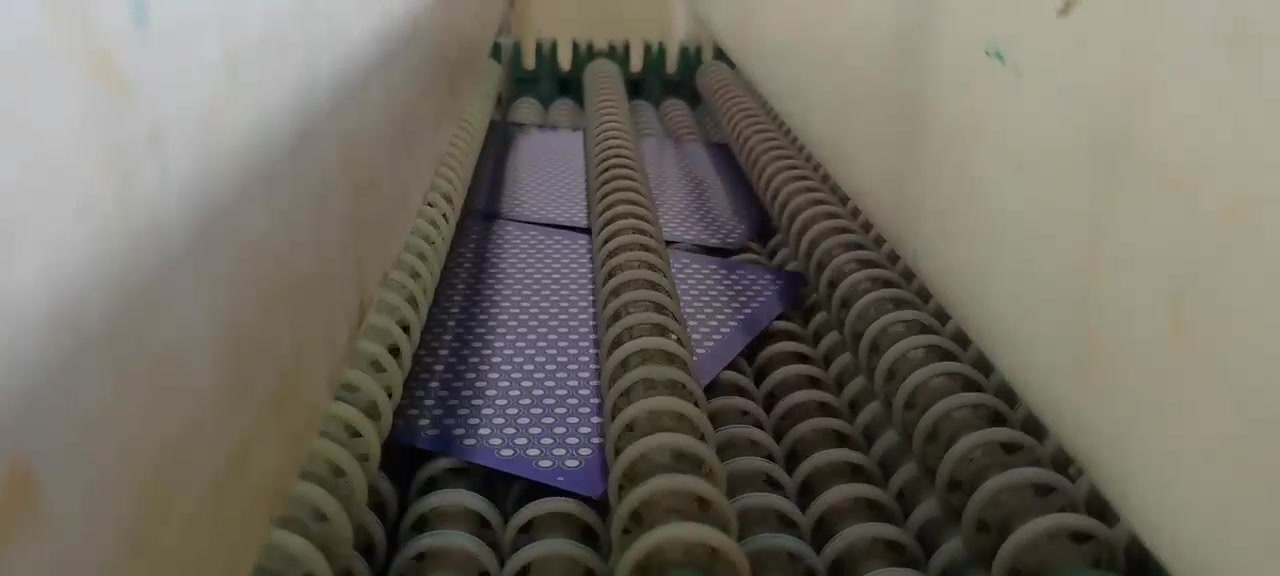
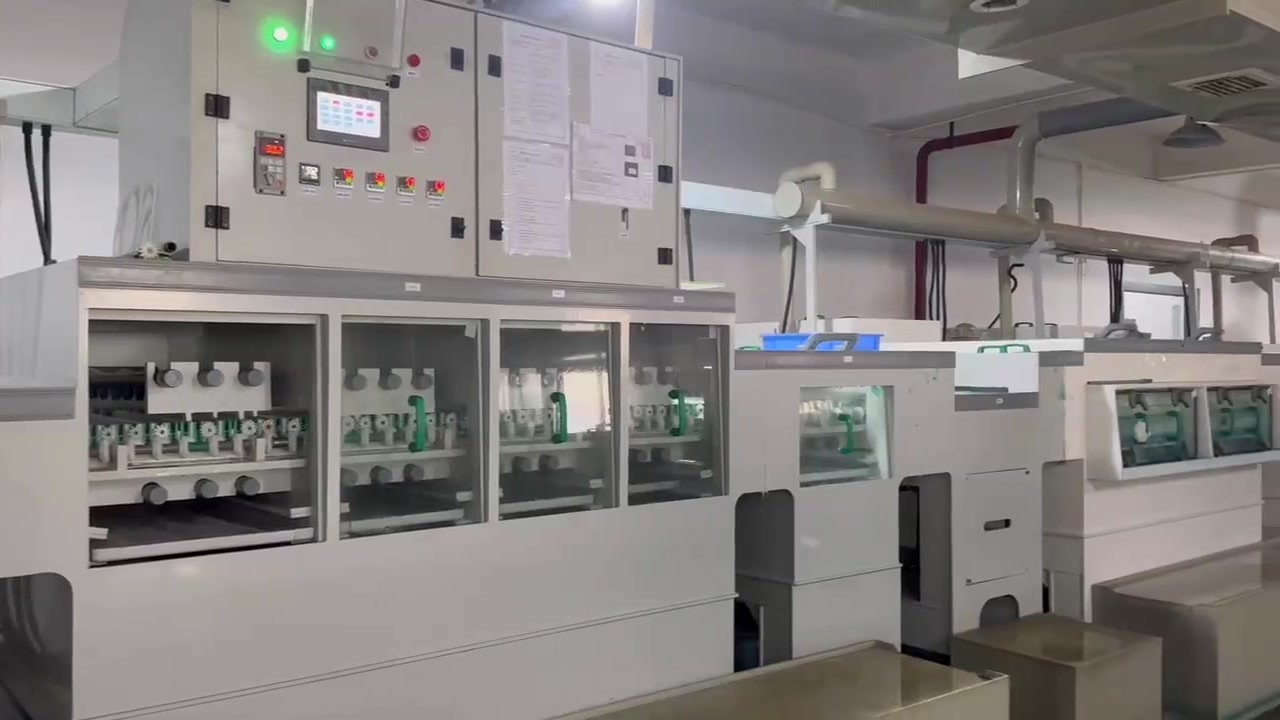
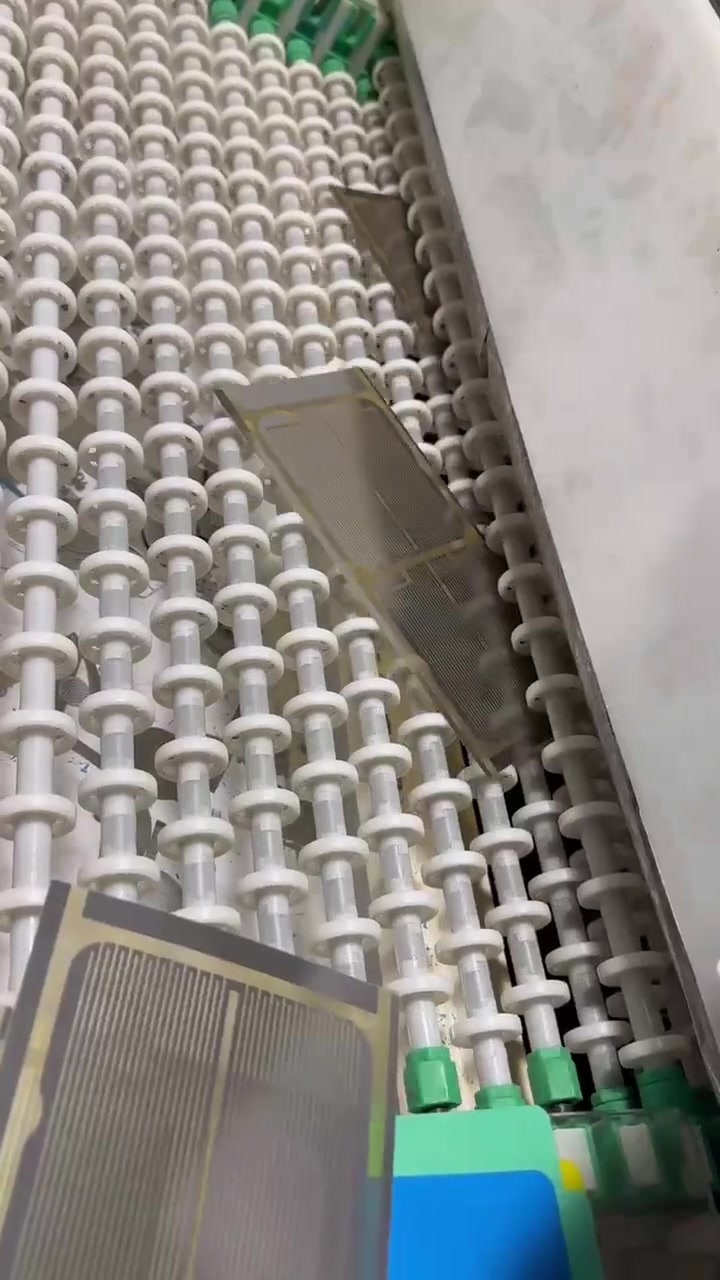
We have a full set of etching production equipment and mature processing technology. We can manufacture products in any shape with mesh sizes as small as 0.1mm, according to your requirements.

Our Advantage
Factory Direct Shipping
Our products undergo 100% QC checks before shipment, and we ensure compliance with international standards. If you require specific certifications for your target market, just let us know, and we'll meet those requirements.
Experienced Design and Manufacturing Team
We work closely with customers from the design phase to help avoid potential product flaws, ensuring both the functionality and design meet expectations.
Excellent Supply Chain Management
We can quickly adjust production schedules to meet your urgent deadlines, whether it's for large bulk orders or smaller rush orders.
OEM & ODM Support
We offer the option to print your logo or other customizations.
Strict Quality Control
Our products undergo 100% QC checks before shipment, and we ensure compliance with international standards. If you require specific certifications for your target market, just let us know, and we'll meet those requirements.
Certificate
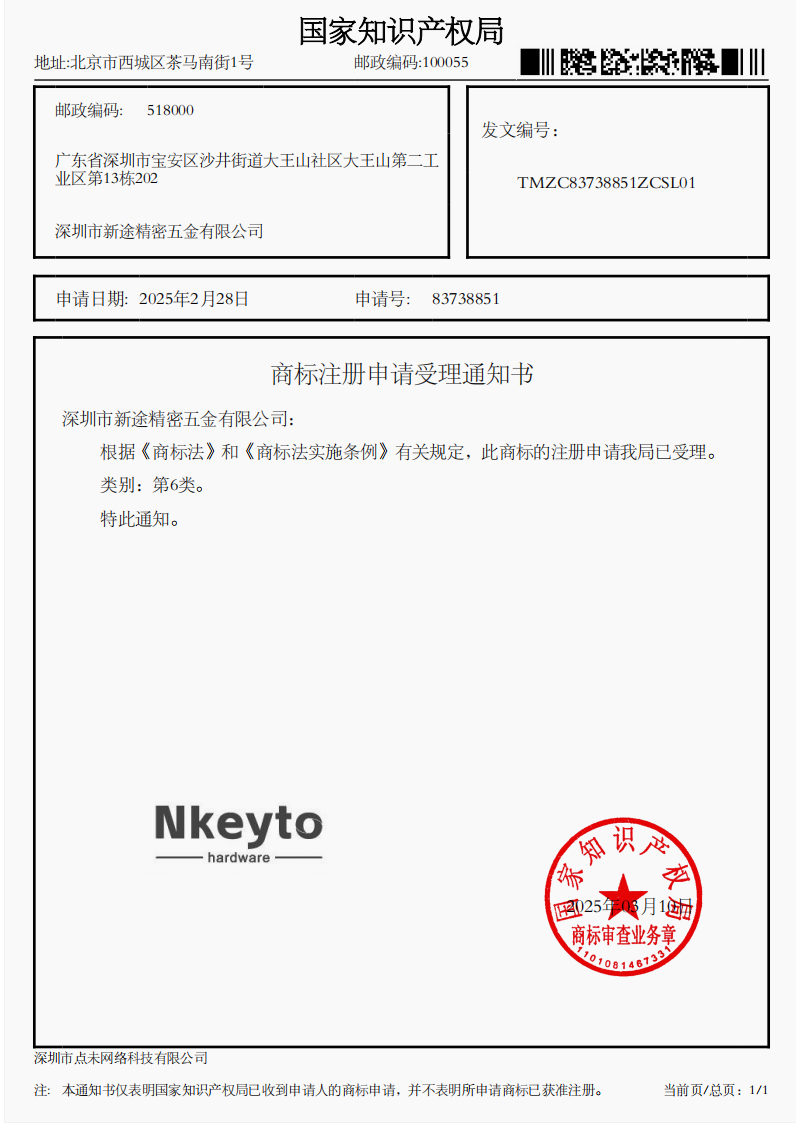
商标6类

9001
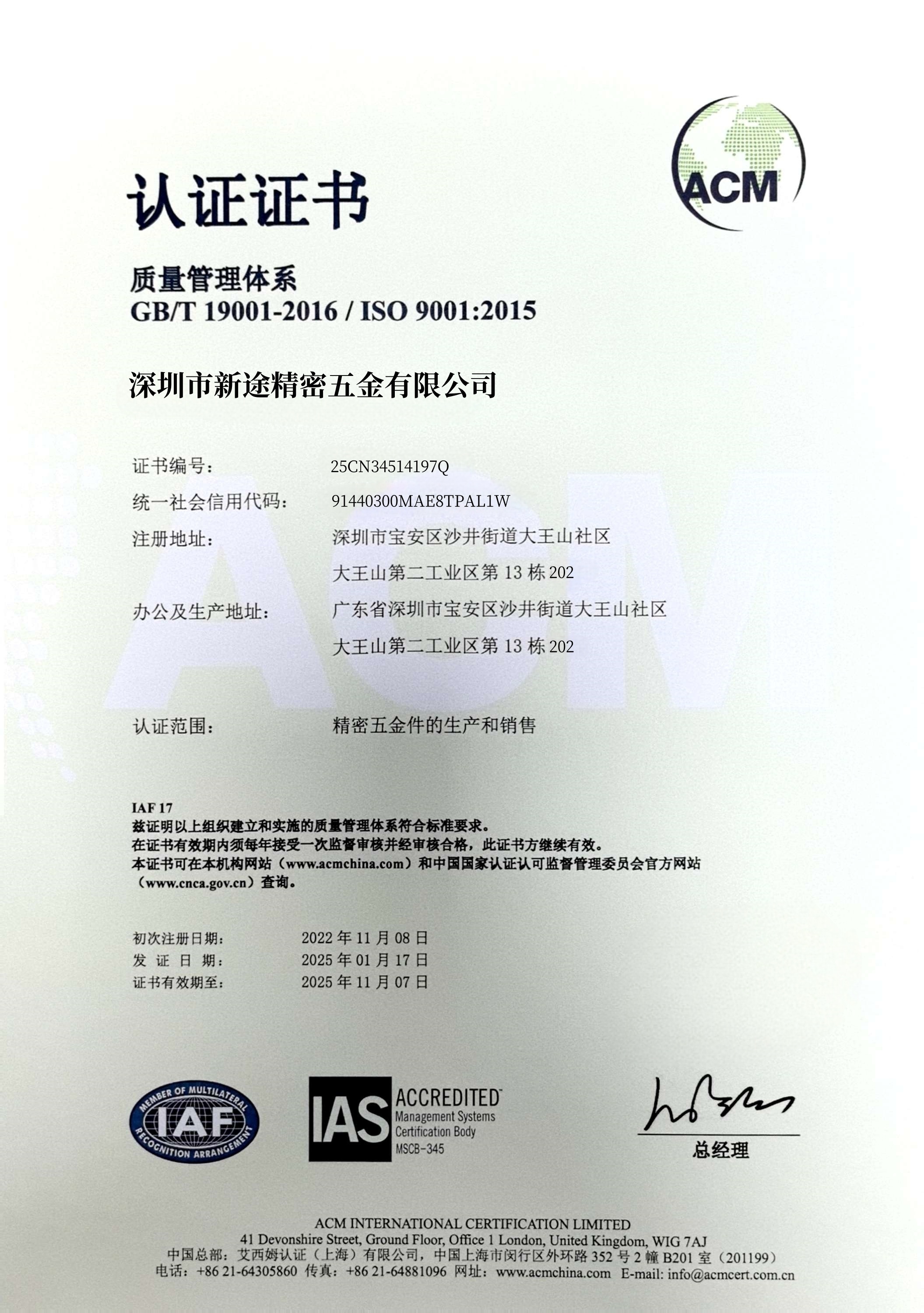
质量认证


Related Products

Shenzhen Nkeyto Precision Hardware Co., Ltd. is a factory specializing in precision hardware processing, committed to providing customers with high-quality products and services.We look forward to working with you.
Contact Us

E-mail: luna@nkeyto.com

Tel: +1 213-221-9094

Add: 13th Building, 202, Dawangshan Second Industrial Zone, Dawangshan Community, Shajing Street, Bao'an District, Shenzhen, Guangdong Province
Powered by: CEglobal
Copryright © 2025 Shenzhen Xintu Precision Hardware Co., Ltd.




Back To Top