



Molybdenum Aperture Plate Micro Hole Laser Beam Control Metal Disc
Category:
Key Words:
Product parameters
Parameter | Specification / Range | Notes |
Product Name | Precision Molybdenum Aperture Plate / Micro Hole Disc | Optical / Laser / Vacuum Grade |
Material | Pure Molybdenum (Mo ≥ 99.95%) | High purity, stable performance |
Density | 10.2 g/cm³ | High density metal |
Melting Point | 2620°C | Excellent high temperature resistance |
Working Temperature | ≤1800°C (vacuum/inert gas) | Key advantage over stainless steel |
Thermal Expansion Coefficient | 4.8–5.1 ×0.000001/K | Very low expansion |
Thermal Conductivity | ~138 W/m·K | Good heat dissipation |
Thickness | 0.02 – 1.0 mm | Ultra-thin achievable |
Tolerance | ±0.003 – ±0.01 mm | Higher precision than standard metal parts |
Aperture Size (Hole Diameter) | ≥0.01 mm | Micro hole capability |
Hole Accuracy | ±2–5 μm | Critical for optical alignment |
Minimum Feature Size | ≥0.01 mm | Depends on thickness |
Surface Condition | Bright / matte / blackened (optional) | Anti-reflection available |
Surface Treatment | Polishing / black coating / oxidation | Optical-grade optional |
Edge Quality | Burr-free, smooth edge | Etching advantage |
Flatness | ≤0.02 mm | High flatness for optical use |
Shape | Round, ring, micro hole, custom design | OEM supported |
Max Size | ≤300 mm (recommended) | Larger upon request |
Process | Chemical Etching / Laser Drilling / Precision Machining | Based on feature size |
Vacuum Compatibility | Excellent | Low outgassing |
Oxidation Resistance | Limited in air (>400°C) | Recommend vacuum use |
Customization | Full OEM / ODM | Based on drawing or sample |
Product Description
Product Introduction
This molybdenum aperture disc is a precision laser disc used for micro hole beam control, optical path limitation, and spot shaping in laser equipment. The micro hole disc is manufactured for stable geometry and clean edge quality, making it suitable for laser beam guidance and high-temperature working conditions. As a high-performance molybdenum disc, it offers better heat resistance and lower deformation than stainless steel parts, helping maintain accurate beam control in demanding laser systems.
Applications
Laser beam control systems, laser alignment modules, laser measuring devices, cutting and marking equipment, optical research setups, precision beam shaping components
Advantage
Excellent high temperature resistance for laser applications
Better dimensional stability under heat than stainless steel
Suitable for vacuum-compatible beam control systems
Precision micro hole structure for accurate optical path control
Designed for high temperature, vacuum, and precision optical applications
Achieving 0.1mm Micro Holes in Metal: Chemical Etching vs. CNC for Aperture Discs
In the world of precision engineering, size matters. When it comes to manufacturing metal components for optical systems, laser equipment, or medical devices, the demand for miniaturization is relentless. One of the most significant challenges we face—and solve daily—is the production of micro holes with diameters as small as 0.1mm.
Drilling a hole this small is not just about making a puncture; it is about maintaining structural integrity, ensuring perfect roundness, and guaranteeing a burr-free edge. At our factory, we understand that a flawed aperture can disrupt a laser beam or compromise a sensor's accuracy. To achieve this level of precision, selecting the right manufacturing process is critical.
The Challenge of Micro Hole Processing
Why is processing a 0.1mm hole so difficult?
- Tool Limitations: Mechanical drills of this size are fragile and prone to breaking, which can damage the part or leave rough edges.
- Heat & Stress: Traditional machining generates heat and mechanical stress, which can warp thin metal sheets or alter the material's properties.
- Burr Formation: Mechanical cutting often leaves "burrs" (rough edges) that require secondary deburring processes, risking dimensional inaccuracy.
To overcome these hurdles, we utilize two primary technologies: Chemical Etching and Precision CNC/Laser Machining.
Chemical Etching: The "Cold" Process for Complex Geometries
Chemical etching, also known as photochemical machining, is our go-to process for creating complex micro-hole patterns on thin to medium-thickness metals. It is a subtractive manufacturing process that uses chemical solutions to dissolve metal, rather than mechanical force.
Why we use it for Aperture Discs:
- Zero Mechanical Stress: Because there is no physical contact with the tool, there is no stress on the metal. This is crucial for maintaining the flatness of thin discs.
- Burr-Free Results: The chemical reaction dissolves the metal evenly from both sides, resulting in a clean, burr-free edge right out of the machine. No secondary finishing is needed.
- Complexity without Cost: Whether you need a single 0.1mm hole or a mesh of 5,000 micro-holes, the cost remains the same. It is perfect for intricate optical apertures.
Ideal for: Thin metal shims, optical apertures, complex mesh screens, and parts requiring high surface quality.
CNC & Laser Machining: Precision for Thicker Parts
While etching is fantastic for thin parts, some applications require thicker metal plates to withstand high pressure or structural loads. This is where our CNC and Laser capabilities shine.
Laser Cutting:
For high-speed precision, lasers can cut micro holes with extreme accuracy. It is a non-contact process (like etching) but removes material through vaporization. It is excellent for rapid prototyping and handling thicker materials that etching cannot penetrate.
Micro-Drilling (CNC):
For specific through-holes in thicker blocks, precision CNC micro-drilling is used. We utilize high-speed spindles and specialized carbide tools to achieve deep, narrow holes with strict positional accuracy.
Ideal for: Thicker metal discs, structural components, and parts where hole depth exceeds the material thickness significantly.
Process Comparison: Which is Right for Your Project?
To help you decide, here is a comparison of how these methods perform in our facility.
Feature | Chemical Etching | CNC / Laser Machining |
|---|---|---|
Minimum Hole Size | ~0.1mm (depending on thickness) | ~0.1mm (Laser) / ~0.3mm (Mechanical) |
Material Thickness | Best for thin to medium (0.01mm - 2.0mm) | Suitable for medium to thick plates |
Edge Quality | Smooth, burr-free | Clean (Laser) / May need deburring (CNC) |
Heat Affected Zone | None (Cold process) | Low to Medium (Laser) |
Cost Efficiency | High for complex patterns/large batches | High for simple holes/prototypes |
Technical Deep Dive: Quality Control & Tolerances
Regardless of the method, our goal is the same: Precision.
- Tolerance Control: We maintain tight tolerances, typically within ±0.01mm to ±0.02mm for micro features. This ensures that every aperture plate fits perfectly into its assembly.
- Hole Wall Quality: For laser applications, we optimize parameters to minimize the Heat Affected Zone (HAZ), ensuring the metal's microstructure remains intact. For etching, we control the "etch factor" to ensure holes are perfectly vertical (or intentionally tapered for specific nozzle applications).
- Cleaning: All micro-hole parts undergo rigorous ultrasonic cleaning to remove any debris, ensuring that even the smallest 0.1mm channel is completely open.
Featured Application: Laser Beam Control Discs
A prime example of our capability is the Molybdenum Aperture Plate used for laser beam control.
These discs often require a specific hole size to shape a laser beam without causing diffraction spikes (which rough edges would do). By using our precision etching or laser processes, we produce discs that:
- Withstand high temperatures (using Molybdenum or Tungsten).
- Provide a perfectly circular aperture.
- Ensure the laser beam passes through cleanly, without scattering.
Ready to Define Your Precision?
Whether you need a complex aperture plate via chemical etching or a robust metal disc via CNC, we have the technology to deliver. We invite engineers and procurement specialists to send us their drawings for a free DFM (Design for Manufacturing) analysis.
Let us help you choose the most cost-effective and precise method for your project.
Contact Us:
- Contact: Luna
- WhatsApp: 12132219094
- Factory Location: Shenzhen, China
Questions and Answers
Frequently Asked Questions (FAQ)
Q: What is the smallest hole size you can manufacture?
We can achieve micro holes as small as 0.1mm in diameter. The feasibility depends slightly on the material thickness; generally, the hole diameter should be equal to or greater than the material thickness for optimal results.
Q: Does chemical etching weaken the metal?
No. Chemical etching is a "cold" process that does not alter the metallurgical properties of the material. It does not create heat-affected zones or mechanical stress, preserving the original strength and hardness of the metal.
Q: Can you etch holes in hard metals like Molybdenum or Titanium?
Yes. While harder metals require specialized etching chemistries and longer processing times, our factory has extensive experience processing refractory metals like Molybdenum and Tungsten for high-performance applications.
Q: How do you ensure the holes are clean?
We utilize industrial ultrasonic cleaning systems. For high-precision optical parts, we can also perform additional surface treatments to ensure no particulate matter remains inside the micro-holes.
Factory Description
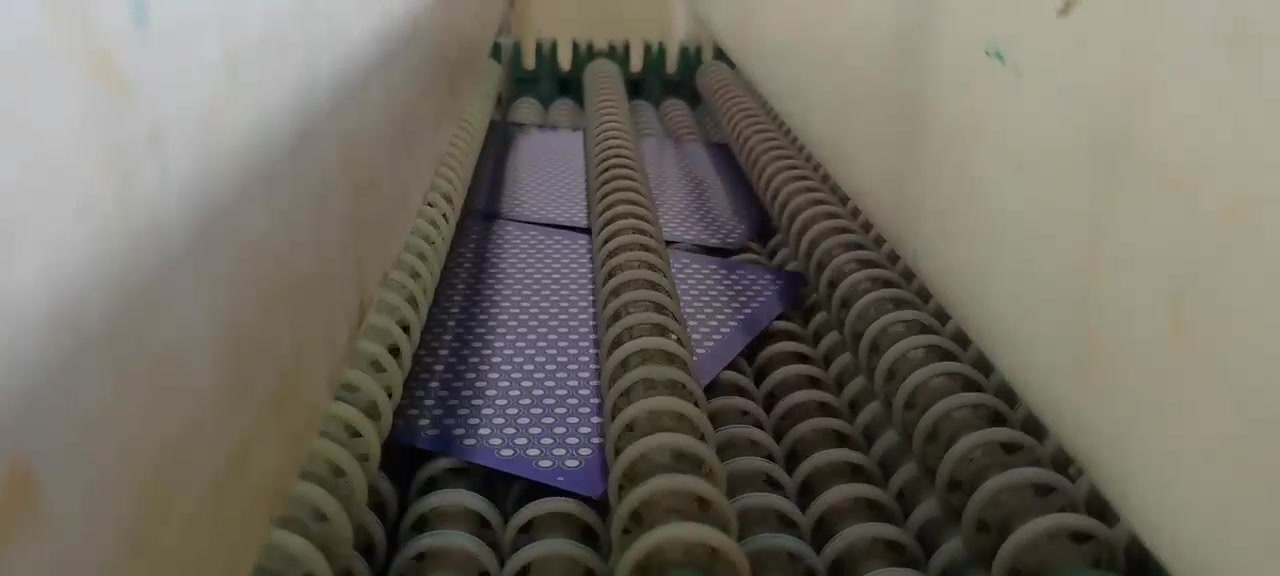
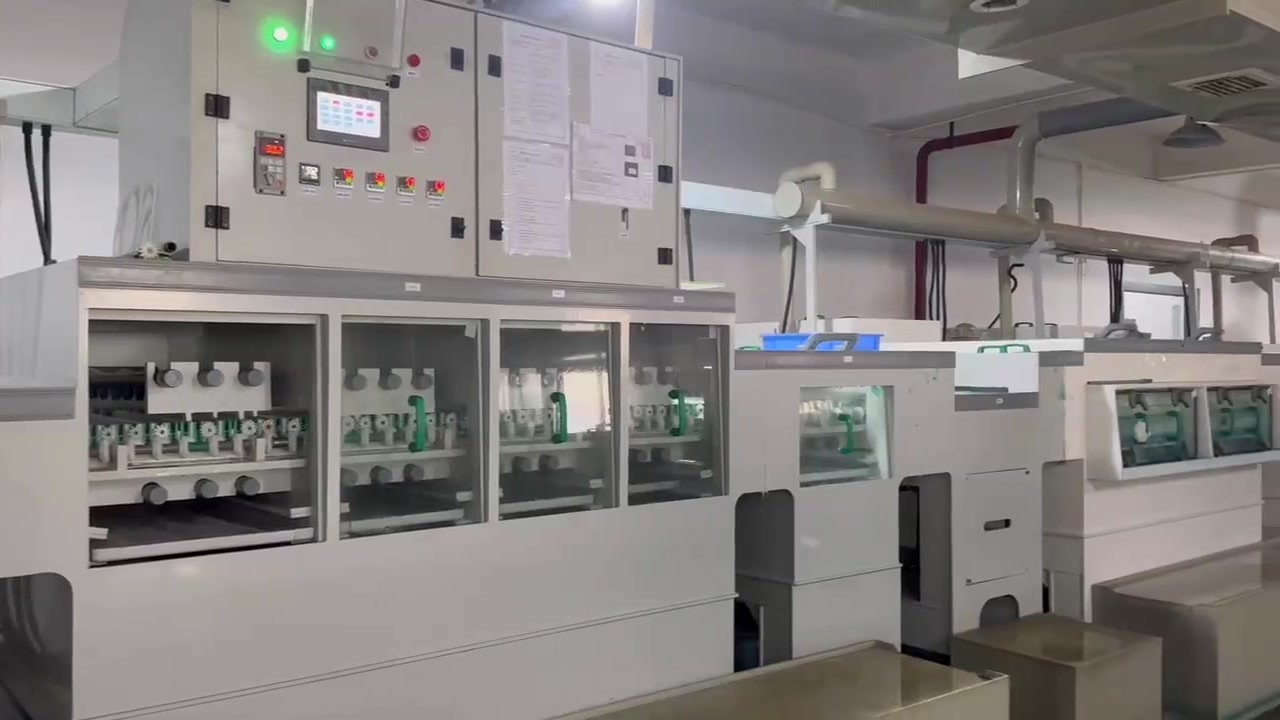
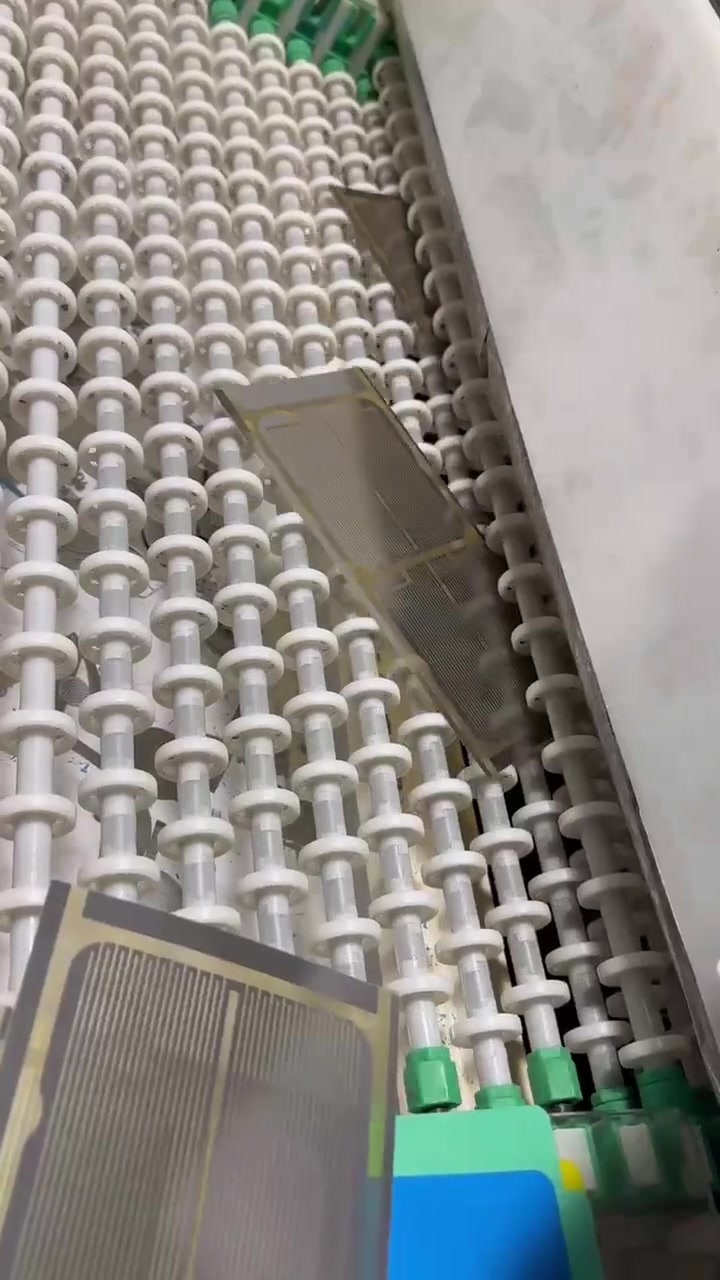
We have a full set of etching production equipment and mature processing technology. We can manufacture products in any shape with mesh sizes as small as 0.1mm, according to your requirements.

Our Advantage
Factory Direct Shipping
Our products undergo 100% QC checks before shipment, and we ensure compliance with international standards. If you require specific certifications for your target market, just let us know, and we'll meet those requirements.
Experienced Design and Manufacturing Team
We work closely with customers from the design phase to help avoid potential product flaws, ensuring both the functionality and design meet expectations.
Excellent Supply Chain Management
We can quickly adjust production schedules to meet your urgent deadlines, whether it's for large bulk orders or smaller rush orders.
OEM & ODM Support
We offer the option to print your logo or other customizations.
Strict Quality Control
Our products undergo 100% QC checks before shipment, and we ensure compliance with international standards. If you require specific certifications for your target market, just let us know, and we'll meet those requirements.
Certificate
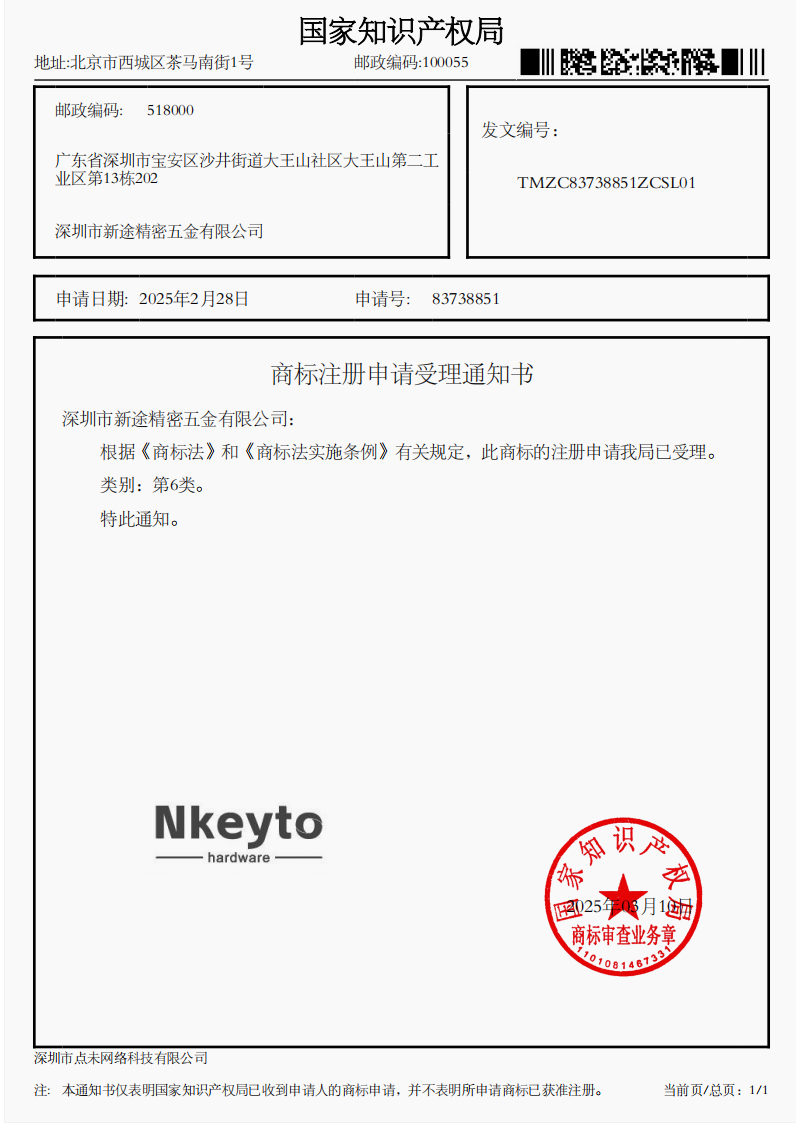
商标6类

9001
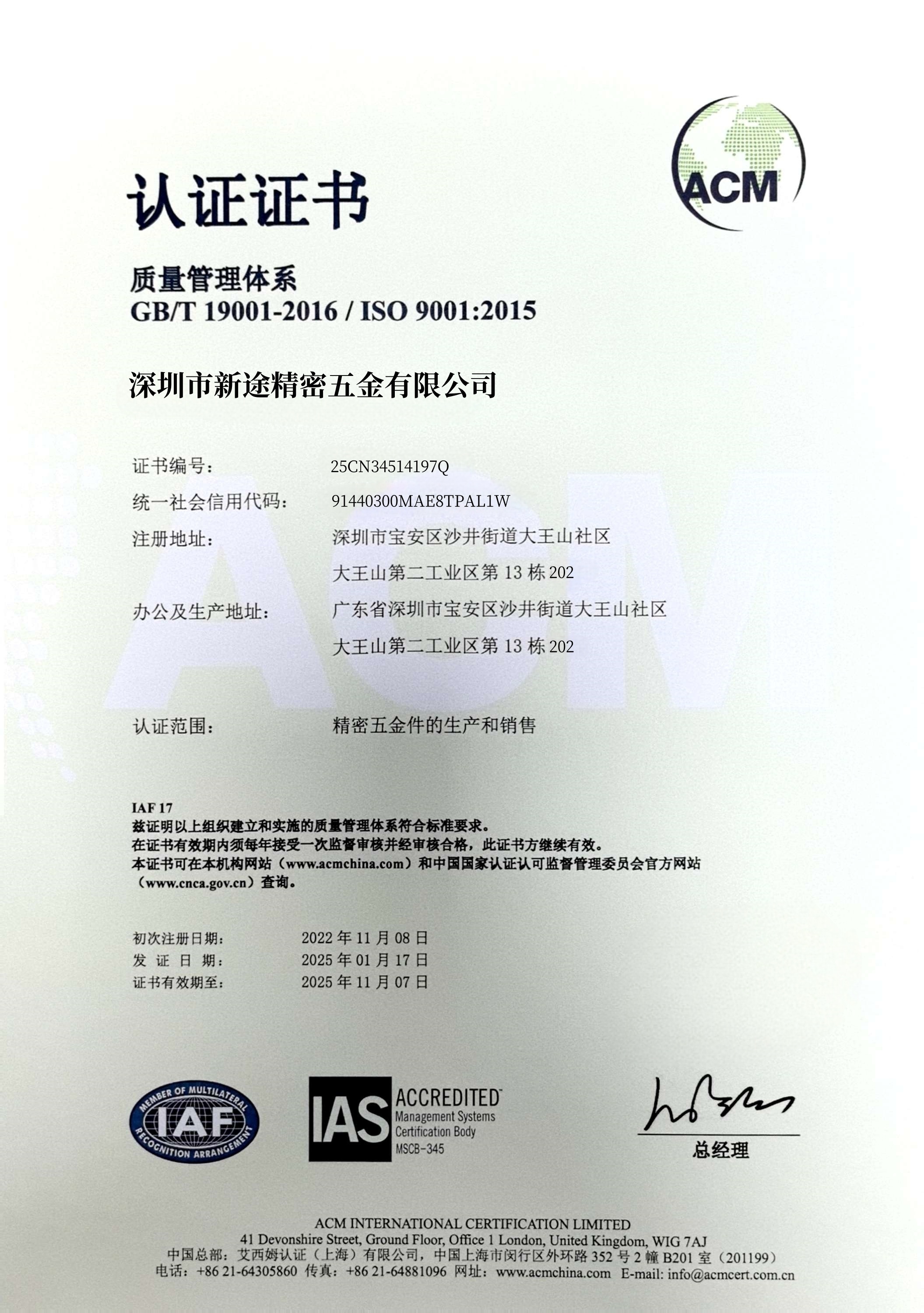
质量认证


Related Products

Shenzhen Nkeyto Precision Hardware Co., Ltd. is a factory specializing in precision hardware processing, committed to providing customers with high-quality products and services.We look forward to working with you.
Contact Us

E-mail: luna@nkeyto.com

Tel: +1 213-221-9094

Add: 13th Building, 202, Dawangshan Second Industrial Zone, Dawangshan Community, Shajing Street, Bao'an District, Shenzhen, Guangdong Province
Powered by: CEglobal
Copryright © 2025 Shenzhen Xintu Precision Hardware Co., Ltd.




Back To Top