



PCB EMI Shielding Can for Communication Module RF Shield
Category:
Key Words:
Product parameters
Parameter | Specification |
Product Name | EMI Shielding Can / RF Shielding Cover / PCB Shielding Can |
Material | Stainless Steel (SUS304 / SUS301), Nickel Silver, Copper |
Thickness | 0.05 mm – 0.30 mm |
Manufacturing Process | Chemical Etching + Stamping + Bending |
Surface Treatment | Tin Plating / Nickel Plating / Gold Plating / Natural Finish |
Shielding Effectiveness | 30 dB – 90 dB (depending on design & frequency) |
Frequency Range | MHz – GHz |
Dimensional Tolerance | ±0.01 – ±0.03 mm |
Flatness | ≤ 0.05 mm |
Hole Size | ≥ 0.03 mm (etching dependent) |
Structure Type | One-piece / Two-piece (Frame + Cover) / Clip Type |
Mounting Method | SMT Soldering / Through-hole / Clip-on |
Edge Condition | Burr-free (etching process) |
Operating Temperature | -40°C to 300°C (depending on material) |
Corrosion Resistance | High (optional plating for enhanced protection) |
Application Level | PCB Level / Module Level Shielding |
Customization | Size / Thickness / Hole Pattern / Structure / Surface Treatment |
Standards | RoHS / REACH compliant |
Product Description
Product Introduction:
This PCB EMI shielding can is designed specifically for communication modules requiring stable signal transmission and effective electromagnetic protection. The RF shielding can isolates high-frequency interference and improves signal integrity. This communication module shielding can is widely used in wireless communication systems where precision and reliability are critical.
Applications:
5G communication modules, RF transceivers, wireless communication boards, base station modules, telecom equipment
Stainless Steel vs. Copper vs. Aluminum: How to Choose the Best EMI Shielding Material
Selecting the right material for an EMI (Electromagnetic Interference) shield is not a one-size-fits-all decision. It is a balancing act between electrical performance, mechanical durability, weight, and cost.
For engineers designing Communication Modules, RF shields, or PCB enclosures, the choice often comes down to three primary metals: Copper, Aluminum, and Stainless Steel. While each has its place in electronics, understanding the specific trade-offs is crucial for optimizing your design.
In this guide, we break down the properties of these metals to help you make the right choice, with a special focus on why Stainless Steel is becoming the preferred choice for demanding applications.
1. Copper: The Conductivity King
Copper is the industry benchmark for electrical conductivity. When you need maximum signal attenuation, especially at lower frequencies, copper is often the first material considered.
- Pros:
- Highest Conductivity: Copper offers superior shielding effectiveness (SE) due to its high electrical conductivity.
- Easy to Solder: It has excellent solderability, making grounding straightforward.
- Highest Conductivity: Copper offers superior shielding effectiveness (SE) due to its high electrical conductivity.
- Cons:
- Cost: It is significantly more expensive than steel or aluminum.
- Weight: Copper is dense (8.96 g/cm³), which can be a drawback for portable devices.
- Oxidation: It tarnishes easily and often requires plating (tin or nickel) to prevent corrosion.
- Cost: It is significantly more expensive than steel or aluminum.
Verdict: Best for high-performance, stationary applications where cost and weight are secondary to pure shielding performance.
2. Aluminum: The Lightweight Contender
Aluminum is the go-to material for applications where weight reduction is critical, such as in aerospace or handheld consumer electronics.
- Pros:
- Lightweight: With a density of only 2.7 g/cm³, it is roughly one-third the weight of copper or steel.
- Corrosion Resistance: It naturally forms an oxide layer that protects against rust.
- Cost-Effective: Generally cheaper than copper.
- Lightweight: With a density of only 2.7 g/cm³, it is roughly one-third the weight of copper or steel.
- Cons:
- Lower Conductivity: While good, it is not as effective as copper or steel for magnetic field shielding.
- Mechanical Weakness: It is softer and can be more prone to deformation during handling or assembly.
- Soldering Difficulty: The natural oxide layer makes soldering difficult without specialized flux or plating.
- Lower Conductivity: While good, it is not as effective as copper or steel for magnetic field shielding.
Verdict: Ideal for lightweight enclosures or battery-powered devices where extreme magnetic shielding is not required.
3. Stainless Steel: The Balanced Performer
At our factory, we frequently recommend Stainless Steel (specifically grades like SUS304) for Communication Modules and industrial applications. It offers a unique combination of magnetic shielding, mechanical strength, and cost-efficiency.
- Pros:
- Magnetic Permeability: Unlike copper and aluminum, stainless steel is ferromagnetic. This allows it to absorb and block low-frequency magnetic fields effectively, which is critical for power supplies and transformers.
- Durability: It has high tensile strength and is resistant to deformation.
- Corrosion Resistance: High-grade stainless steel is highly resistant to rust and harsh environments without needing expensive plating.
- Cost: It is generally more affordable than copper.
- Magnetic Permeability: Unlike copper and aluminum, stainless steel is ferromagnetic. This allows it to absorb and block low-frequency magnetic fields effectively, which is critical for power supplies and transformers.
- Cons:
- Conductivity: Its electrical conductivity is lower than copper, though this is often mitigated by its magnetic absorption properties.
- Conductivity: Its electrical conductivity is lower than copper, though this is often mitigated by its magnetic absorption properties.
Verdict: The optimal choice for robust, long-life applications requiring a balance of magnetic and electric field shielding.
Material Comparison Table
Feature | Copper (Cu) | Aluminum (Al) | Stainless Steel (SUS304) |
|---|---|---|---|
Conductivity | Excellent (100%) | Good (~60%) | Fair (~3-4%) |
Magnetic Shielding | Poor | Poor | Excellent |
Weight | Heavy | Light | Medium/Heavy |
Cost | High | Low | Medium |
Corrosion Resistance | Low (needs plating) | High | High |
Why We Recommend Stainless Steel for Precision Shields
While Copper is excellent for pure conductivity, Stainless Steel shines when you consider the total lifecycle of a product, particularly in communication and industrial sectors.
1. Strength for Thin Walls
Using our chemical etching process, we can manufacture Stainless Steel Cans with very thin walls (0.1mm - 0.2mm). Because stainless steel is stronger than aluminum or copper, these thin walls remain rigid and do not dent easily during the pick-and-place assembly process. This allows you to reduce weight and material cost without sacrificing structural integrity.
2. Ideal for Harsh Environments
For outdoor communication modules or automotive electronics, moisture and temperature changes are inevitable. A Stainless Steel Can resists oxidation naturally, ensuring that the grounding points remain clean and conductive over years of use.
3. Cost-Effective Mass Production
Stainless steel is more affordable than copper, making it a better candidate for high-volume production. When combined with our etching technology—which eliminates the need for expensive hard tooling—the overall cost savings become significant.
Conclusion
Choosing the right material depends on your specific priorities. If you need the absolute highest conductivity and money is no object, choose Copper. If weight is your only concern, choose Aluminum.
However, for a solution that balances magnetic shielding, mechanical strength, corrosion resistance, and cost, Stainless Steel is the superior engineering choice. At our factory, we specialize in etching high-precision Stainless Steel Cans that meet these rigorous demands, ensuring your Communication Module is protected, reliable, and cost-effective.
Need Help Selecting Materials?
Unsure which material fits your project? Our engineering team is ready to help you optimize your design for performance and cost.
Contact us
today for a quote on your PCB EMI Shielding Can.
- Contact Person: Luna
- WhatsApp: 12132219094
Questions and Answers
Frequently Asked Questions (FAQ)
Q1: Can stainless steel shield against low-frequency magnetic fields?
Yes. Unlike copper or aluminum, stainless steel is ferromagnetic. This gives it high magnetic permeability, making it highly effective at absorbing and shielding low-frequency magnetic fields, which is essential for power electronics and transformers.
Q2: Is stainless steel more expensive than copper?
No. Generally, raw stainless steel is less expensive than copper. Additionally, because stainless steel is stronger, you can often use thinner gauges to achieve the same structural rigidity, further reducing material costs.
Q3: Does stainless steel rust?
High-grade stainless steel (like SUS304) is highly resistant to rust and corrosion. It is an excellent choice for outdoor applications or environments with high humidity, unlike copper which requires plating to prevent oxidation.
Q4: Can you plate stainless steel for better solderability?
Yes. While stainless steel is durable, we can apply surface treatments like tin or nickel plating to improve solderability and ensure a low-resistance ground connection on your PCB.
Factory Description
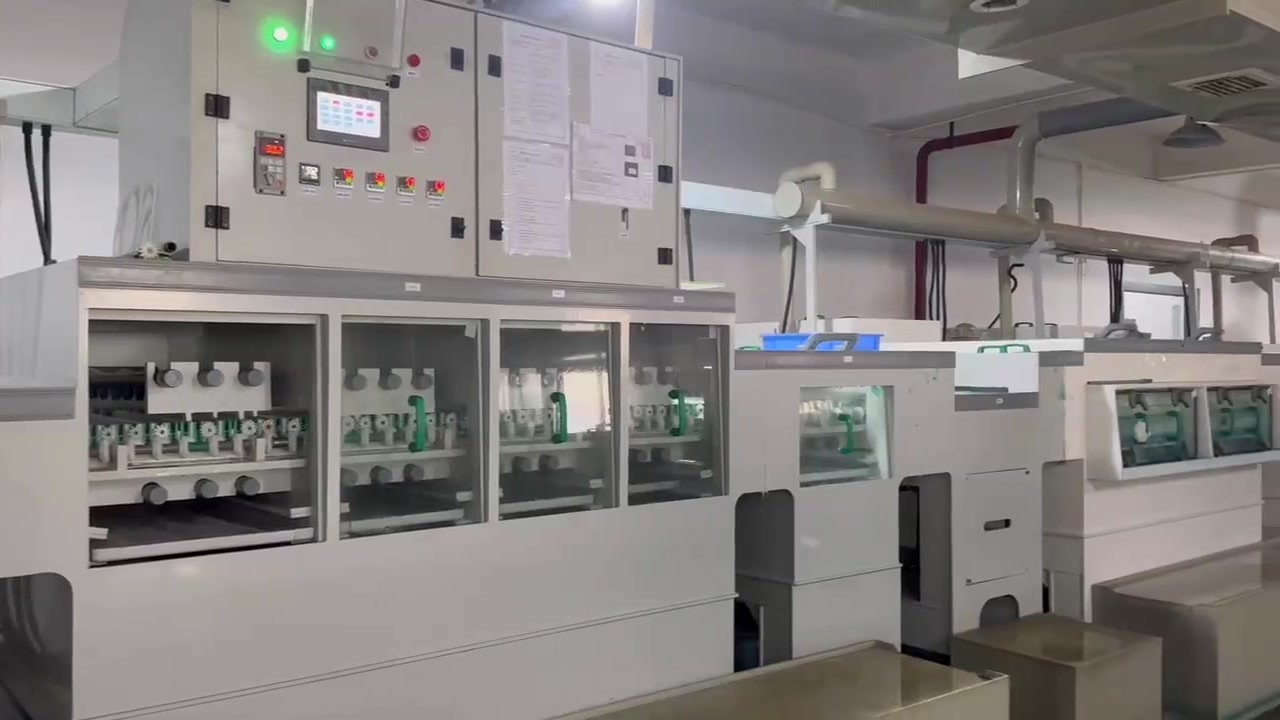
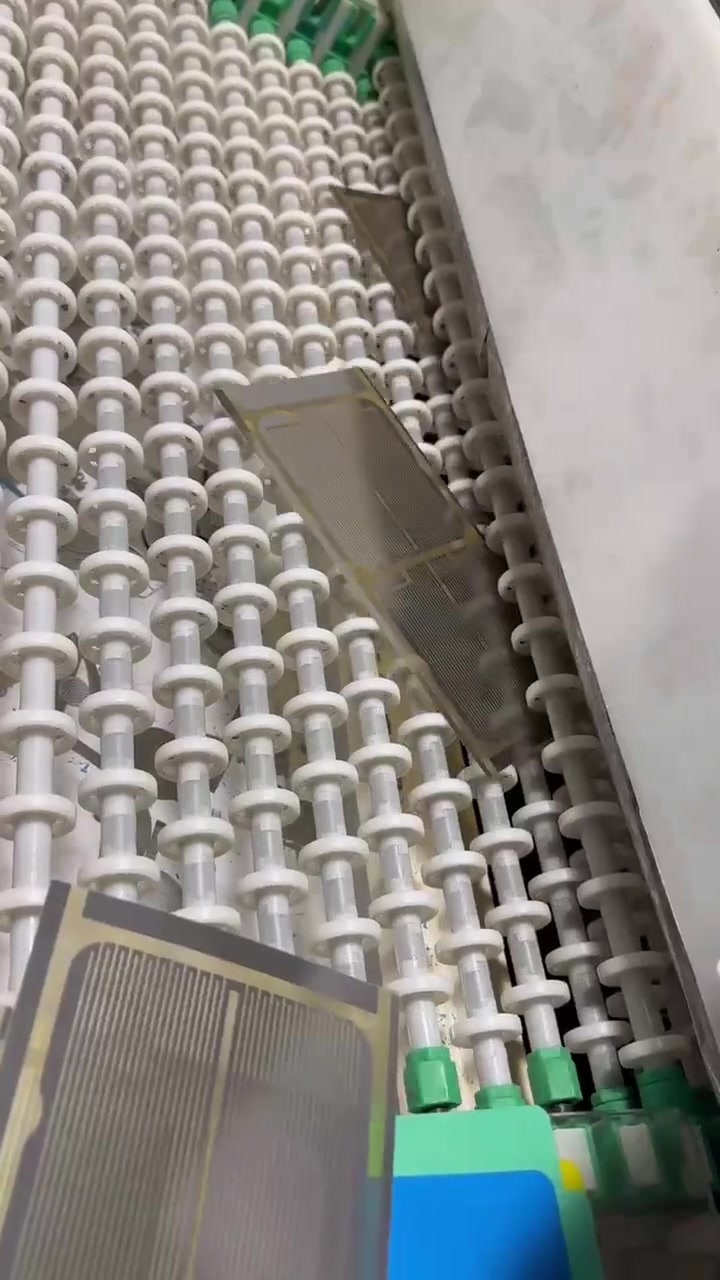
We have a full set of etching production equipment and mature processing technology. We can manufacture products in any shape with mesh sizes as small as 0.1mm, according to your requirements.


Our Advantage
Factory Direct Shipping
Our products undergo 100% QC checks before shipment, and we ensure compliance with international standards. If you require specific certifications for your target market, just let us know, and we'll meet those requirements.
Experienced Design and Manufacturing Team
We work closely with customers from the design phase to help avoid potential product flaws, ensuring both the functionality and design meet expectations.
Excellent Supply Chain Management
We can quickly adjust production schedules to meet your urgent deadlines, whether it's for large bulk orders or smaller rush orders.
OEM & ODM Support
We offer the option to print your logo or other customizations.
Strict Quality Control
Our products undergo 100% QC checks before shipment, and we ensure compliance with international standards. If you require specific certifications for your target market, just let us know, and we'll meet those requirements.
Certificate
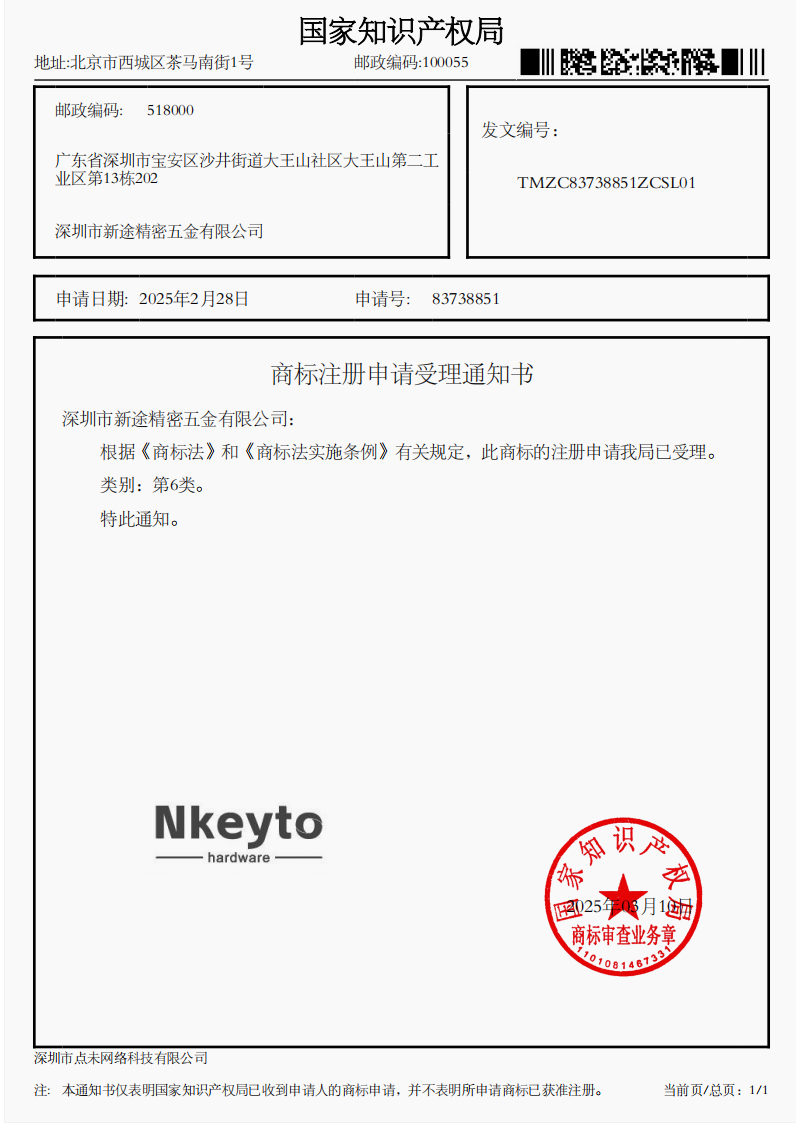
商标6类

9001
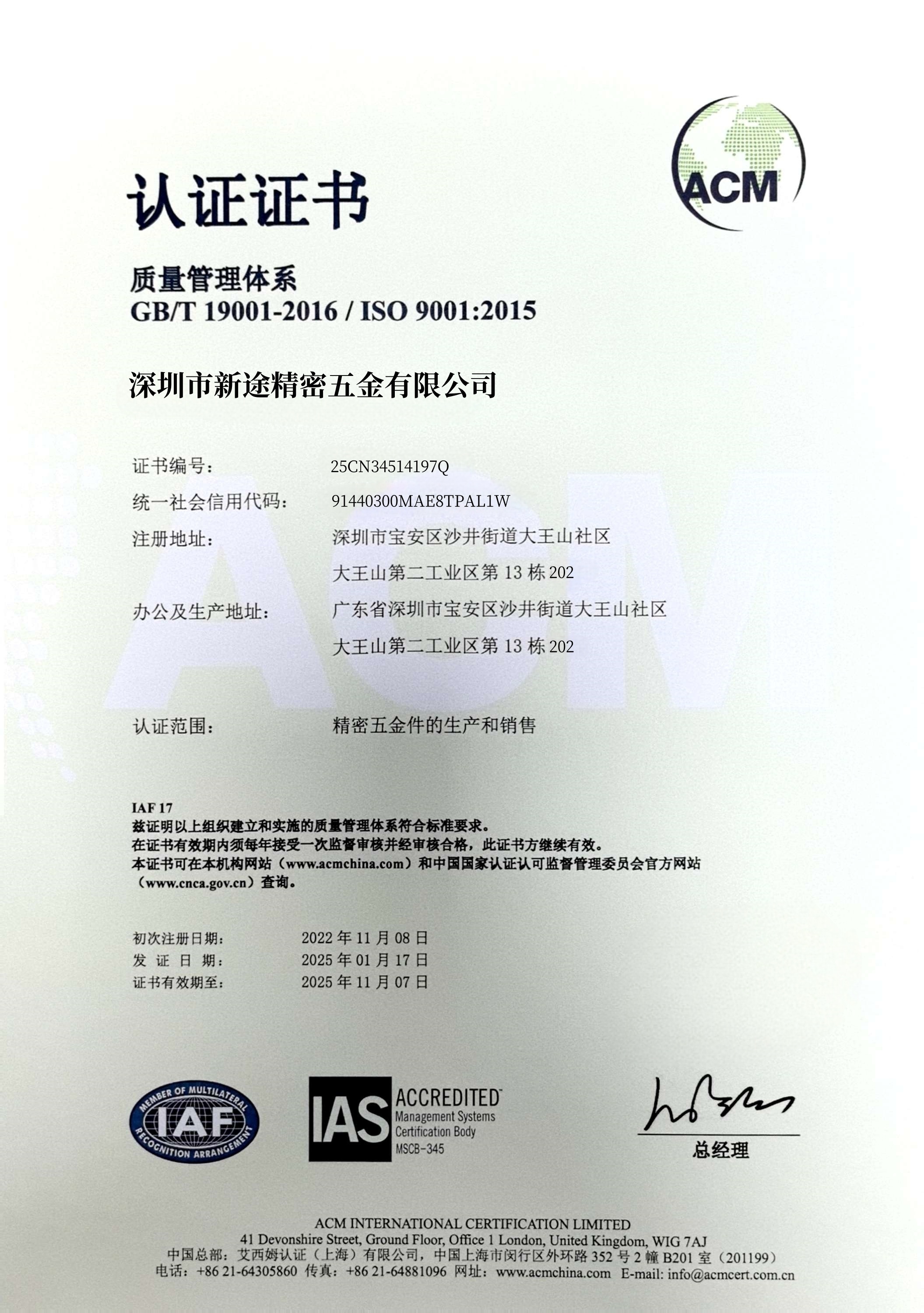
质量认证


Related Products

Shenzhen Nkeyto Precision Hardware Co., Ltd. is a factory specializing in precision hardware processing, committed to providing customers with high-quality products and services.We look forward to working with you.
Contact Us

E-mail: luna@nkeyto.com

Tel: +1 213-221-9094

Add: 13th Building, 202, Dawangshan Second Industrial Zone, Dawangshan Community, Shajing Street, Bao'an District, Shenzhen, Guangdong Province
Powered by: CEglobal
Copryright © 2025 Shenzhen Xintu Precision Hardware Co., Ltd.




Back To Top