



Precision Metal Mesh Sheet for EMI Shielding and Ventilation
Category:
Key Words:
Product parameters
Parameter | Specification Range |
Material | Stainless Steel 304 / 316 / Copper / Brass |
Thickness | 0.05 – 1.0 mm |
Hole Diameter | 0.05 – 1.0 mm |
Hole Pattern | Round / Square / Hex / Custom |
Tolerance | ±0.01 – ±0.02 mm |
Process | Chemical Etching / Laser / CNC |
Surface Treatment | Polishing / Passivation / Blackening |
Open Area | 20% – 70% |
Shape | Sheet / Plate / Custom Geometry |
OEM Service | Supported |
Product Description
Product Description:
Precision metal mesh sheet for EMI shielding and ventilation is designed for applications that require both airflow and electromagnetic protection. This shielding mesh is manufactured by etching to provide precise hole geometry, stable open area, and high consistency for thin metal sheet parts. It is suitable for ventilation mesh components in electronic housings and precision assemblies where performance and appearance both matter.
Applications:
EMI shielding mesh, ventilation mesh for electronic housings, communication device mesh panels, industrial control box mesh covers, battery system protection mesh, and precision metal mesh used in electronics and electrical equipment.
Dual-Function Mesh: EMI Shielding and Thermal Ventilation Solutions
In the realm of high-performance electronics, engineers face a constant conflict: the need to dissipate heat versus the need to block electromagnetic interference (EMI). Traditional solutions often involve separate components—solid metal shields for EMI and perforated vents for airflow—which add weight, complexity, and potential points of failure to the design.
At our factory, we bridge this gap with our Precision Metal Mesh Sheet for EMI Shielding and Ventilation. By utilizing advanced chemical etching, we manufacture dual-function meshes that serve as both effective electromagnetic shields and high-efficiency thermal vents, ensuring your devices run cool and clean without signal leakage.
The Physics of Protection: Waveguide-Beyond-Cutoff
The core principle behind our shielding mesh is the "waveguide-beyond-cutoff" theory. Simply put, an aperture (hole) in a metal sheet can act as a waveguide. If the dimensions of the hole are significantly smaller than the wavelength of the electromagnetic signal, the signal is attenuated (blocked) rather than passing through.
How We Optimize This Effect:
- Precision Aperture Control: We can etch holes with extreme geometric accuracy. By strictly controlling the hole diameter and the thickness of the metal sheet, we tune the mesh to block specific frequency ranges (e.g., 5G, Wi-Fi, or radar signals).
- High Open Area for Airflow: Unlike solid sheets, our mesh allows air to pass freely. We balance the "shielding effectiveness" (SE) with the "open area percentage" to ensure that while electromagnetic waves are reflected, heat is carried away by natural or forced convection.
- Material Selection: We typically use conductive metals like Copper, Brass, or Stainless Steel. Copper offers the highest conductivity for shielding, while Stainless Steel provides structural strength and corrosion resistance.
Solving the Thermal-EMC Conflict
In devices like 5G base stations or server racks, overheating is a primary cause of failure. However, leaving a chassis open for airflow invites EMI in and out.
The Etched Mesh Advantage:
- Integrated Solution: Our Precision Metal Mesh Sheet replaces the need for separate shielding cans and ventilation grilles. This reduces the part count and assembly time.
- Burr-Free Performance: Mechanical punching can leave sharp burrs that create uneven gaps when the mesh is mounted, leading to EMI leakage. Our chemical etching process produces perfectly flat, burr-free sheets that sit flush against gaskets or chassis walls, ensuring a continuous electrical bond.
- Custom Impedance Matching: We can design the hole pattern to vary across the sheet, optimizing airflow where heat is highest (e.g., directly over a CPU) while maintaining shielding density in other areas.
Key Applications
Our dual-function meshes are critical in industries where reliability is non-negotiable:
- 5G Telecommunications: Shielding antenna units (AAU) from external noise while allowing heat from the amplifiers to escape.
- Data Centers & Servers: protecting high-speed processors and memory modules from cross-talk and external interference.
- Military & Aerospace: Ruggedized enclosures for communication equipment that must meet strict MIL-STD EMI/EMC standards.
- Medical Imaging: Preventing external RF noise from distorting sensitive MRI or CT scan data.
Optimize Your Electronic Enclosure
Don't let heat or interference compromise your product's performance. Our precision-etched meshes offer the perfect equilibrium between thermal management and electromagnetic compatibility.
Contact us today to discuss your shielding requirements:
- Manufacturer: NKEYTO (Shenzhen Xintu Precision Hardware Co., Ltd.)
- Contact: Luna
- WhatsApp: +86 12132219094
- Location: Shenzhen, China
Questions and Answers
Frequently Asked Questions (FAQ)
Q1: How do you balance shielding effectiveness with airflow?
It is a trade-off. Generally, a higher open area allows for better airflow but slightly reduces shielding at very high frequencies. We work with your engineers to find the "sweet spot"—often achieving >60% open area while maintaining >40dB of shielding effectiveness in the target frequency range.
Q2: Can this mesh replace a solid metal shield?
For high-frequency applications, yes. As long as the hole size is small enough relative to the wavelength of the interference, the mesh acts effectively as a solid wall to the electromagnetic wave, but with the added benefit of ventilation.
Q3: What materials are best for EMI shielding?
Copper and Brass offer the best electrical conductivity and shielding performance. However, for applications requiring high durability or corrosion resistance, we often recommend Nickel-Silver or Stainless Steel, sometimes with a conductive plating.
Q4: Does the thickness of the mesh matter?
Yes. According to the waveguide theory, a thicker material (longer "tunnel") provides better shielding. Chemical etching allows us to process thicker plates (up to several millimeters) while still maintaining fine aperture details, unlike drilling which becomes difficult in thick sheets.
Q5: Can you add mounting features to the mesh?
Yes. We can etch mounting holes, tabs, and bending lines directly into the sheet, allowing for easy installation into your enclosure without secondary machining.
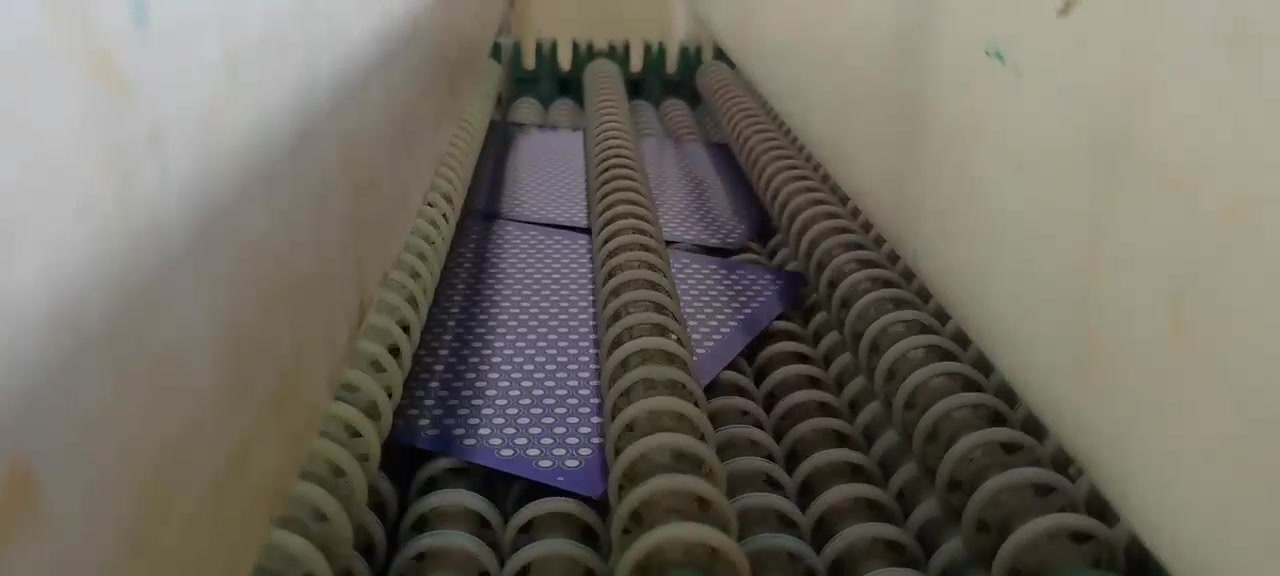
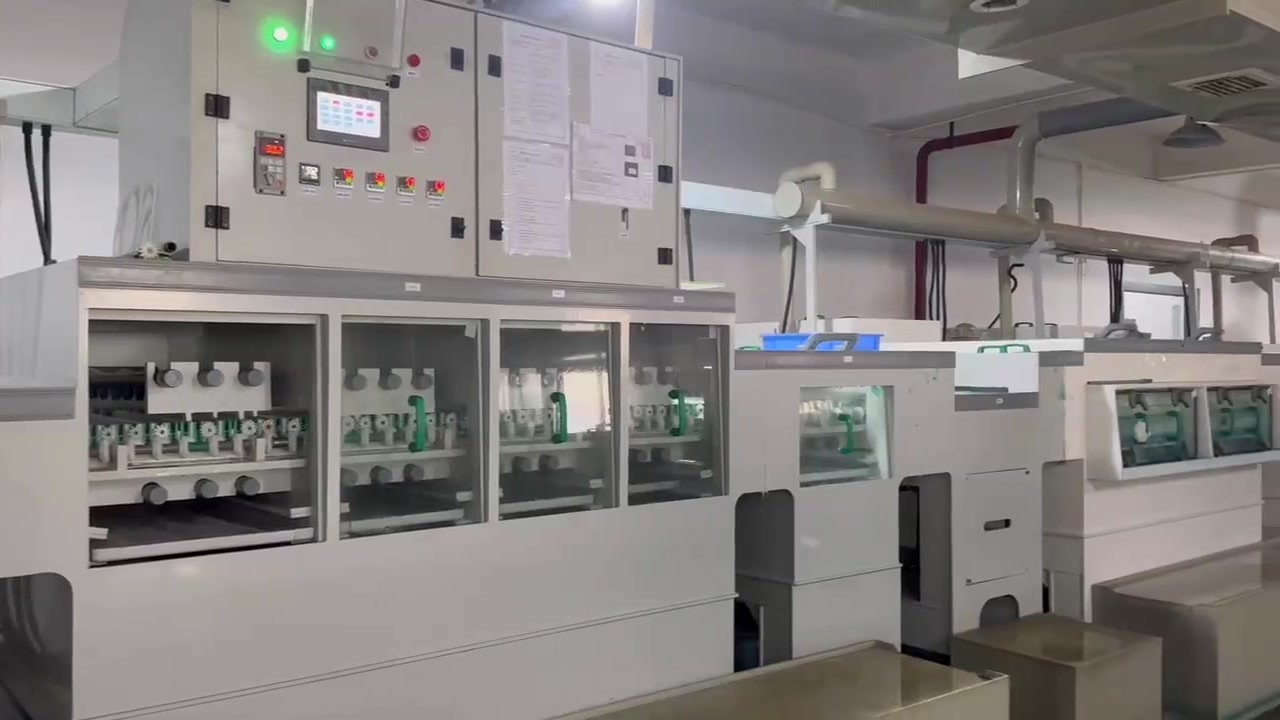
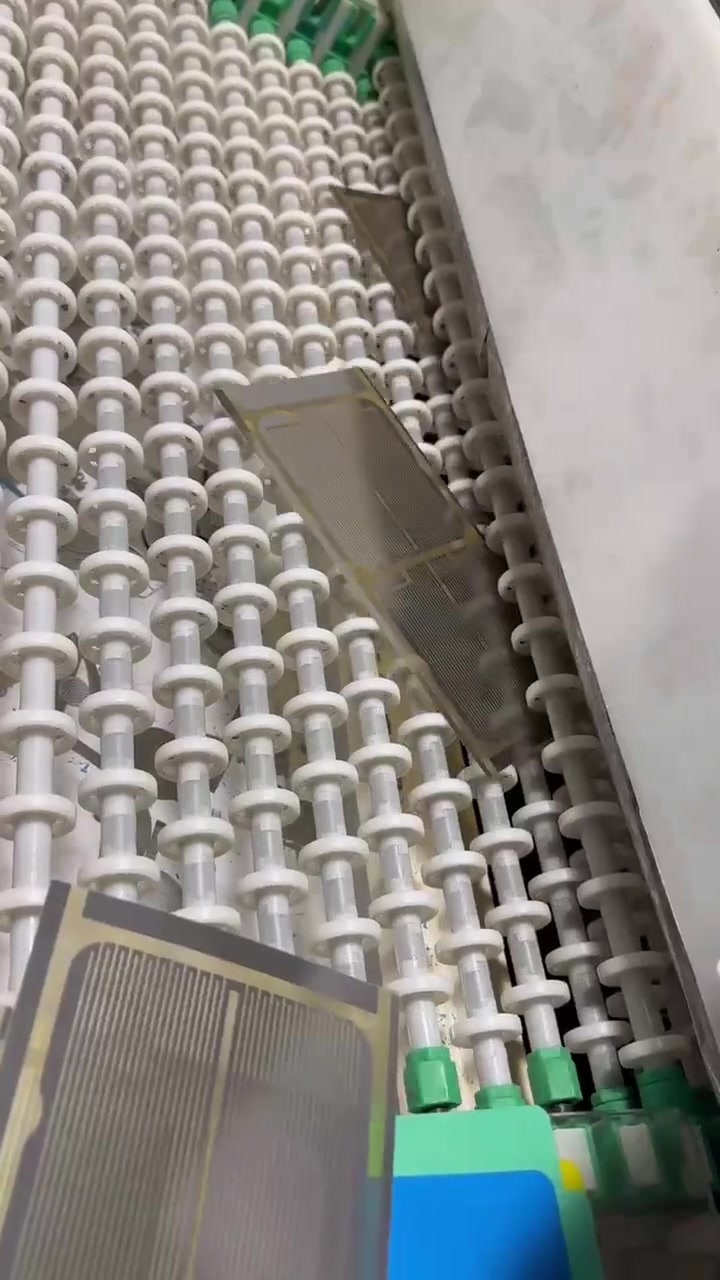
Factory Description
We have a full set of etching production equipment and mature processing technology. We can manufacture products in any shape with mesh sizes as small as 0.1mm, according to your requirements.

Our Advantage
Factory Direct Shipping
Our products undergo 100% QC checks before shipment, and we ensure compliance with international standards. If you require specific certifications for your target market, just let us know, and we'll meet those requirements.
Experienced Design and Manufacturing Team
We work closely with customers from the design phase to help avoid potential product flaws, ensuring both the functionality and design meet expectations.
Excellent Supply Chain Management
We can quickly adjust production schedules to meet your urgent deadlines, whether it's for large bulk orders or smaller rush orders.
OEM & ODM Support
We offer the option to print your logo or other customizations.
Strict Quality Control
Our products undergo 100% QC checks before shipment, and we ensure compliance with international standards. If you require specific certifications for your target market, just let us know, and we'll meet those requirements.
Certificate
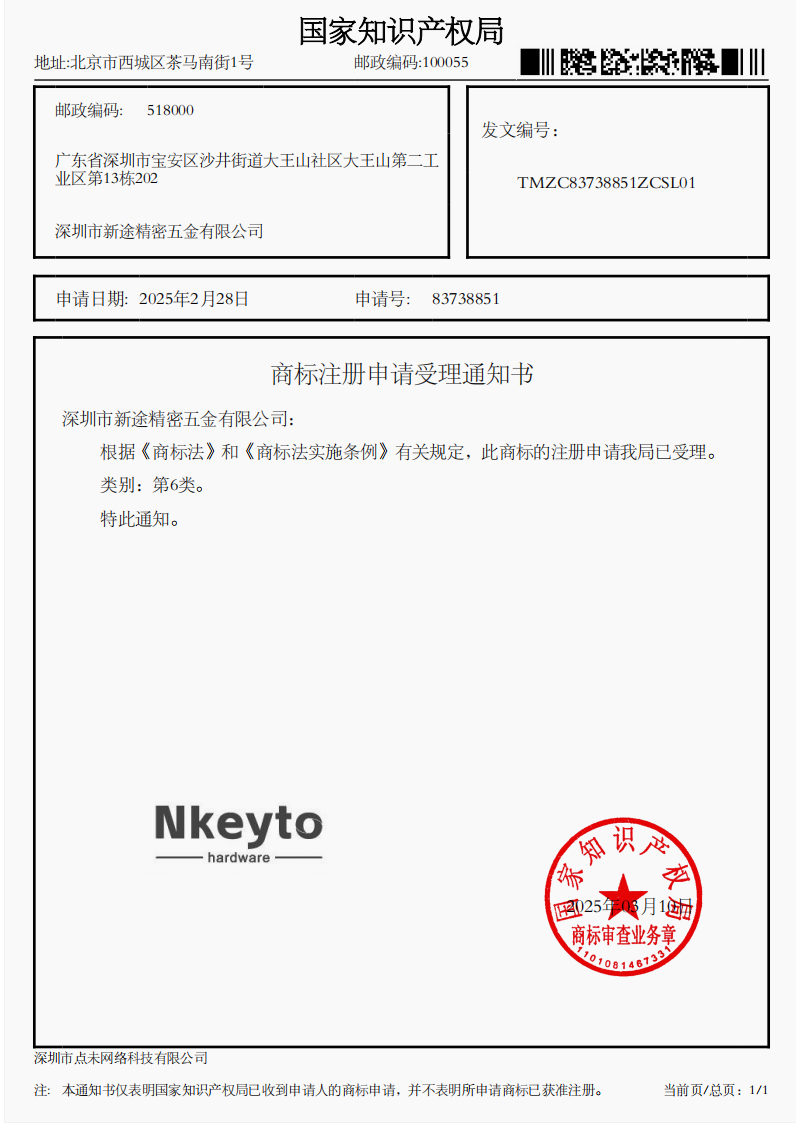
商标6类

9001
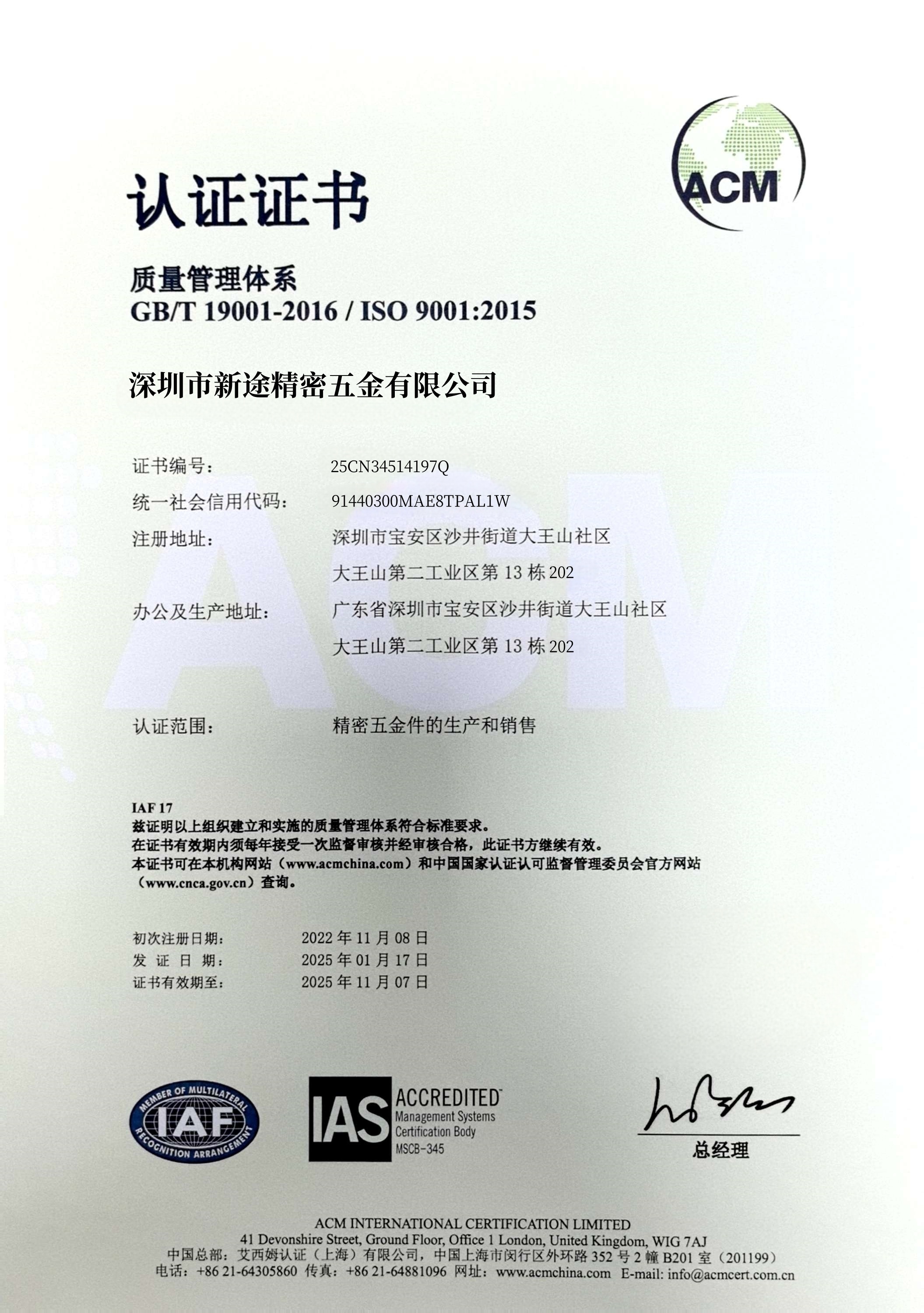
质量认证


Related Products

Shenzhen Nkeyto Precision Hardware Co., Ltd. is a factory specializing in precision hardware processing, committed to providing customers with high-quality products and services.We look forward to working with you.
Contact Us

E-mail: luna@nkeyto.com

Tel: +1 213-221-9094

Add: 13th Building, 202, Dawangshan Second Industrial Zone, Dawangshan Community, Shajing Street, Bao'an District, Shenzhen, Guangdong Province
Powered by: CEglobal
Copryright © 2025 Shenzhen Xintu Precision Hardware Co., Ltd.




Back To Top