



Precision Optical Grating Plate Stainless Steel Micro Slot
Category:
Key Words:
Product parameters
Parameter | Typical Range / Specification |
Product Name | Precision Optical Grating Plate / Encoder Grating Disc |
Material | Stainless Steel 304 / 316 / 316L |
Thickness | 0.02 – 0.50 mm (customizable) |
Structure Type | Through Slot / Micro Slit / Line Pattern |
Slot Width | 0.01 – 0.10 mm |
Pitch (Slot Spacing) | 0.02 – 0.50 mm |
Resolution | Up to 5000 lines per inch (LPI) or customized |
Pattern Accuracy | High precision, uniform distribution |
Tolerance | ±0.003 – ±0.01 mm |
Surface Quality | Burr-free, smooth edge, no deformation |
Flatness | ≤ 0.02 mm |
Processing Method | Chemical Etching (Primary) / Laser / CNC |
Surface Treatment | Cleaning / Passivation / Blackening (anti-reflection optional) |
Edge Condition | Smooth edge, no burrs |
Light Transmission | Optimized for optical signal stability |
Shape | Disc / Plate / Custom geometry |
OEM / ODM | Fully supported |
Drawing Format | CAD / PDF / DWG / DXF |
Application | Optical measurement / Encoder / Imaging system / Positioning system |
Product Description
Product Description
This precision optical grating plate is manufactured from high-quality stainless steel using advanced chemical etching technology. Featuring ultra-fine micro slot structures and high pattern accuracy, the grating ensures excellent optical performance and signal stability. With burr-free edges and uniform slit distribution, it is ideal for high-precision optical measurement and positioning systems.
Applications
Optical measurement and positioning systems
Imaging equipment and inspection systems
Precision alignment and calibration devices
Industrial automation and sensing systems
Laboratory optical instruments
Ultra-Precision Optical Grating Plates: The Advantage of Burr-Free Micro Slot Technology
High-Accuracy Stainless Steel Diffraction Gratings for Advanced Optical Systems
In the realm of advanced optical engineering, the optical grating plate is often the defining component between a functional device and a high-performance instrument. Acting as the "heart" of measurement systems, these gratings modulate light to generate the data that drives scientific and industrial decisions.
However, achieving micron-level accuracy is not merely a matter of design; it is a challenge of manufacturing physics. Traditional machining methods often introduce physical stress or edge imperfections that distort optical signals. At our facility, we recognize that micro-slot precision determines the ultimate success of your system. This is why we have dedicated our production capabilities to advanced chemical etching technology, delivering stainless steel gratings that offer exceptional signal stability and optical clarity.
The Manufacturing Advantage: Why Chemical Etching?
To achieve true optical-grade performance on metal substrates, the manufacturing process is just as critical as the material selection. While traditional methods like laser cutting or mechanical stamping serve general industrial purposes, they frequently fall short when applied to high-precision optical components.
Process Comparison for Optical Gratings
Feature | Chemical Etching (Our Specialty) | Laser Cutting | Mechanical Stamping |
|---|---|---|---|
Edge Quality | Perfectly Burr-Free | Slag & Recast Layers | Burrs & Rollover |
Material Stress | Zero Mechanical Stress | High Thermal Distortion | High Mechanical Stress |
Precision | ±0.01mm Accuracy | Moderate (Heat limitations) | Low (Tool wear issues) |
Best For | Complex Micro Slots | Thick, non-critical plates | Simple, high-volume shapes |
The Etching Superiority
- No Heat Affected Zone (HAZ): Unlike laser cutting, which melts metal and leaves a recast layer that can scatter light, chemical etching is a "cold" process. It dissolves metal atom by atom, preventing micro-cracks and ensuring the structural integrity of thin gratings remains intact.
- Absolute Flatness: Stamping exerts immense pressure, causing deformation and stress concentrations that can warp a delicate grating. Our etching process ensures the stainless steel grating remains perfectly flat and stress-free, which is vital for maintaining uniform slit gaps across the entire optical path.
Material Science & Micro-Structure Capabilities
Our factory specializes in pushing the boundaries of stainless steel micro-machining. We understand that optical components often operate in demanding environments where durability is paramount.
Why We Choose Stainless Steel
We primarily utilize high-grade Stainless Steel (e.g., SUS304, SUS316) for our optical gratings. Compared to glass or plastic alternatives, our metal gratings provide distinct advantages:
- Superior Durability: They are resistant to impact and vibration, making them the ideal choice for portable field equipment or heavy industrial machinery.
- Corrosion Resistance: Our etched metal parts can withstand harsh environments, including high humidity or chemical exposure, without degrading optical performance.
- Thermal Stability: The material maintains dimensional stability across temperature fluctuations, ensuring consistent calibration.
Achieving the Micro-Slot
Our chemical etching capabilities allow us to achieve geometries that are difficult or impossible with other methods:
- Minimum Aperture: We can successfully produce hole diameters and slot widths as small as 0.1mm.
- Uniformity: The etching process guarantees that every micro-slot is identical in width and spacing, a critical factor for consistent diffraction efficiency.
- Complex Geometries: Beyond simple linear gratings, we can etch complex circular patterns, variable pitch slots, and custom aperture shapes in a single process step without the cost of hard tooling.
Applications & Value
Our precision optical grating plates are not just components; they are the enablers of accuracy in various high-tech fields. By ensuring burr-free edges and uniform slit distribution, we help our clients significantly improve the Signal-to-Noise Ratio (SNR) in their devices.
Key Application Areas
- Spectrometers & Spectroscopy: High-precision entrance and exit slits require absolute edge definition to minimize stray light.
- Optical Encoders: Rotary and linear scales demand consistent pitch to ensure accurate position feedback in automation.
- Laser Alignment Systems: Used in construction and industrial tools for generating precise laser lines.
- Semiconductor Inspection: Critical apertures for wafer inspection equipment where contamination and particle generation (from burrs) must be zero.
- Medical Diagnostics: Flow cells and optical sensors in medical analyzers rely on the chemical inertness of our etched stainless steel parts.
Conclusion: Precision Tailored to Your Needs
We bridge the gap between optical design theory and manufacturing reality. Our decade of experience in precision metal processing ensures that your optical grating meets the strictest tolerances without compromise.
We do not just sell parts; we provide engineering solutions. Whether you require a standard linear grating or a complex custom aperture plate, our team is ready to assist with rapid prototyping and scalable mass production.
Ready to optimize your optical system?
Contact Luna today for a technical consultation or quote.
WhatsApp: 12132219094
Questions and Answers
Frequently Asked Questions (FAQ)
Q1: What is the typical tolerance for your etched optical gratings?
A: Through our advanced chemical etching process, we typically hold tolerances of ±0.01mm for slot widths and pitch. For specific high-precision requirements, please contact our engineering team to discuss your drawing.
Q2: Can you manufacture gratings with different materials?
A: Yes. While Stainless Steel (SUS304/316) is our standard due to its excellent balance of corrosion resistance and cost, we can also process other metals such as Copper, Brass, Aluminum, and Nickel depending on your specific optical and environmental requirements.
Q3: How does chemical etching ensure the slots are burr-free?
A: Chemical etching is a subtractive process that uses corrosive chemicals to dissolve metal. Unlike mechanical cutting which shears the material (leaving burrs), etching dissolves the material evenly from both sides, resulting in smooth, burr-free edges that do not require secondary finishing.
Q4: Do you offer custom designs for optical apertures?
A: Absolutely. We specialize in custom metal prototypes and small batches. Whether you need a specific slit width, a unique array pattern, or a specialized mounting geometry, we can manufacture it directly from your CAD files.
Q5: What is the minimum line width or hole size you can produce?
A: Our current production capabilities allow us to achieve a minimum aperture/hole size of 0.1mm. This allows for the creation of extremely fine micro-slot structures suitable for high-resolution optical applications.
Factory Description
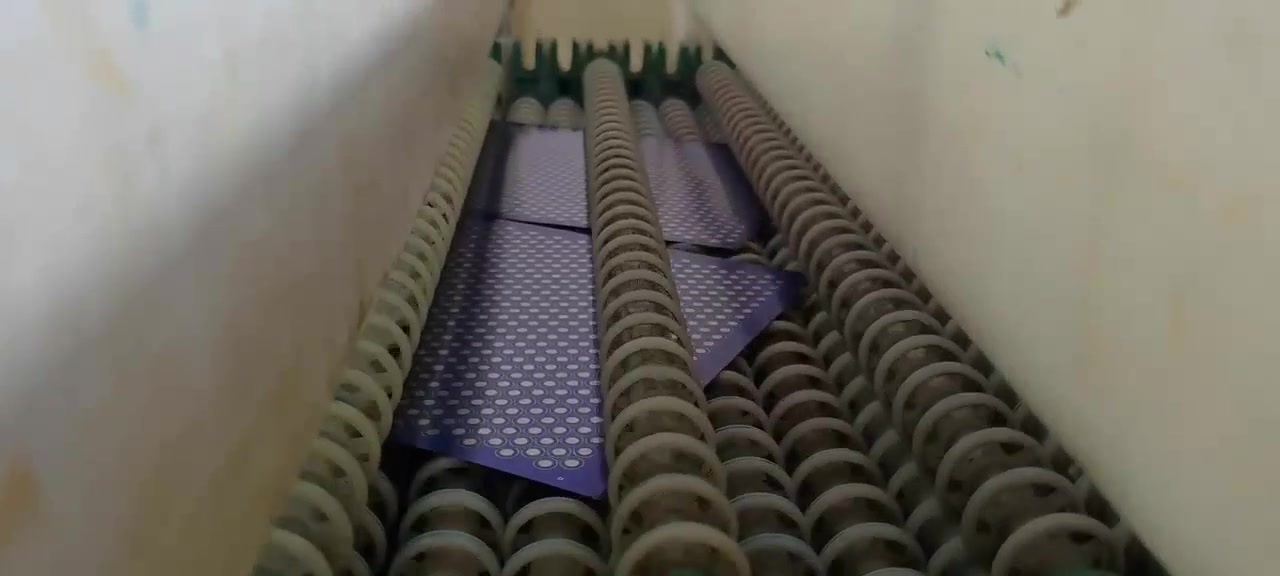
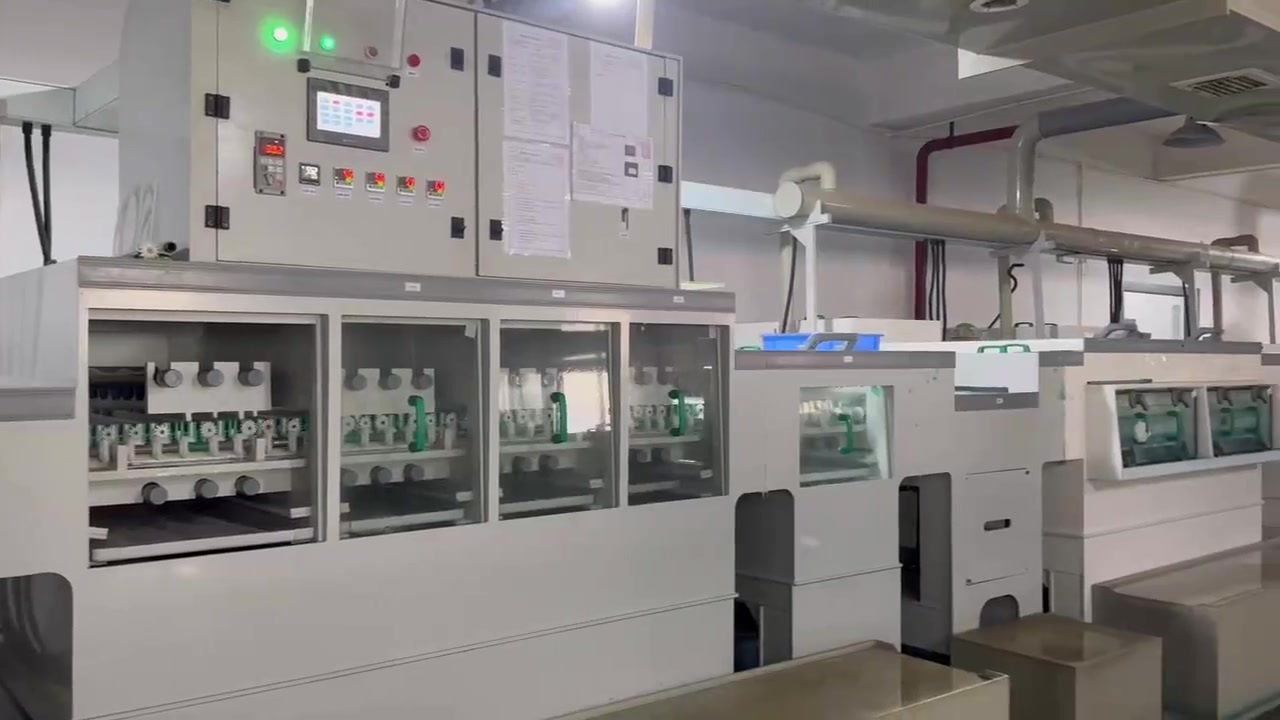
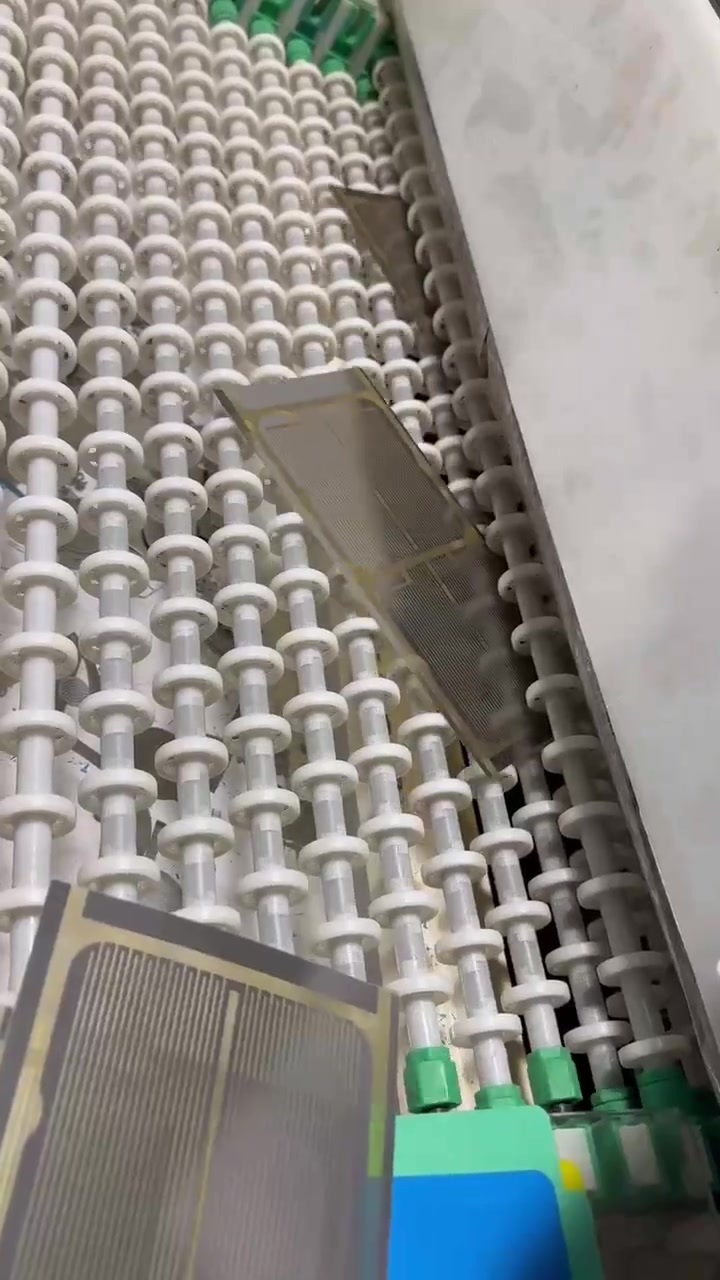
We have a full set of etching production equipment and mature processing technology. We can manufacture products in any shape with mesh sizes as small as 0.1mm, according to your requirements.

Our Advantage
Factory Direct Shipping
Our products undergo 100% QC checks before shipment, and we ensure compliance with international standards. If you require specific certifications for your target market, just let us know, and we'll meet those requirements.
Experienced Design and Manufacturing Team
We work closely with customers from the design phase to help avoid potential product flaws, ensuring both the functionality and design meet expectations.
Excellent Supply Chain Management
We can quickly adjust production schedules to meet your urgent deadlines, whether it's for large bulk orders or smaller rush orders.
OEM & ODM Support
We offer the option to print your logo or other customizations.
Strict Quality Control
Our products undergo 100% QC checks before shipment, and we ensure compliance with international standards. If you require specific certifications for your target market, just let us know, and we'll meet those requirements.
Certificate
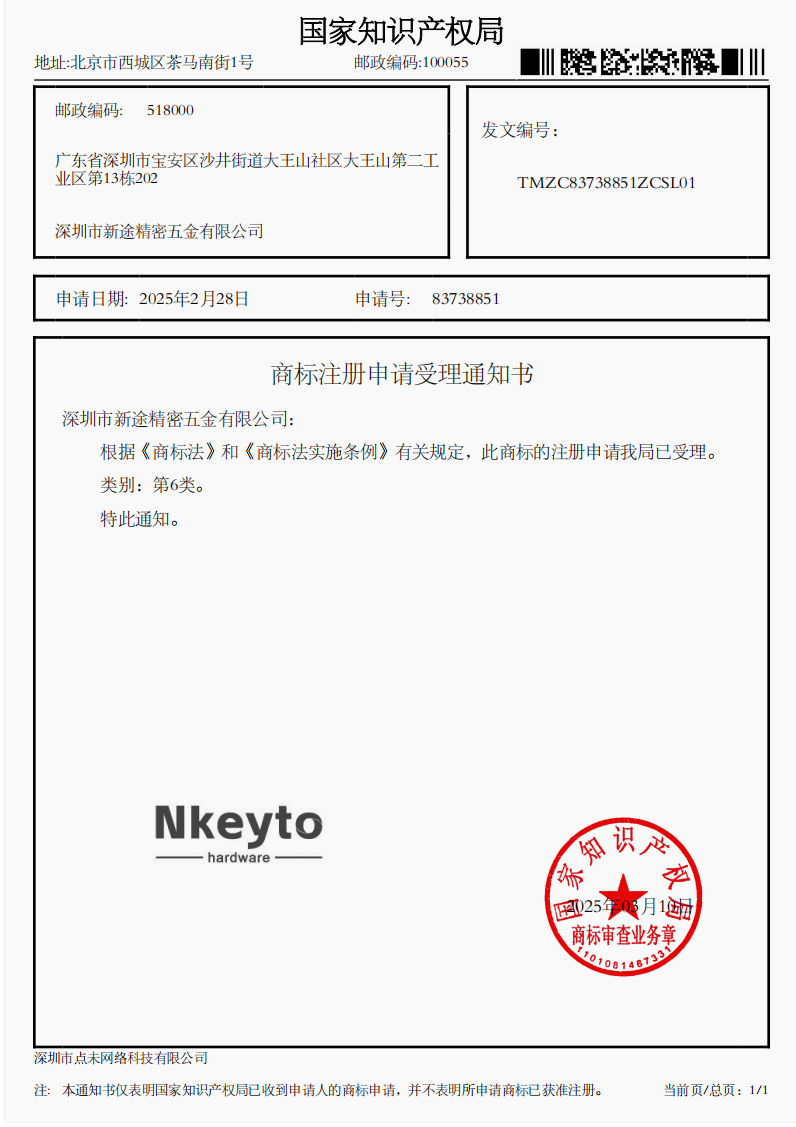
商标6类

9001
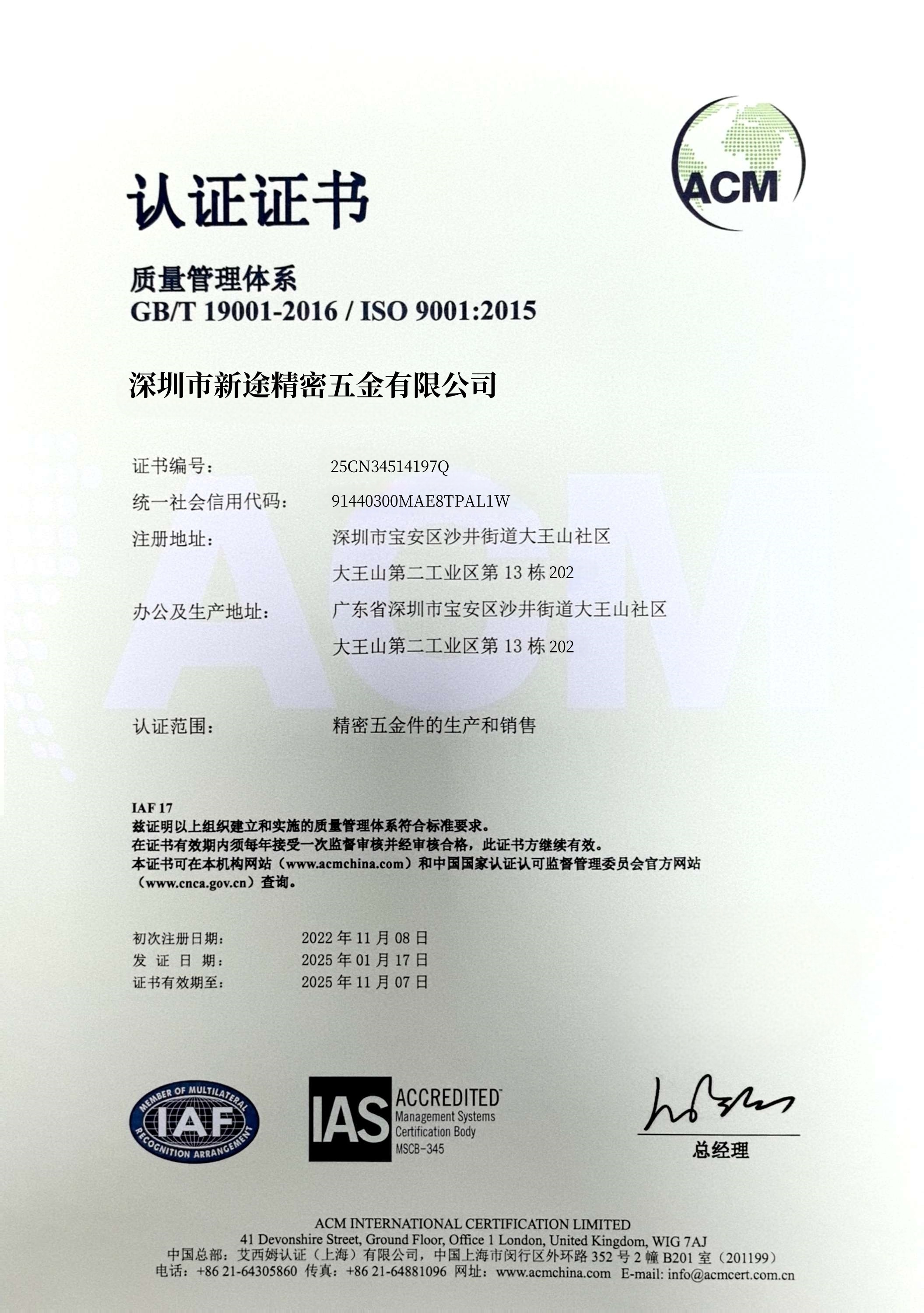
质量认证


Related Products

Shenzhen Nkeyto Precision Hardware Co., Ltd. is a factory specializing in precision hardware processing, committed to providing customers with high-quality products and services.We look forward to working with you.
Contact Us

E-mail: luna@nkeyto.com

Tel: +1 213-221-9094

Add: 13th Building, 202, Dawangshan Second Industrial Zone, Dawangshan Community, Shajing Street, Bao'an District, Shenzhen, Guangdong Province
Powered by: CEglobal
Copryright © 2025 Shenzhen Xintu Precision Hardware Co., Ltd.




Back To Top