



Precision Stainless Steel Spring Contact
Category:
Key Words:
Product parameters
Parameter | Description |
Material | Stainless Steel (SUS301 / SUS304 / SUS316), Beryllium Copper (optional), Phosphor Bronze (optional) |
Manufacturing Process | Chemical Etching (Primary), Forming / Bending (Optional), Laser Cutting (Auxiliary) |
Shape | Flat / Spring type / Cantilever / Multi-contact / Custom profiles |
Size Range | Customizable (Typical: ≤ 300 × 300 mm) |
Thickness | 0.01 mm – 0.5 mm (Etching optimal: 0.02–0.3 mm) |
Hole Diameter (if applicable) | ≥ 0.05 mm |
Minimum Line Width | ≥ 0.03 mm |
Tolerance | ±0.005 mm ~ ±0.02 mm |
Etching Accuracy | ±10% of material thickness |
Elastic Property | Available in half-hard / full-hard materials (SUS301 / copper alloys) |
Contact Force | Customizable based on design and material |
Edge Quality | Burr-free, smooth edge, no deformation |
Flatness | ≤ 0.03 mm |
Surface Finish | Nickel Plating / Gold Plating / Tin Plating / Passivation (optional) |
Conductivity | High conductivity (especially copper alloys) |
Customization (OEM/ODM) | Supported (based on drawings or samples) |
Drawing Formats Accepted | CAD / DWG / DXF / STEP / PDF |
Quality Control | Dimensional inspection, spring force testing (optional), plating thickness inspection |
Product Description
Product Description:
Precision stainless steel spring contact is a high-accuracy metal contact component designed for electrical conduction and elastic connection in compact assemblies. Manufactured by chemical etching, laser cutting, and CNC-assisted processes, this spring contact features excellent elasticity, fine structure, and burr-free edges. It ensures stable electrical performance and is ideal for custom OEM applications requiring reliable contact force and precision geometry.
Key Features:
Connector spring contacts
Battery contact terminals
Electronic contact springs
PCB contact components
Signal transmission contact parts
Chemical Etching vs. Stamping for Precision Spring Contacts: Why Burr-Free Matters
In the realm of precision electronics, the reliability of a connection often hinges on the quality of a single component: the Spring Contact. Whether it is a battery terminal in a wearable device or a pin in a high-speed connector, the contact must provide consistent electrical conductivity and mechanical force.
However, traditional manufacturing methods often introduce microscopic defects that can compromise performance. At our factory, we have seen how the shift from traditional stamping to Chemical Etching can solve these issues, delivering Burr-free metal contacts that ensure superior reliability. This article explores why the manufacturing process matters and how Precision contact manufacturing is evolving to meet the demands of modern technology.
The Hidden Dangers of Traditional Stamping
Stamping has been the industry standard for decades, but it is a mechanical process that relies on physical force. A hard metal die strikes a metal sheet at high speed to shear the material into shape. While effective for simple, thick parts, this process creates inherent problems for delicate components like a Precision Stainless Steel Spring Contact.
The Burr Problem
When a die shears metal, it rarely leaves a perfectly clean edge. Instead, it often creates a "roll-over" or a microscopic burr—a tiny shard of metal protruding from the edge. In a connector, these burrs can break off during mating, creating loose conductive particles that cause short circuits. Alternatively, they can abrade the mating surface, leading to wear and eventual connection failure.
Material Stress
Stamping work-hardens the metal. The physical impact alters the grain structure of the material, creating internal stress. For a spring contact, which relies on elasticity, this stress can lead to unpredictable spring force or fatigue failure over time.
The Chemical Etching Advantage
Chemical etching, also known as photochemical machining, is a "cold" process. Instead of hammering the metal, we use corrosive chemicals to dissolve it selectively. This fundamental difference offers distinct advantages for manufacturing Burr-free metal contacts.
1. Zero Mechanical Stress
Because there is no physical contact between the tool and the part, the material retains its original temper and grain structure. This is critical for spring contacts. A Precision Stainless Steel Spring Contact produced via etching will have consistent, predictable elasticity, ensuring it maintains the necessary contact force throughout its lifecycle.
2. Inherently Burr-Free Edges
The etching process attacks the metal from both sides simultaneously, meeting in the middle. This creates a smooth, clean edge without the "breakout" associated with stamping. For electrical contacts, this smooth surface ensures a uniform mating surface, reducing contact resistance and preventing arcing.
3. Complex Geometries
Hard tooling is expensive and difficult to modify. Etching uses digital tooling (photographic masks), allowing us to produce complex geometries—such as intricate mesh structures or varying thicknesses—without the cost of a die.
Comparison: Stamping vs. Chemical Etching
To help you decide the best manufacturing route for your project, we have compiled a comparison of the two processes.
Feature | Stamping (Traditional) | Chemical Etching (Advanced) |
|---|---|---|
Edge Quality | Burrs present; requires secondary deburring | Burr-free; smooth edges ready for use |
Material Stress | High; alters material hardness/temper | Zero stress; maintains original properties |
Lead Time | Weeks (due to die manufacturing) | Days (digital tooling) |
Tooling Cost | High (hard steel dies) | Low (digital masks) |
Complexity | Limited by physical tool access | Unlimited; ideal for complex meshes |
Best For | Simple, high-volume, thick parts | Precision, thin, complex parts |
NKEYTO's Approach to Precision Contact Manufacturing
At our Shenzhen facility, we specialize in high-precision chemical etching. We understand that a Spring Contact is not just a piece of metal; it is a functional interface that dictates the performance of your device.
Our Precision contact manufacturing capabilities allow us to work with a wide range of materials, including Stainless Steel (SUS304, SUS301), Beryllium Copper, and Phosphor Bronze. By combining etching with laser cutting and CNC support, we can achieve tolerances as tight as ±0.01mm.
For example, in the production of battery contacts, surface smoothness is paramount to prevent damage to the battery terminal. Our etched contacts provide the perfect surface finish, ensuring a safe and stable connection. Furthermore, because we use digital tooling, we can iterate designs rapidly, allowing our customers to move from prototype to mass production faster than ever before.
Conclusion
While stamping has its place in heavy industry, the future of micro-electronics belongs to chemical etching. The ability to produce Burr-free metal contacts without compromising material integrity makes etching the superior choice for high-reliability applications. Whether you are designing a new medical device or upgrading an automotive connector, choosing the right manufacturing process is the first step toward success.
Get a Quote for Your Precision Contacts
Ready to upgrade your components with burr-free precision? If you have a drawing or a concept for a Precision Stainless Steel Spring Contact, our team is ready to help. Contact Luna on WhatsApp at 12132219094 for a fast quote and engineering support.
Questions and Answers
Frequently Asked Questions (FAQ)
Q: Can chemical etching handle high-volume production?
A: Yes. While etching is famous for rapid prototyping, our factory is equipped for mass production. We can produce millions of Precision Stainless Steel Spring Contacts with consistent quality.
Q: Is etching more expensive than stamping?
A: For complex parts and low-to-medium volumes, etching is significantly cheaper because there are no expensive tooling (die) costs. For very high volumes, the unit cost is competitive, especially when you factor in the savings from eliminating secondary deburring operations.
Q: What materials can you etch for spring contacts?
A: We can etch almost any metal, but for spring contacts, we most commonly use Stainless Steel (for corrosion resistance) and Beryllium Copper (for high conductivity and elasticity).
Q: How tight are the tolerances for etched contacts?
A: We can hold tolerances as tight as ±0.01mm, which is sufficient for the vast majority of precision electronic applications.
Factory Description
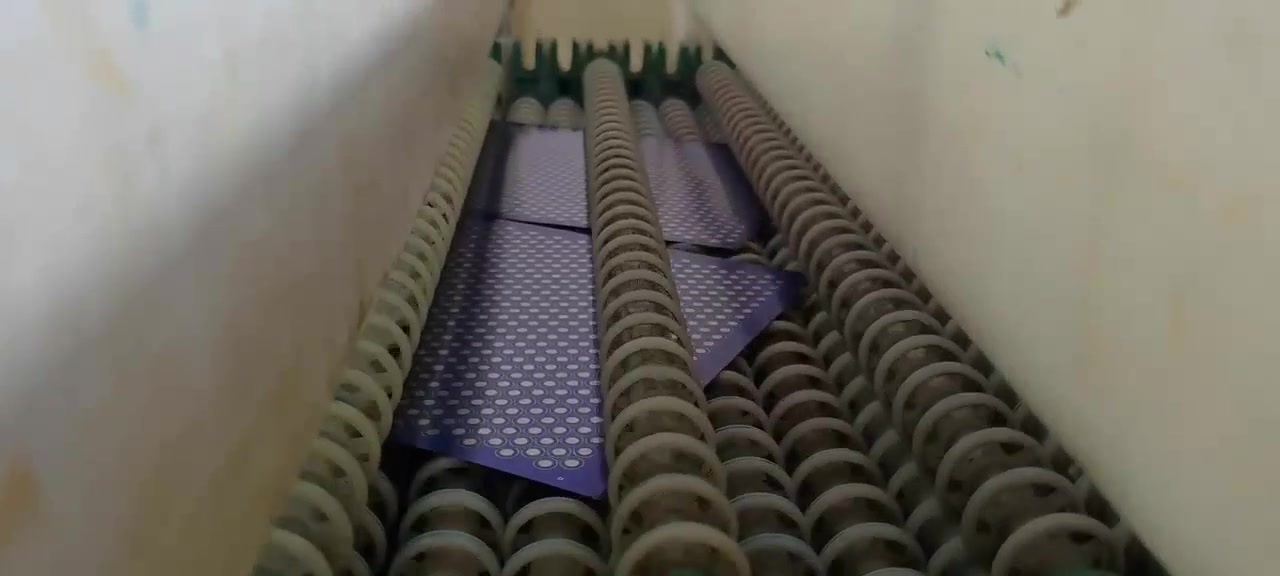
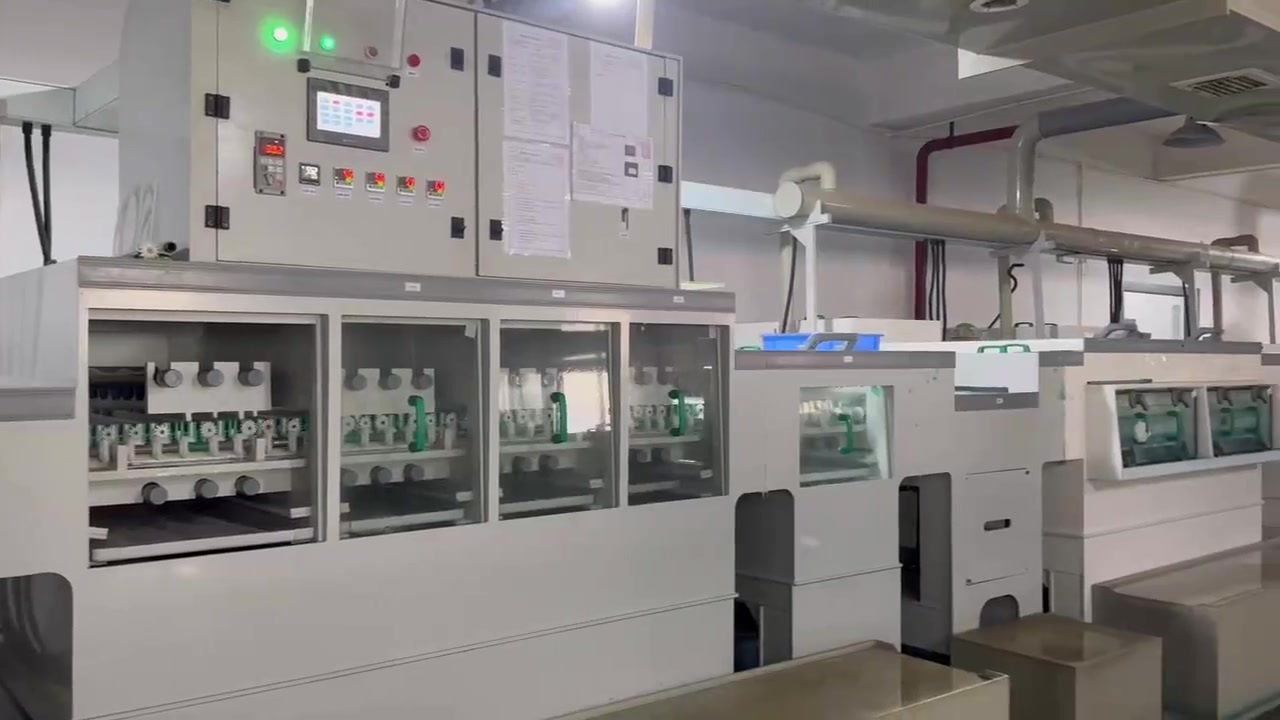
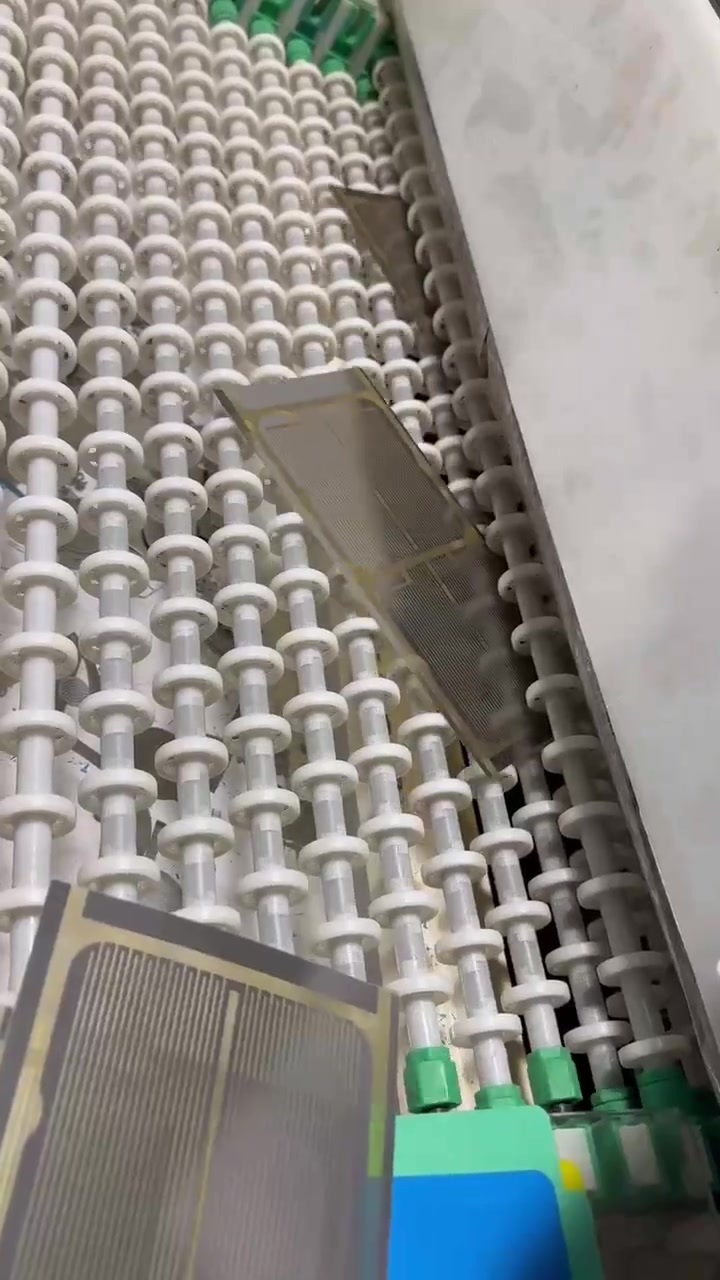
We have a full set of etching production equipment and mature processing technology. We can manufacture products in any shape with mesh sizes as small as 0.1mm, according to your requirements.

Our Advantage
Factory Direct Shipping
Our products undergo 100% QC checks before shipment, and we ensure compliance with international standards. If you require specific certifications for your target market, just let us know, and we'll meet those requirements.
Experienced Design and Manufacturing Team
We work closely with customers from the design phase to help avoid potential product flaws, ensuring both the functionality and design meet expectations.
Excellent Supply Chain Management
We can quickly adjust production schedules to meet your urgent deadlines, whether it's for large bulk orders or smaller rush orders.
OEM & ODM Support
We offer the option to print your logo or other customizations.
Strict Quality Control
Our products undergo 100% QC checks before shipment, and we ensure compliance with international standards. If you require specific certifications for your target market, just let us know, and we'll meet those requirements.
Certificate
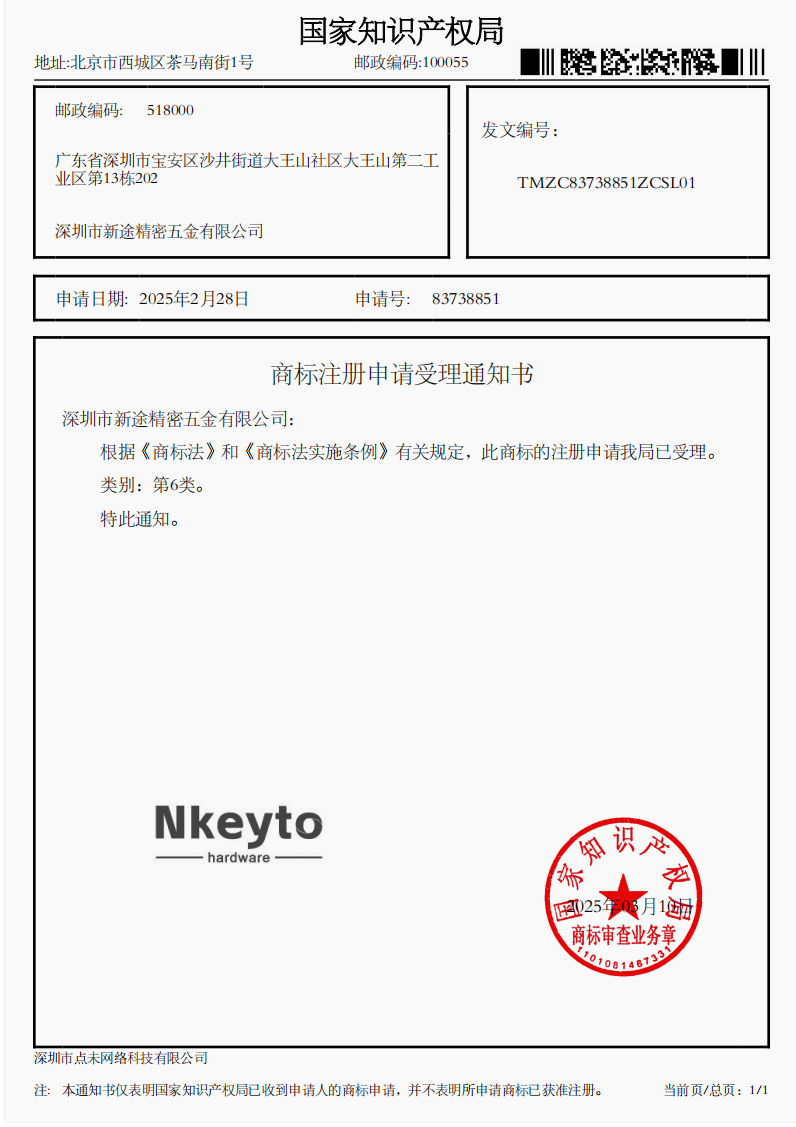
商标6类

9001
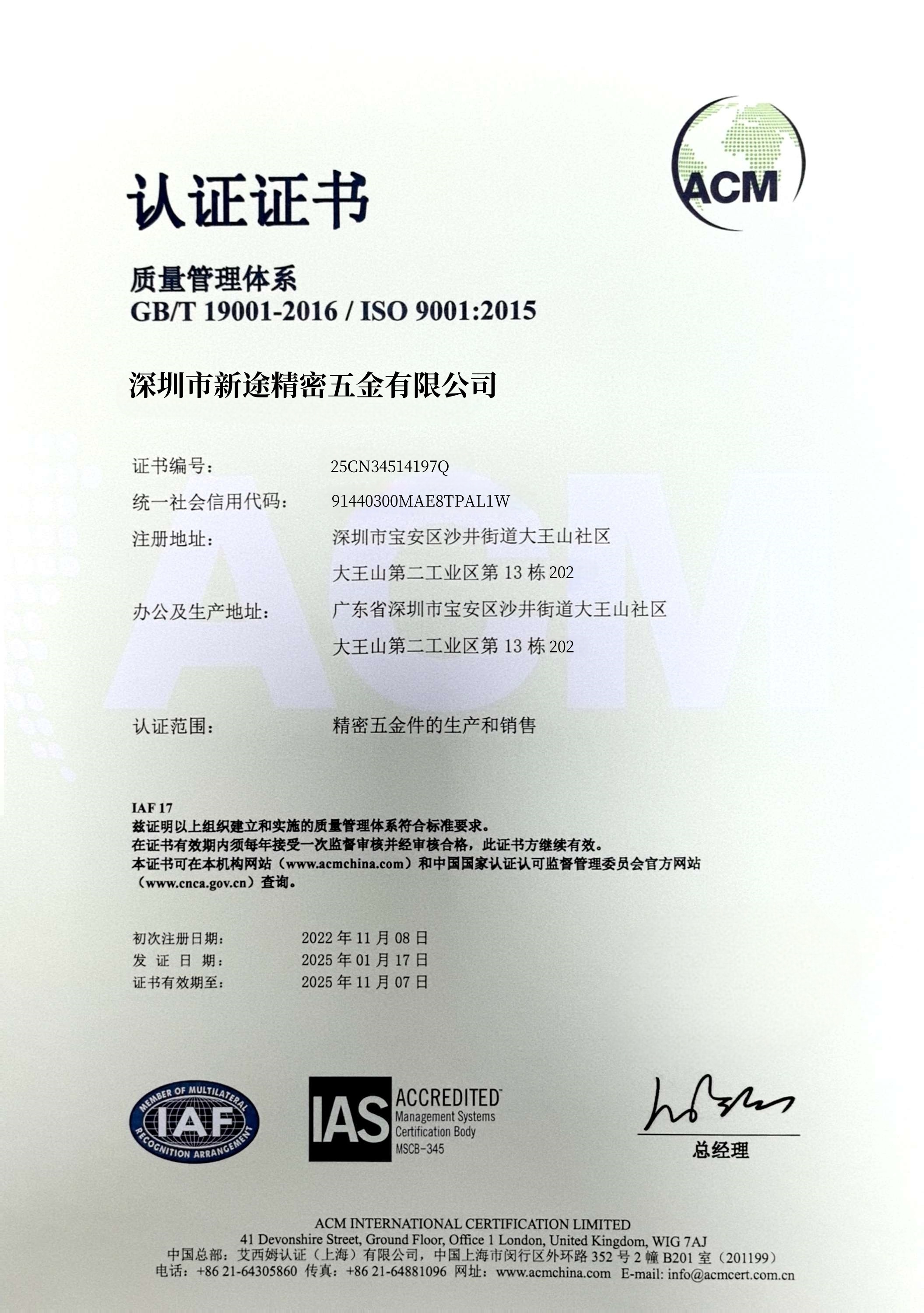
质量认证


Related Products

Shenzhen Nkeyto Precision Hardware Co., Ltd. is a factory specializing in precision hardware processing, committed to providing customers with high-quality products and services.We look forward to working with you.
Contact Us

E-mail: luna@nkeyto.com

Tel: +1 213-221-9094

Add: 13th Building, 202, Dawangshan Second Industrial Zone, Dawangshan Community, Shajing Street, Bao'an District, Shenzhen, Guangdong Province
Powered by: CEglobal
Copryright © 2025 Shenzhen Xintu Precision Hardware Co., Ltd.




Back To Top