



RF Antenna Array Plate for High Frequency Communication Systems
Category:
Key Words:
Product parameters
Parameter | Specification / Range |
Product Name | RF Antenna Array Plate / Etched Antenna Plate / Metal Antenna Component |
Material | Stainless Steel / Copper / Brass / Aluminum / Nickel Alloy |
Thickness | 0.05 – 1.0 mm (customizable) |
Outer Diameter / Size | Custom according to drawing |
Aperture / Pattern Type | Etched slots / Micro apertures / Array patterns / Custom geometry |
Pattern Accuracy | High precision etched pattern |
Minimum Line Width | 0.03 – 0.10 mm (depending on material and thickness) |
Minimum Slot Width | 0.03 – 0.10 mm (customizable) |
Tolerance | ±0.005 – ±0.02 mm |
Surface Treatment | Cleaning / Passivation / Polishing / Nickel Plating / Tin Plating |
Edge Condition | Burr-free / Smooth edge |
Flatness | According to design requirement |
Manufacturing Process | Chemical Etching / Laser Cutting / Stamping / Forming |
Frequency Application | RF / Microwave / High Frequency / Communication Systems |
Structure Type | Flat plate / Array plate / Functional metal component |
OEM / ODM | Supported |
Drawing Format | PDF / CAD / DWG / DXF / STEP |
Sample | Available |
Lead Time | 5 – 15 days for samples, depending on complexity |
Packaging | Standard export packaging / Custom protective packaging |
Product Description
Product Description
RF antenna array plate designed for high-frequency communication systems, featuring precision etched patterns for accurate signal transmission and distribution. This metal antenna array plate ensures stable RF performance, low signal loss, and consistent structural accuracy, making it suitable for advanced communication applications. As a precision RF antenna and antenna array component, it supports customized frequency design and high-density layouts.
Application Field
Widely used in RF communication systems, wireless modules, radar systems, and signal transmission equipment. This RF antenna array plate is ideal for high-frequency antenna applications in communication infrastructure and electronic systems.
High Frequency RF Antenna Array Plate for 5G Communication Systems
In the rapidly evolving landscape of 5G infrastructure and advanced radar systems, the physical precision of your hardware dictates the ceiling of your system's performance. At our facility, we specialize in manufacturing high-frequency RF antenna array plates that bridge the gap between complex circuit design and physical reality.
Our focus is simple: delivering metal antenna array plates that ensure signal integrity, minimal transmission loss, and absolute structural consistency.
Engineered for the Demands of 5G and Radar
The shift toward 5G technology and millimeter-wave (mmWave) communication has rendered traditional manufacturing methods insufficient for high-end applications. Our high frequency antennas are specifically engineered to operate within these demanding spectrums.
Whether you are deploying phased array radar systems or next-generation 5G base stations, the consistency of the antenna element is non-negotiable. We understand that in high-frequency environments, microscopic structural deviations can result in signal degradation or phase misalignment. Our manufacturing process is calibrated to eliminate these variances, ensuring that every component in your array performs identically.
Why We Choose Precision Chemical Etching
To achieve the rigorous standards required for modern communication systems, we rely on precision chemical etching rather than mechanical stamping or traditional milling. This choice is driven by the physics of RF signal transmission.
- Burr-Free Geometry: In RF applications, sharp edges or burrs (common in stamping) can concentrate electric fields, leading to arcing or signal loss. Our etching process is non-contact and chemical, resulting in perfectly smooth, burr-free edges that maintain signal stability.
- Preserving Material Integrity: Mechanical punching induces stress and micro-fractures in the metal, which can warp thin substrates over time. Chemical etching leaves the material stress-free and perfectly flat, a critical factor for maintaining the precise gap distances required in high-frequency circuits.
- Complexity Without Compromise: We can produce complex feed networks and micro-patterns that would be impossible or prohibitively expensive with hard tooling. This allows for high-density layouts essential for compact 5G modules.
Technical Specifications
Our production lines are equipped to handle a wide range of frequency requirements and material specifications.
Parameter | Specification |
|---|---|
Frequency Range | Optimized for Sub-6GHz and mmWave (up to 40GHz+) |
Impedance Control | Precise 50Ω / 75Ω matching via trace width control |
Material Versatility | Copper, Aluminum, Stainless Steel, Rogers, PTFE composites |
Precision Capability | Minimum aperture/line width of 0.1mm |
Tolerance | ±0.01 mm (depending on material thickness) |
Surface Finish | Gold, Silver, or Tin plating available for oxidation resistance |
Material Selection and Performance
We work closely with our clients to select the optimal material stack-up for their specific application.
- Conductors: We predominantly use high-conductivity copper for the radiating elements to minimize resistive losses.
- Structural Components: For antenna arrays requiring structural rigidity with lower weight, we utilize precision-etched aluminum.
Substrates: We have extensive experience processing low-loss laminates such as Rogers and PTFE. These materials are essential for reducing the loss tangent (Df) in high-frequency transmission, ensuring that the energy is radiated rather than
Ready to enhance your RF system performance?
Contact us today to discuss your antenna array specifications and manufacturing needs.
Contact Person: Luna
WhatsApp: 12132219094
Questions and Answers
Frequently Asked Questions
Why is chemical etching preferred over stamping for 5G antennas?
Stamping involves physical force that can distort thin metal sheets and create burrs. In 5G applications, where signal wavelength is short, these imperfections cause scattering and loss. Our etching process guarantees a flat, smooth surface that preserves the theoretical performance of your design.
Can you handle complex impedance matching requirements?
Yes. Impedance is determined by the physical geometry of the trace and the dielectric properties of the material. Our etching process allows us to control trace widths with extreme accuracy (down to ±0.01mm), which is essential for maintaining strict 50Ω impedance matching across the array.
Do you support prototyping for custom RF designs?
We do. One of the distinct advantages of our chemical etching process is the use of "digital tooling." This means we can manufacture prototypes rapidly without the high cost and long lead times associated with hard molds. This allows you to iterate your 5G antenna designs quickly and cost-effectively.
Factory Description
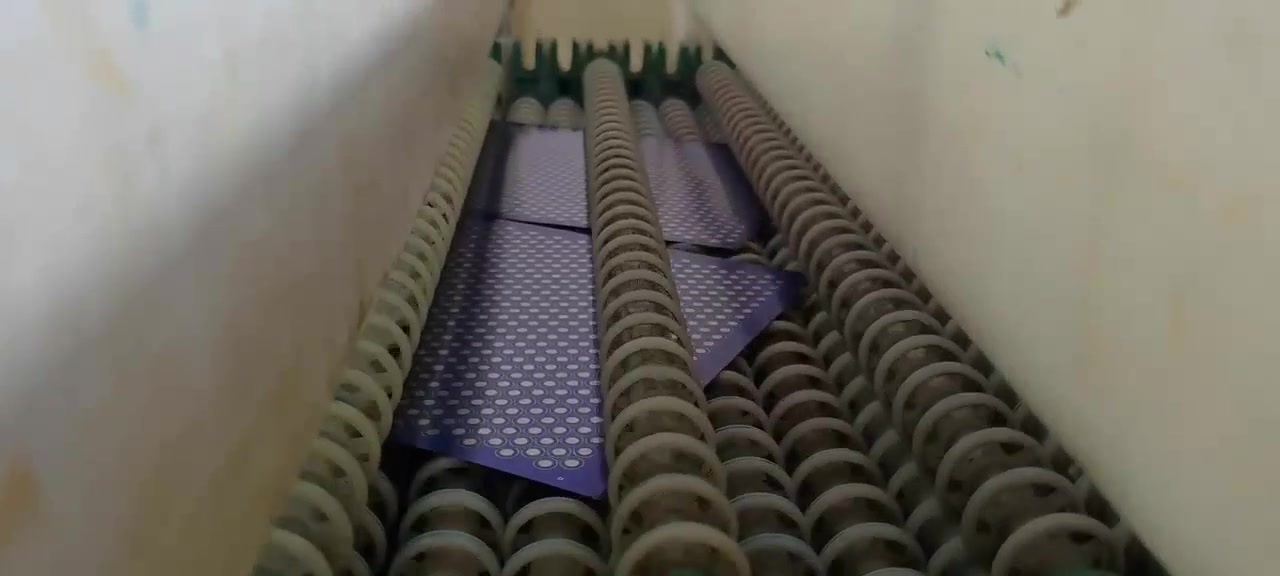
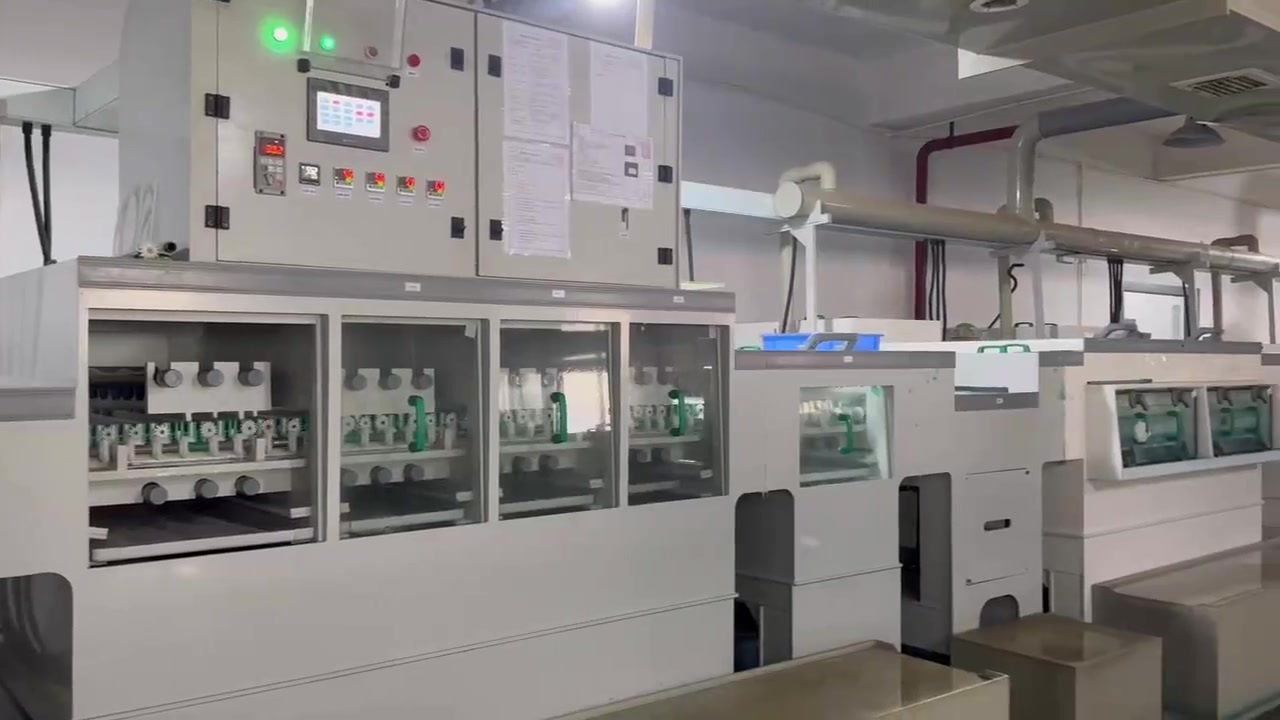
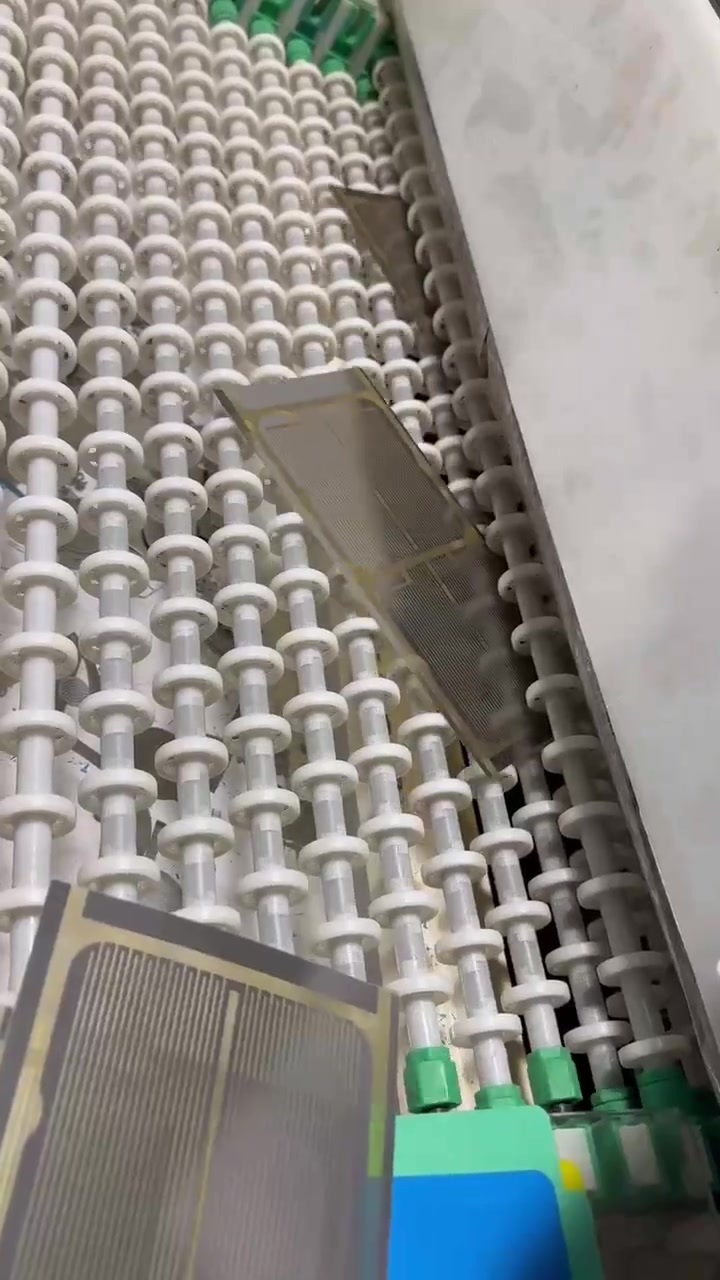
We have a full set of etching production equipment and mature processing technology. We can manufacture products in any shape with mesh sizes as small as 0.1mm, according to your requirements.

Our Advantage
Factory Direct Shipping
Our products undergo 100% QC checks before shipment, and we ensure compliance with international standards. If you require specific certifications for your target market, just let us know, and we'll meet those requirements.
Experienced Design and Manufacturing Team
We work closely with customers from the design phase to help avoid potential product flaws, ensuring both the functionality and design meet expectations.
Excellent Supply Chain Management
We can quickly adjust production schedules to meet your urgent deadlines, whether it's for large bulk orders or smaller rush orders.
OEM & ODM Support
We offer the option to print your logo or other customizations.
Strict Quality Control
Our products undergo 100% QC checks before shipment, and we ensure compliance with international standards. If you require specific certifications for your target market, just let us know, and we'll meet those requirements.
Certificate
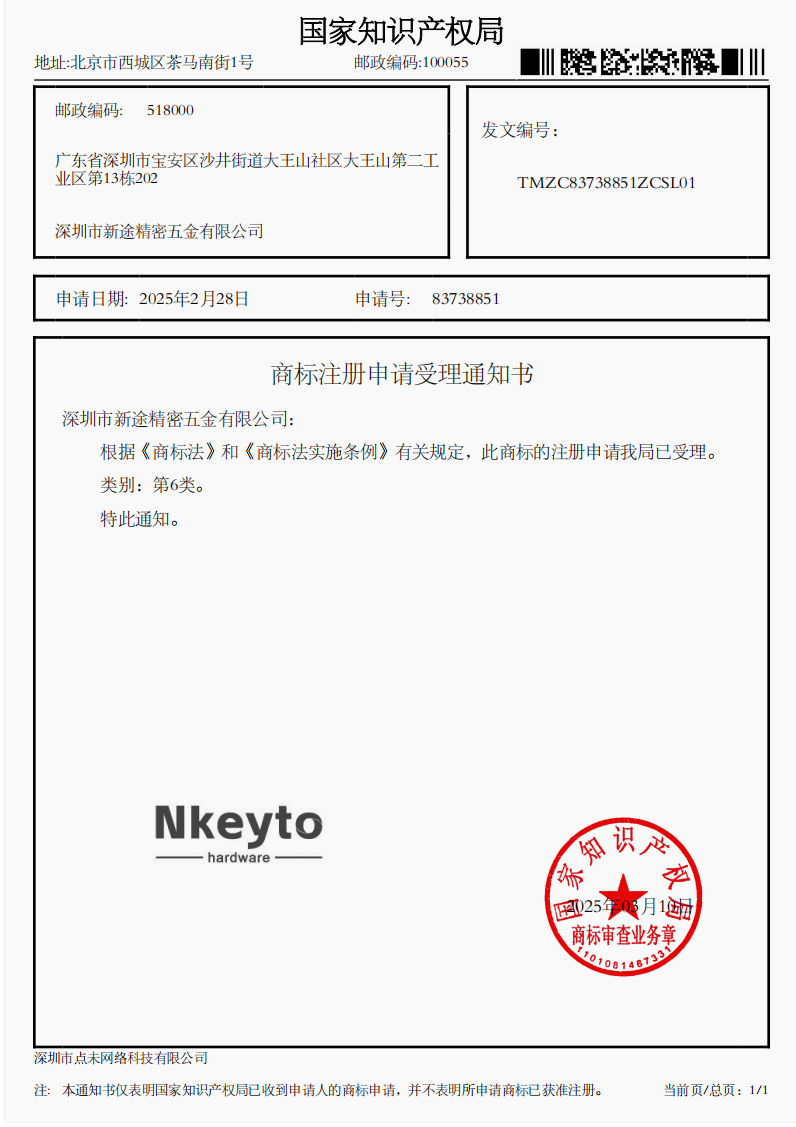
商标6类

9001
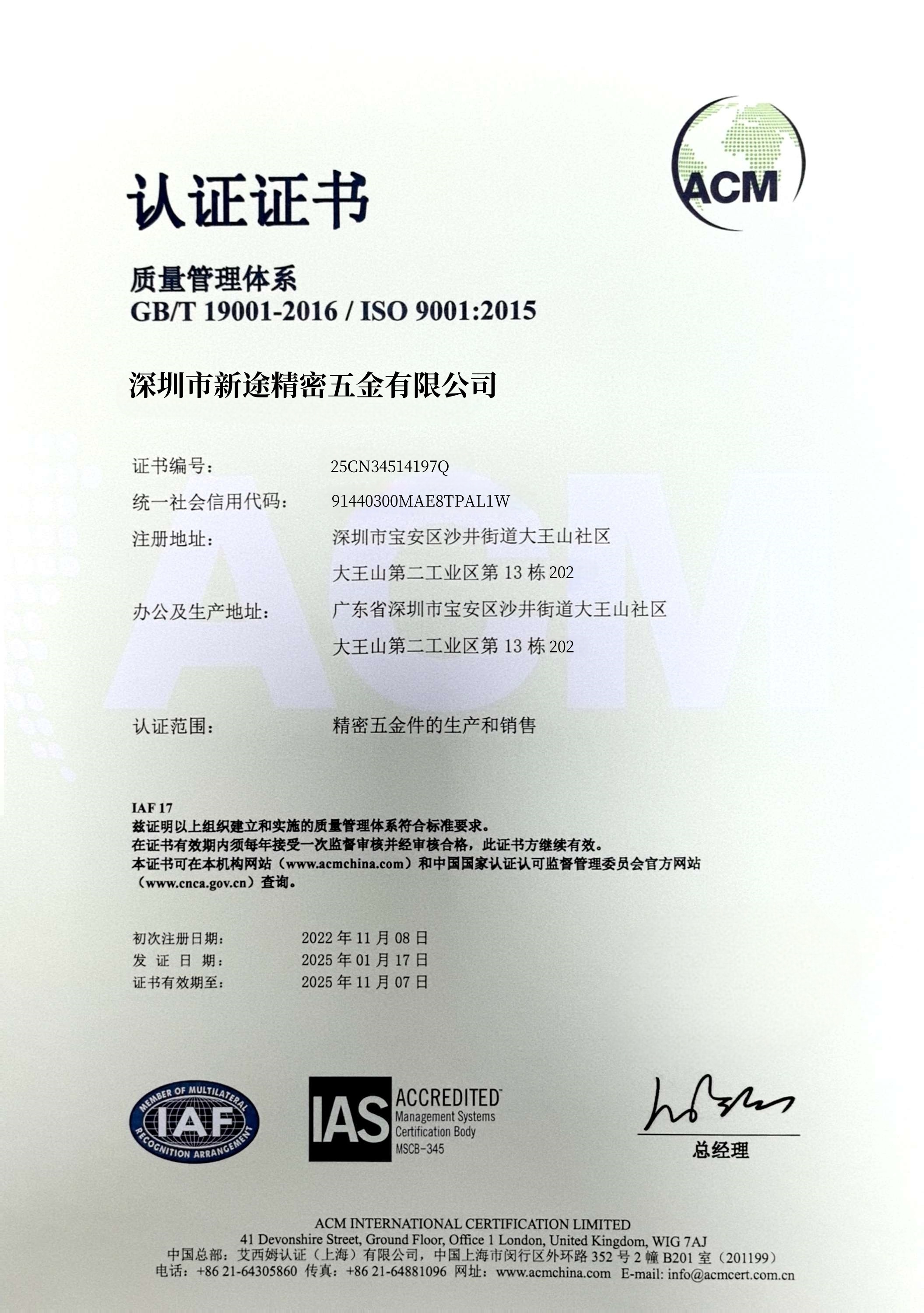
质量认证


Related Products

Shenzhen Nkeyto Precision Hardware Co., Ltd. is a factory specializing in precision hardware processing, committed to providing customers with high-quality products and services.We look forward to working with you.
Contact Us

E-mail: luna@nkeyto.com

Tel: +1 213-221-9094

Add: 13th Building, 202, Dawangshan Second Industrial Zone, Dawangshan Community, Shajing Street, Bao'an District, Shenzhen, Guangdong Province
Powered by: CEglobal
Copryright © 2025 Shenzhen Xintu Precision Hardware Co., Ltd.




Back To Top