



RF Shielding Can for Automotive Electronics PCB Shield
Category:
Key Words:
Product parameters
Parameter | Specification |
Product Name | EMI Shielding Can / RF Shielding Cover / PCB Shielding Can |
Material | Stainless Steel (SUS304 / SUS301), Nickel Silver, Copper |
Thickness | 0.05 mm – 0.30 mm |
Manufacturing Process | Chemical Etching + Stamping + Bending |
Surface Treatment | Tin Plating / Nickel Plating / Gold Plating / Natural Finish |
Shielding Effectiveness | 30 dB – 90 dB (depending on design & frequency) |
Frequency Range | MHz – GHz |
Dimensional Tolerance | ±0.01 – ±0.03 mm |
Flatness | ≤ 0.05 mm |
Hole Size | ≥ 0.03 mm (etching dependent) |
Structure Type | One-piece / Two-piece (Frame + Cover) / Clip Type |
Mounting Method | SMT Soldering / Through-hole / Clip-on |
Edge Condition | Burr-free (etching process) |
Operating Temperature | -40°C to 300°C (depending on material) |
Corrosion Resistance | High (optional plating for enhanced protection) |
Application Level | PCB Level / Module Level Shielding |
Customization | Size / Thickness / Hole Pattern / Structure / Surface Treatment |
Standards | RoHS / REACH compliant |
Product Description
Product Introduction:
This RF shielding can is designed for automotive electronic systems requiring high reliability and stable EMI protection. The automotive shielding can effectively reduces electromagnetic interference in complex vehicle environments. This PCB shielding can supports long-term durability under vibration and temperature variations.
Applications:
Automotive ECU modules, ADAS systems, vehicle communication units, in-car infotainment systems, automotive radar modules
Beyond the Metal: How Surface Treatment Defines Shielding Performance
When engineers design an RF Shielding Can, the focus is often heavily placed on the base material—choosing between Stainless Steel, Copper, or Aluminum. However, the base metal is only half the story. The surface finish is the unsung hero of electromagnetic compatibility (EMC).
The surface layer is the first line of defense against corrosion, the interface for electrical grounding, and a critical factor in the overall conductivity of the shield. A poor surface choice can lead to oxidized contact points, soldering defects, or signal leakage over time.
At our factory, we specialize in applying precise Surface Treatment layers that enhance the performance of your PCB Shields. Whether it is Tin Plating for superior solderability or Nickel Plating for durability, selecting the right finish is essential for ensuring your electronics survive the real world.
The Role of Surface Finish in EMC
The effectiveness of an EMI shield relies on two main factors: reflection and absorption. The surface conductivity plays a major role in reflection loss. If the surface resistance increases due to oxidation or poor plating, the shielding effectiveness (SE) drops.
Furthermore, in applications like Automotive Electronics, the shield must withstand harsh environments—extreme temperatures, humidity, and vibration. The right coating acts as a barrier, preserving the integrity of the metal underneath.
Tin Plating: The Solderability Specialist
For many PCB applications, the shielding can is soldered directly to the board. This requires a surface that is highly "wettable" by solder.
Tin Plating is the industry standard for this purpose.
- Excellent Solderability: Tin allows for rapid, reliable soldering during the reflow process. It ensures that the shield bonds perfectly to the PCB ground pads, creating a low-impedance path.
- Cost-Effective: It provides a high-performance conductive surface at a relatively low cost.
- Corrosion Resistance: Tin resists oxidation, keeping the shield looking clean and conductive over time.
Best For: General consumer electronics and telecom equipment where the shield is soldered to the PCB.
Nickel Plating: Durability and Conductivity
When the application demands higher performance, particularly in harsh environments or high-frequency scenarios, Nickel is the superior choice.
Nickel Plating offers distinct advantages:
- High Conductivity: Nickel maintains excellent electrical conductivity, which is vital for reflecting high-frequency RF signals.
- Hardness and Wear Resistance: Nickel is a hard metal. If the shield requires sliding contacts or if it is handled frequently during assembly, Nickel plating resists scratches and wear better than Tin.
- Barrier Layer: It acts as an excellent diffusion barrier, preventing base metals (like Copper) from migrating into the solder joint, which can cause brittleness over time.
Best For: Automotive Electronics, industrial controls, and high-reliability connectors.
Conductive Oxidation and Coatings
For specific applications, particularly involving Aluminum or specialized alloys, we utilize Conductive Coating technologies.
Unlike standard anodizing, which is insulating, conductive oxidation creates a thin, chemically bonded layer that protects the metal from corrosion while maintaining electrical continuity.
- Thin Profile: These coatings are microscopic, meaning they do not alter the dimensions of the shield.
- Paint Adhesion: They provide an excellent base if the shield needs to be painted or color-coded for identification.
Comparison: Choosing the Right Finish
表格
Feature | Tin Plating | Nickel Plating | Conductive Oxide |
|---|---|---|---|
Primary Benefit | Solderability | Hardness & Conductivity | Corrosion Resistance |
Conductivity | Good | Excellent | Moderate |
Durability | Moderate | High | High |
Cost | Low | Medium | Low/Medium |
Ideal Application | Consumer PCBs | Automotive, RF Connectors | Aluminum Housings |
Application Spotlight: Automotive Electronics
The automotive sector represents one of the most challenging environments for electronics. An RF Shielding Can under the hood of a car faces heat cycles from -40°C to +125°C, exposure to oils, and constant vibration.
In this scenario, we typically recommend Nickel Plating. Its hardness prevents wear during the rigorous automated assembly processes used in automotive manufacturing. Furthermore, its stability ensures that the grounding connection remains low-resistance even after years of thermal expansion and contraction.
By specifying the correct Surface Treatment, we help our automotive clients ensure that their advanced driver-assistance systems (ADAS) and control modules remain interference-free for the life of the vehicle.
Conclusion
The metal defines the structure, but the surface defines the performance. Whether you need the seamless soldering of Tin Plating or the rugged resilience of Nickel Plating, our factory provides the finishing expertise required to maximize your shielding effectiveness.
Don't let surface oxidation compromise your design. Choose a finish that matches your environment.
Enhance Your Shield's Performance
Not sure which finish is right for your project? Our team is ready to guide you through the material selection process.
Contact us
today to discuss your PCB Shield requirements.
- Contact Person: Luna
- WhatsApp: 12132219094
Questions and Answers
Frequently Asked Questions (FAQ)
Q1: What is the difference between Tin and Nickel plating for shields?
Tin Plating is softer and offers superior solderability, making it ideal for shields that are soldered to the PCB. Nickel Plating is harder and more conductive, offering better wear resistance and durability, which is why it is preferred for Automotive Electronics and sliding contacts.
Q2: Can you apply plating to complex shapes?
Yes. Our plating processes are designed to cover complex geometries uniformly. Whether your RF Shielding Can has deep drawn walls or fine mesh structures, we ensure consistent coverage to maintain shielding integrity.
Q3: Does surface treatment affect the shielding effectiveness (SE)?
Yes. A high-quality conductive surface lowers the surface resistance, which improves the shield's ability to reflect electromagnetic waves. Conversely, a surface that oxidizes easily (like unplated copper or steel) will see its SE degrade over time.
Q4: Do you offer RoHS compliant plating?
Absolutely. All our Surface Treatment options, including our Tin and Nickel plating, are fully RoHS compliant and environmentally friendly, suitable for global export markets.
Factory Description
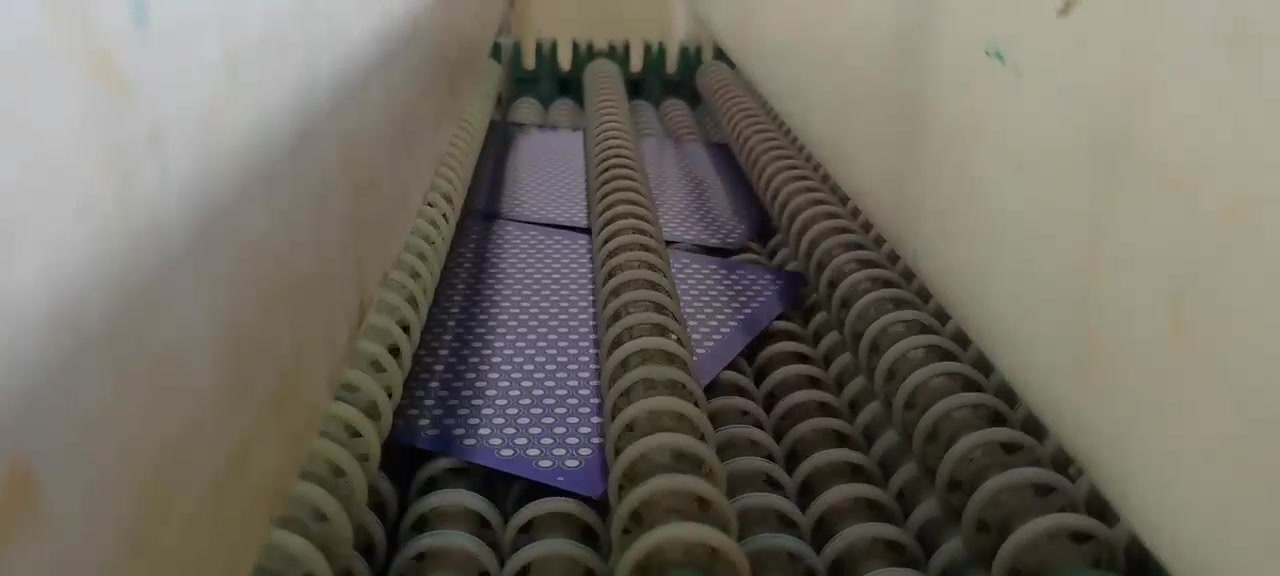
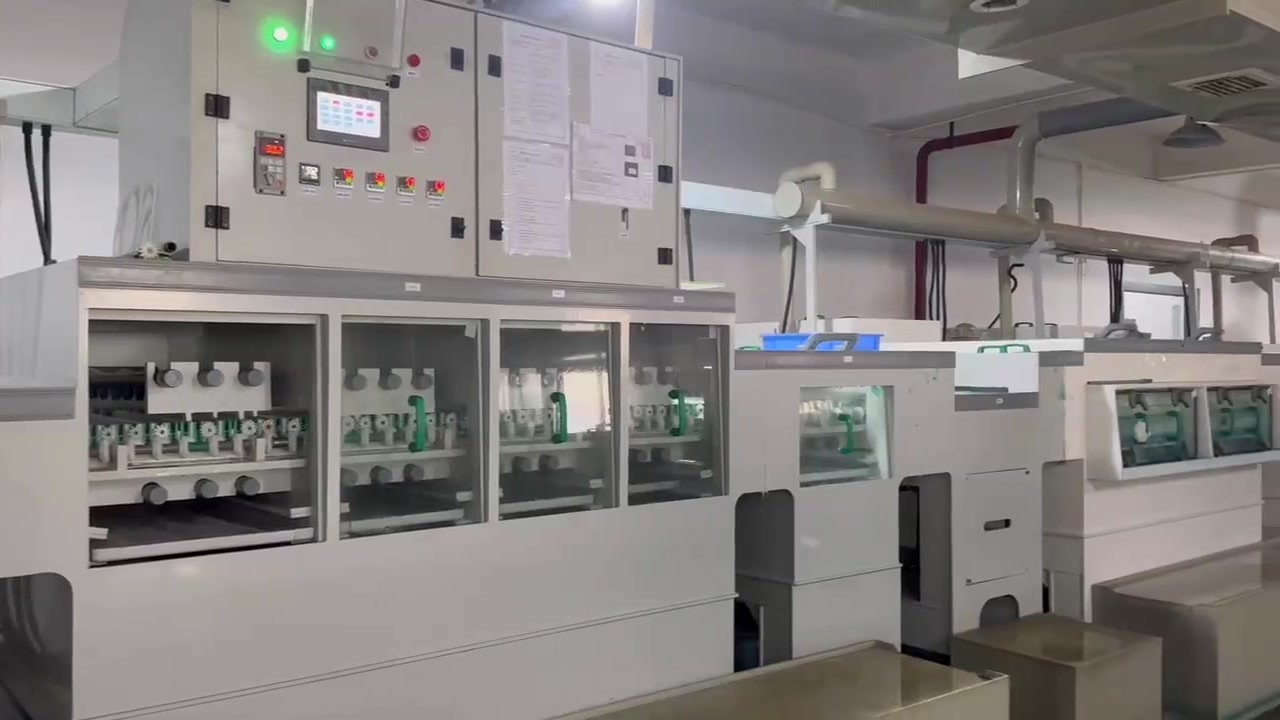
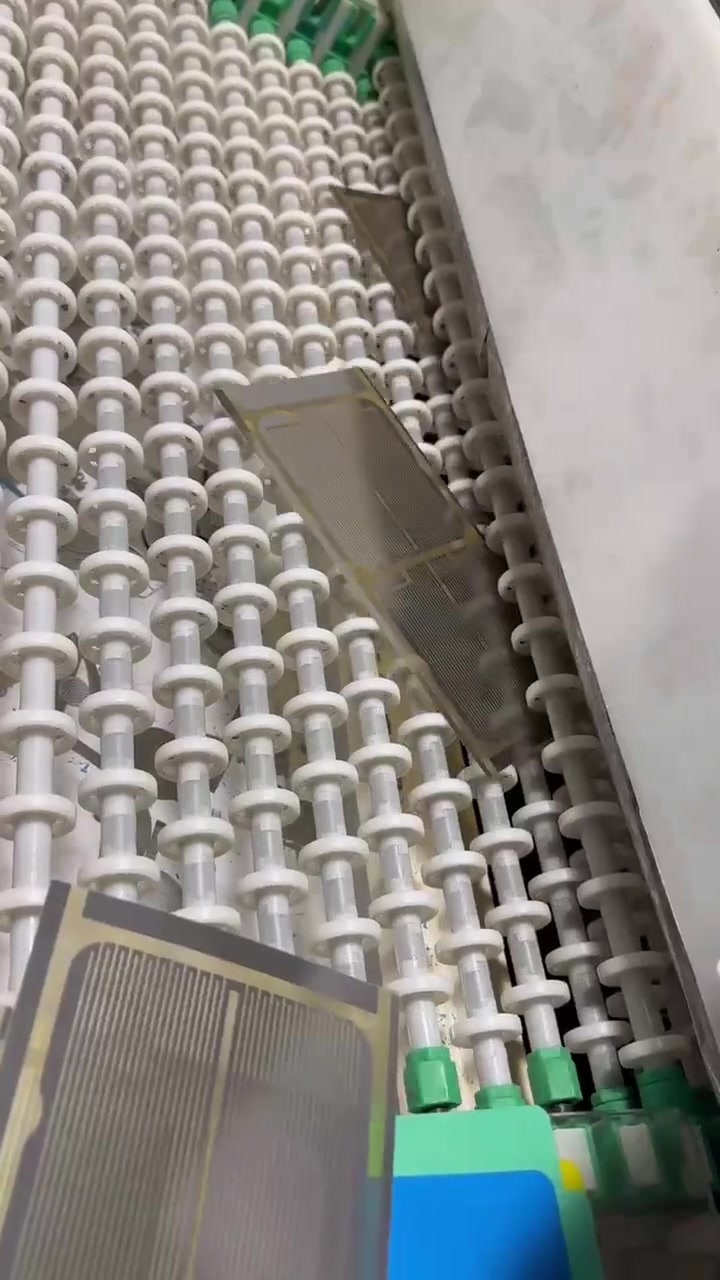
We have a full set of etching production equipment and mature processing technology. We can manufacture products in any shape with mesh sizes as small as 0.1mm, according to your requirements.

Our Advantage
Factory Direct Shipping
Our products undergo 100% QC checks before shipment, and we ensure compliance with international standards. If you require specific certifications for your target market, just let us know, and we'll meet those requirements.
Experienced Design and Manufacturing Team
We work closely with customers from the design phase to help avoid potential product flaws, ensuring both the functionality and design meet expectations.
Excellent Supply Chain Management
We can quickly adjust production schedules to meet your urgent deadlines, whether it's for large bulk orders or smaller rush orders.
OEM & ODM Support
We offer the option to print your logo or other customizations.
Strict Quality Control
Our products undergo 100% QC checks before shipment, and we ensure compliance with international standards. If you require specific certifications for your target market, just let us know, and we'll meet those requirements.
Certificate
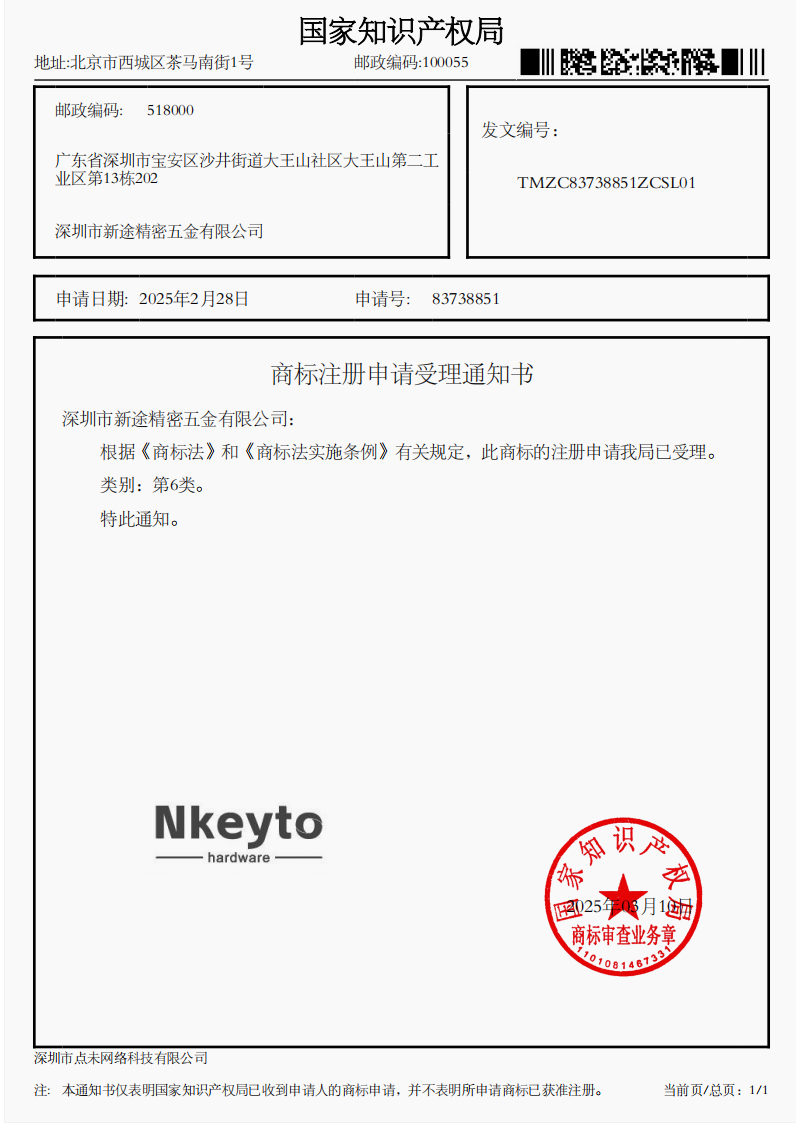
商标6类

9001
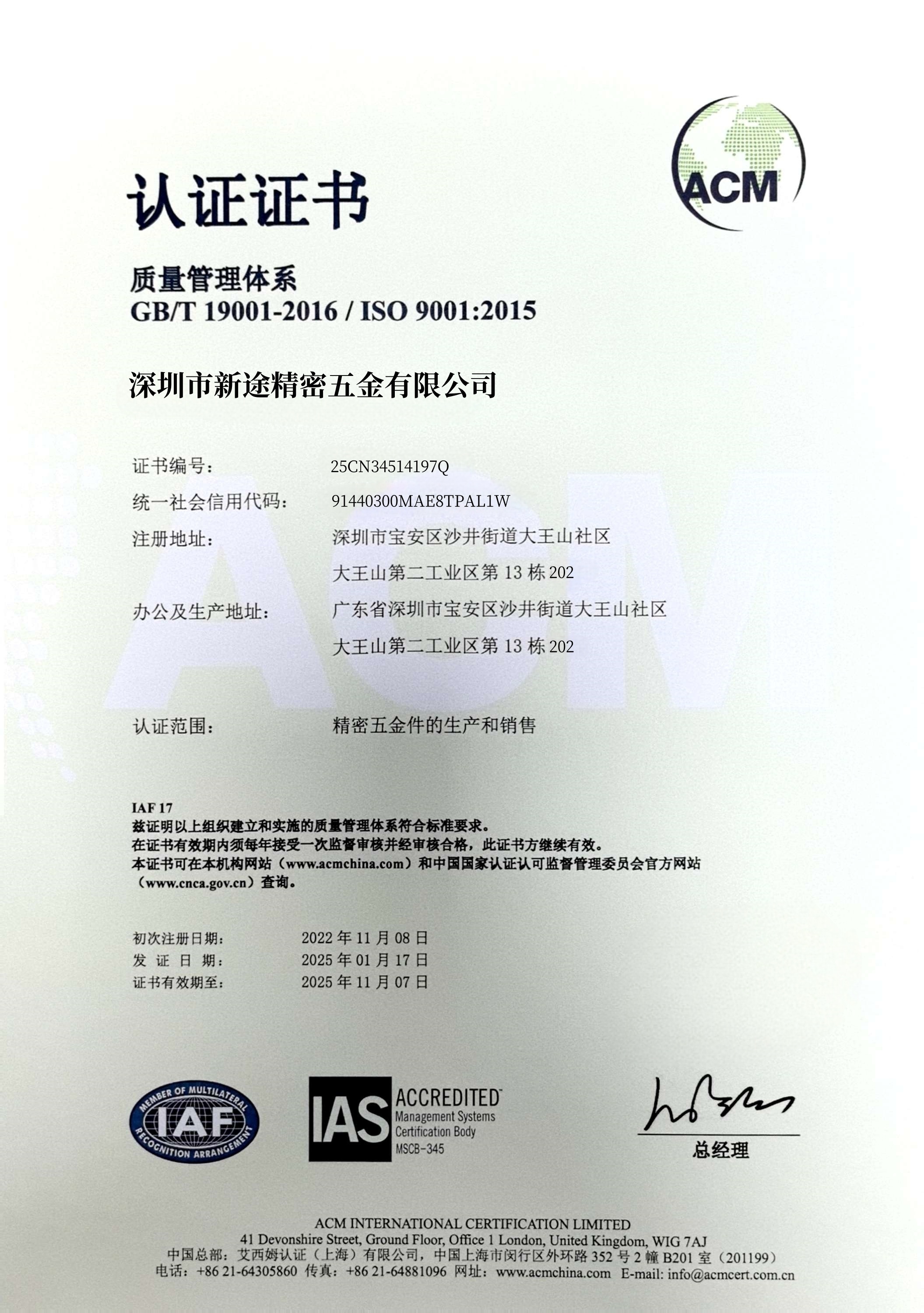
质量认证


Related Products

Shenzhen Nkeyto Precision Hardware Co., Ltd. is a factory specializing in precision hardware processing, committed to providing customers with high-quality products and services.We look forward to working with you.
Contact Us

E-mail: luna@nkeyto.com

Tel: +1 213-221-9094

Add: 13th Building, 202, Dawangshan Second Industrial Zone, Dawangshan Community, Shajing Street, Bao'an District, Shenzhen, Guangdong Province
Powered by: CEglobal
Copryright © 2025 Shenzhen Xintu Precision Hardware Co., Ltd.




Back To Top