



Stainless Steel Encoder Disc High Precision Optical Component
Category:
Key Words:
Product parameters
Parameter | Specification |
Material | Stainless Steel 304 / 301 |
Thickness | 0.02 – 0.5 mm |
Diameter | 10 – 200 mm |
Resolution | 100 – 5000+ lines |
Slot Type | Through slot / grating / custom |
Tolerance | ±2 – ±10 μm |
Process | Chemical Etching / Laser Cutting / CNC |
Surface | Matte / Polished |
Mounting | Center hole / custom holes |
Customization | Supported (OEM / ODM) |
Product Description
Product Introduction:
This stainless steel encoder disc is a high precision optical disc designed for stable signal generation and accurate position detection. The precision disc offers consistent slot geometry and excellent durability, making it suitable for long-term use in encoder systems. As a dependable encoder disc, it meets the needs of high-performance applications.
Applications:
Encoder systems, servo motors, industrial automation, robotics, precision control equipment
In the world of precision motion control, the Stainless Steel Encoder Disc is a critical component. It acts as the "ruler" for optical sensors, translating physical rotation into digital data. But how do we transform a raw sheet of metal into a High Precision Optical Component with micron-level accuracy?
The answer lies in Chemical Etching (also known as Photo Chemical Machining). Unlike traditional stamping or laser cutting, this process uses corrosive chemicals and light to remove material. At our factory, we have refined this process to ensure burr-free, stress-free, and highly accurate results. Let's take a look behind the curtain at how we manufacture these vital components.
Step 1: Material Preparation & Cleaning
Every great product starts with a clean foundation. We begin with high-grade stainless steel coils or sheets (typically SUS304 or SUS316).
- The Process: The metal is thoroughly cleaned to remove any oils, oxides, or contaminants.
- Why it matters: Any dirt on the surface can prevent the photoresist from adhering properly, leading to defects. A pristine surface is essential for a high-quality Stainless Steel Encoder Disc.
Step 2: Photoresist Lamination
Once clean, the metal is laminated with a light-sensitive polymer called "photoresist."
- The Process: This film is applied uniformly to both sides of the metal sheet.
- Why it matters: This layer acts as a shield. It protects the areas of the metal that we want to keep, leaving only the areas we want to remove exposed for the next step.
Step 3: Exposure (Imaging)
This is where the design comes to life. We use a phototool (a high-resolution film negative of your design) to transfer the pattern.
- The Process: The laminated sheet is sandwiched between the phototool and a UV light source. The UV light hardens the resist in the shape of the encoder disc pattern.
- Why it matters: This step defines the accuracy of the High Precision Optical Component. Our digital tooling allows for rapid design changes without the cost of hard dies.
Step 4: Developing
After exposure, the sheet is sprayed with a developing solution.
- The Process: This washes away the unhardened photoresist, revealing the bare metal underneath where the slots and holes need to be.
- Why it matters: The result is a precise "stencil" on the metal, ready for etching.
Step 5: Chemical Etching
This is the core of our operation. The developed sheets are conveyed through an etching chamber where high-pressure nozzles spray corrosive chemicals (typically Ferric Chloride) onto the metal.
- The Process: The chemical eats away the exposed bare metal, while the hardened resist protects the rest.
- Why it matters: Unlike mechanical punching, which pushes metal and creates burrs, chemical etching dissolves the metal atom by atom. This results in a Stainless Steel Encoder Disc with perfectly smooth edges and zero mechanical stress.
Step 6: Stripping & Inspection
The final step is to remove the remaining photoresist and clean the parts.
- The Process: The parts are stripped, washed, and dried. They then undergo rigorous inspection using optical projection and CMM machines.
- Why it matters: We verify that every slot width and pitch measurement meets the strict tolerances required for optical applications.
Comparison: Etching vs. Traditional Methods
Why do we choose chemical etching for High Precision Optical Components?
Feature | Stamping / Punching | Laser Cutting | Chemical Etching |
|---|---|---|---|
Burr Formation | High (Requires deburring) | Medium (Dross/Recast layer) | None (Burr-free) |
Material Stress | High (Mechanical deformation) | High (Heat Affected Zone) | Zero (Cold process) |
Lead Time | Long (Hard tooling required) | Short | Fast (Digital tooling) |
Accuracy | Low to Medium | Medium | High (±0.02mm) |
Why This Process Matters for You
By mastering the chemical etching process, we can offer you:
- Complex Geometries: We can etch intricate optical patterns that are impossible with punches.
- Durability: The stress-free nature of etching means the stainless steel retains its natural hardness and flatness.
- Cost-Effectiveness: No hard tooling means lower upfront costs and faster turnaround times for prototypes and production runs.
Ready to See Your Design in Metal?
Understanding our process helps you understand the quality we deliver. If you have a design for a Stainless Steel Encoder Disc or need a High Precision Optical Component manufactured, we are ready to help.
Contact us today to discuss your project specifications.
Get in touch with us:
- Contact Person: Luna
- Company: NKEYTO (Shenzhen Xintu Precision Hardware Co., Ltd.)
- WhatsApp: 12132219094
Questions and Answers
Frequently Asked Questions (FAQ)
Q1: What is the typical tolerance for your etched encoder discs?
A: We typically hold a tolerance of ±0.02mm (or ±10% of material thickness). For a High Precision Optical Component, this level of accuracy ensures that the optical slots are perfectly positioned for reliable signal reading.
Q2: Does the etching process weaken the stainless steel?
A: No. Unlike laser cutting, which uses heat and can alter the material's grain structure (creating a Heat Affected Zone), chemical etching is a "cold" process. It does not change the physical properties or hardness of the Stainless Steel Encoder Disc.
Q3: Can you etch very thin materials?
A: Yes. Chemical etching is ideal for thin materials. We can process stainless steel as thin as 0.05mm without warping or deformation, which is crucial for lightweight, high-speed encoder applications.
Q4: How does this process affect the edge quality?
A: It produces superior edge quality. The chemical spray dissolves the metal smoothly, leaving edges that are virtually burr-free. This is essential for optical components where light scattering must be minimized.
Factory Description
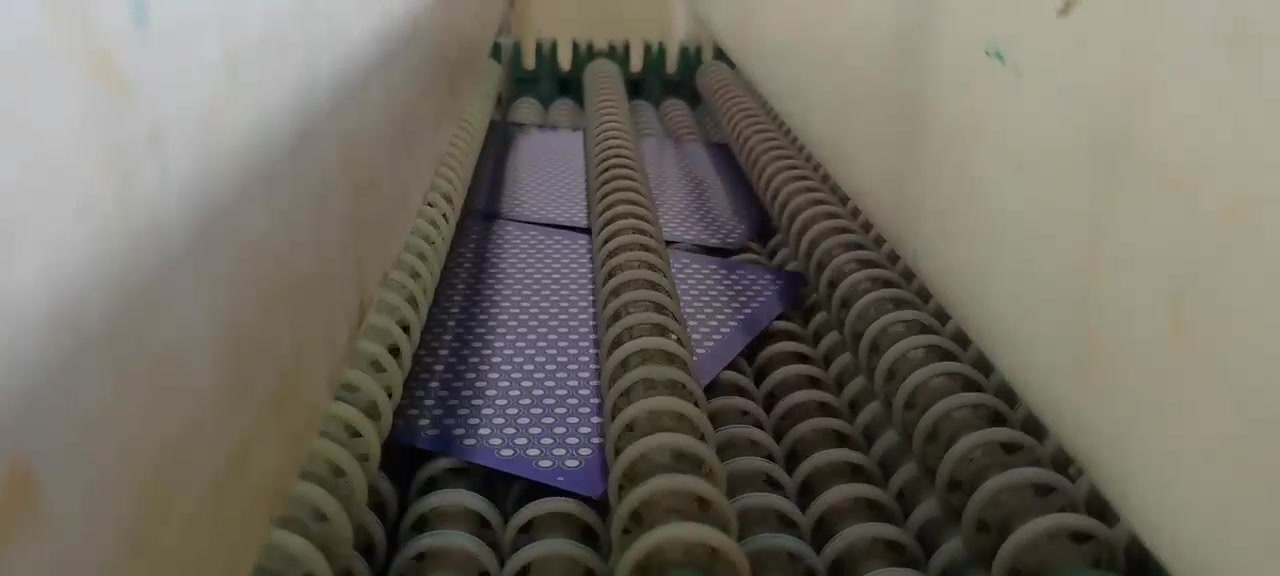
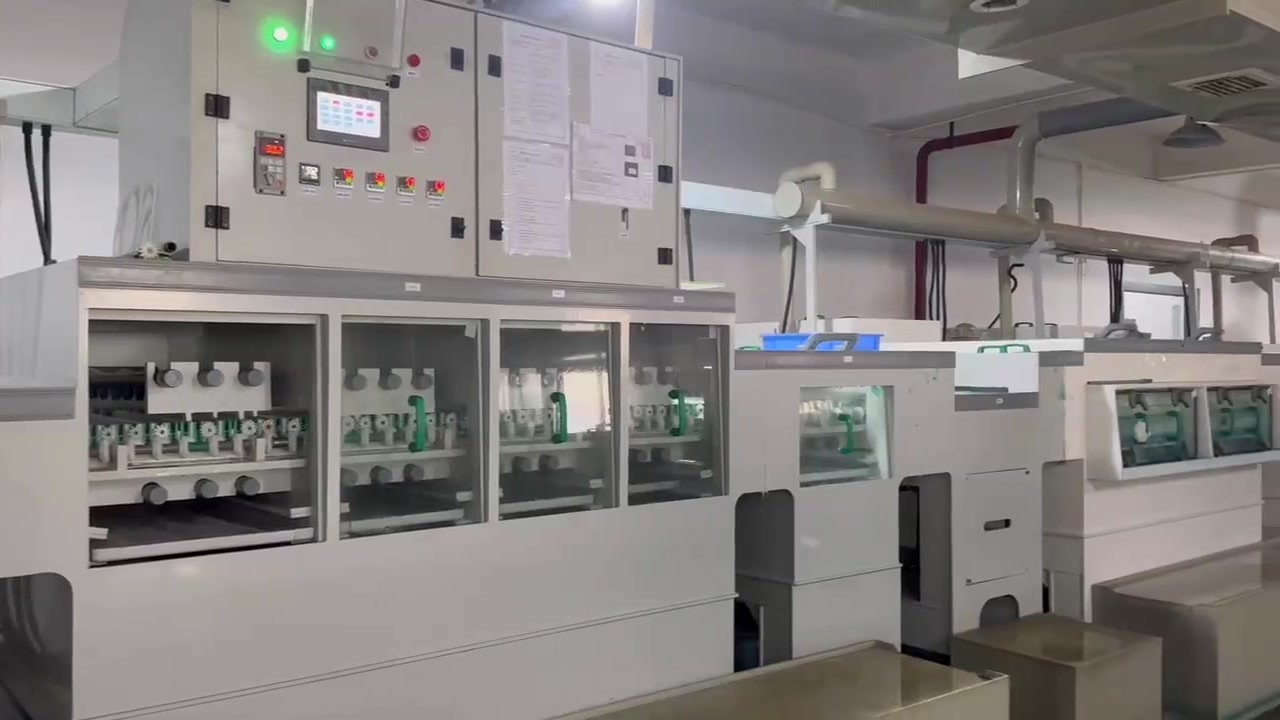
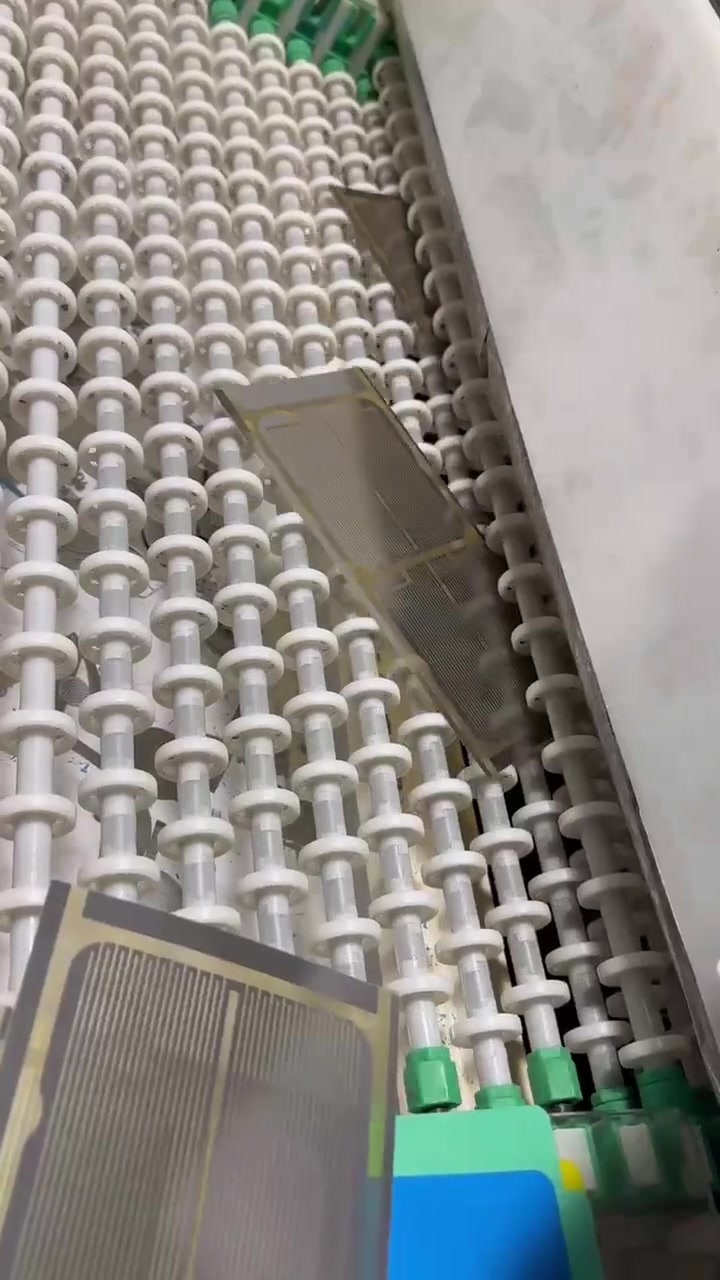
We have a full set of etching production equipment and mature processing technology. We can manufacture products in any shape with mesh sizes as small as 0.1mm, according to your requirements.

Our Advantage
Factory Direct Shipping
Our products undergo 100% QC checks before shipment, and we ensure compliance with international standards. If you require specific certifications for your target market, just let us know, and we'll meet those requirements.
Experienced Design and Manufacturing Team
We work closely with customers from the design phase to help avoid potential product flaws, ensuring both the functionality and design meet expectations.
Excellent Supply Chain Management
We can quickly adjust production schedules to meet your urgent deadlines, whether it's for large bulk orders or smaller rush orders.
OEM & ODM Support
We offer the option to print your logo or other customizations.
Strict Quality Control
Our products undergo 100% QC checks before shipment, and we ensure compliance with international standards. If you require specific certifications for your target market, just let us know, and we'll meet those requirements.
Certificate
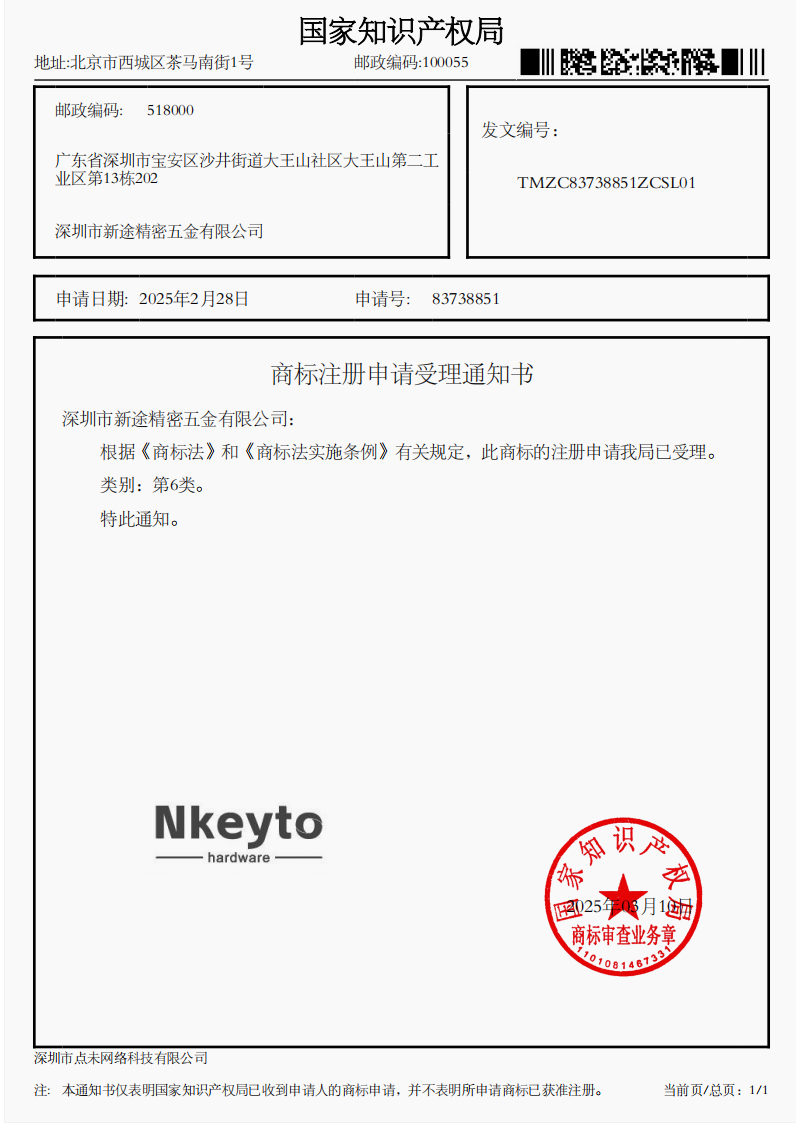
商标6类

9001
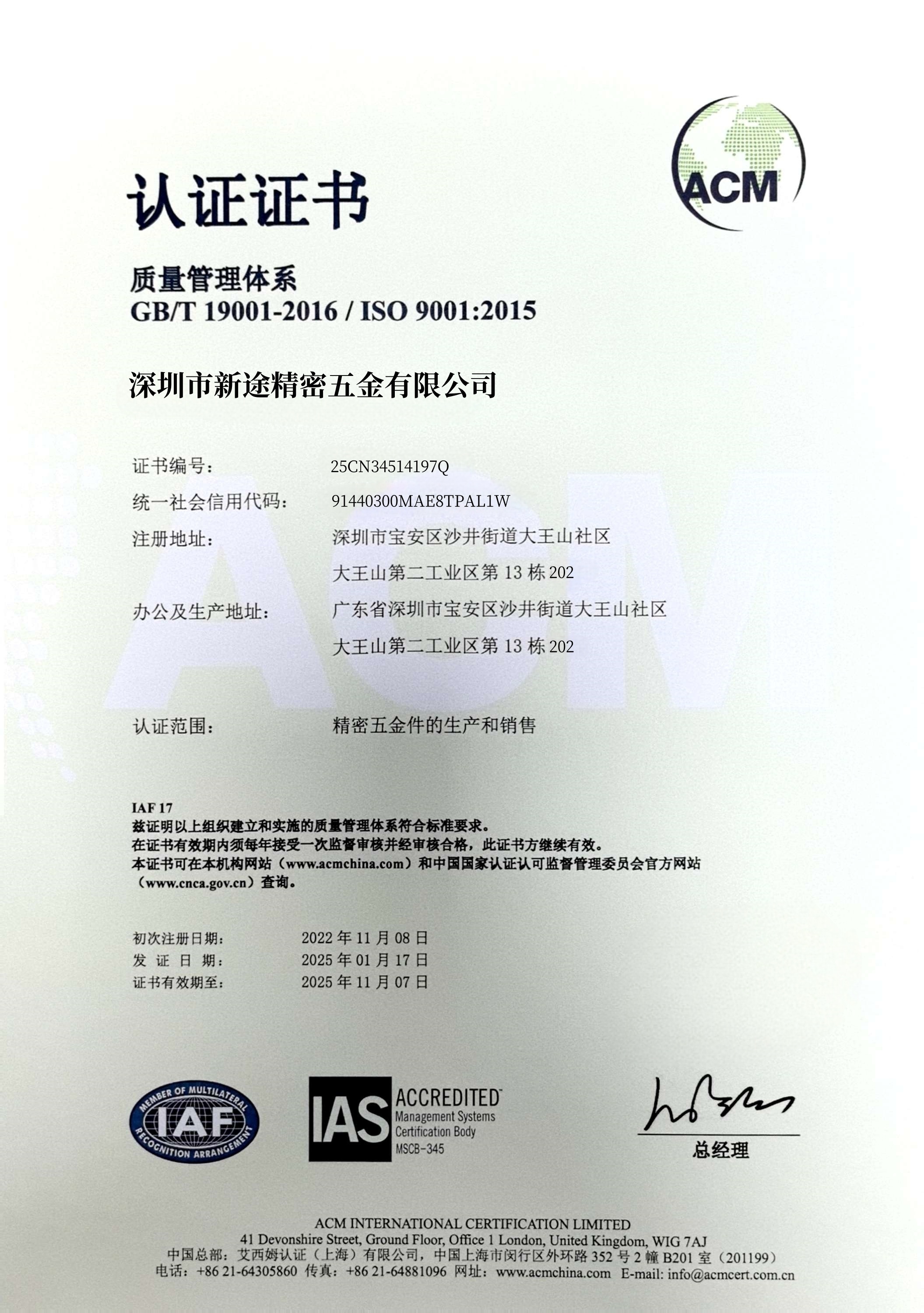
质量认证


Related Products

Shenzhen Nkeyto Precision Hardware Co., Ltd. is a factory specializing in precision hardware processing, committed to providing customers with high-quality products and services.We look forward to working with you.
Contact Us

E-mail: luna@nkeyto.com

Tel: +1 213-221-9094

Add: 13th Building, 202, Dawangshan Second Industrial Zone, Dawangshan Community, Shajing Street, Bao'an District, Shenzhen, Guangdong Province
Powered by: CEglobal
Copryright © 2025 Shenzhen Xintu Precision Hardware Co., Ltd.




Back To Top